








































Operation Sindoor: One Year Later — 22 Minutes That Changed India Forever

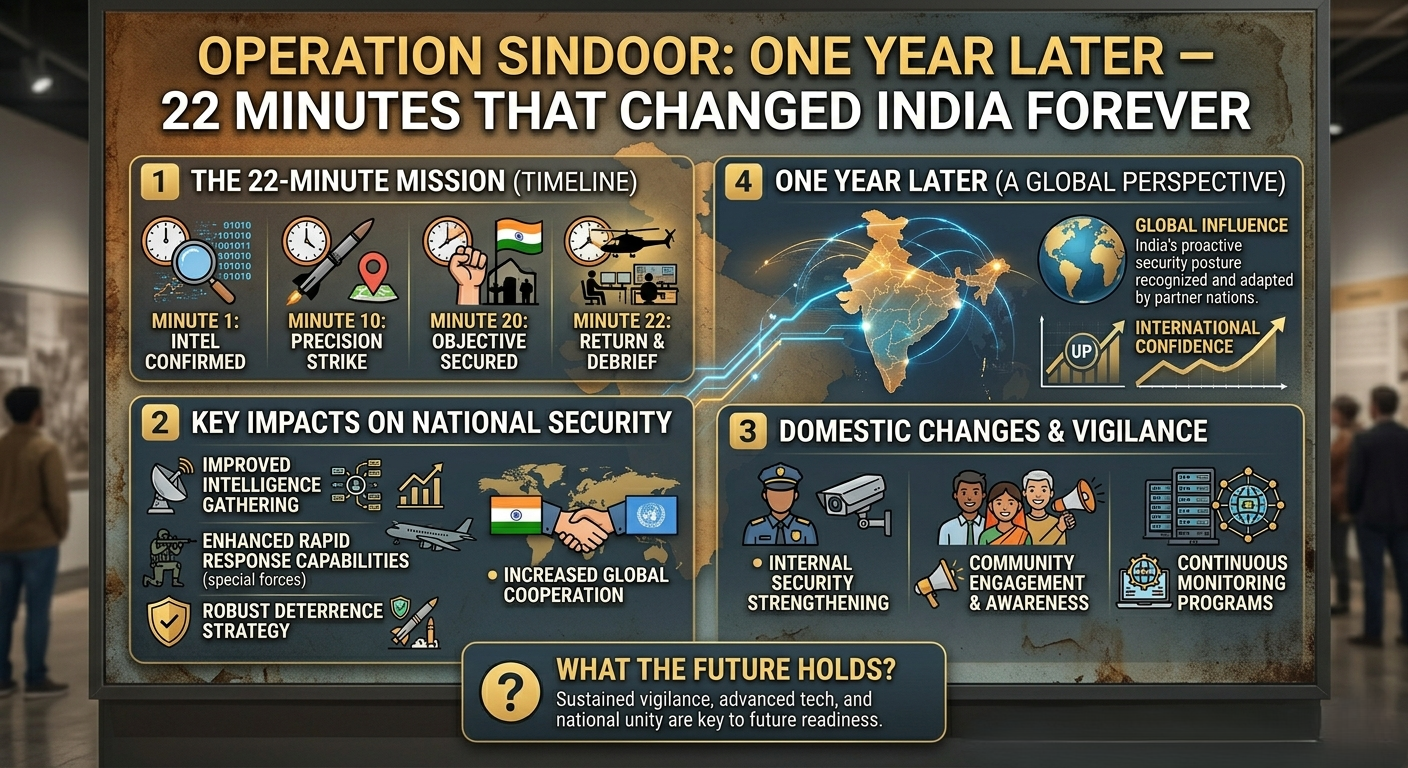
On May 7, 2025 at 1:05 AM, India launched strikes on nine terror camps deep inside Pakistan. By 1:27 AM — 22 minutes later — it was done. One year on, India’s military, diplomacy and doctrine have all changed. Here is the complete story, clearly told.
| 22 minutes. That’s how long Operation Sindoor lasted. From 1:05 AM to 1:27 AM on May 7, 2025, Indian armed forces struck nine terror camps in Pakistan and Pakistan-occupied Kashmir with missiles, drones, and air strikes. The strikes were surgical, calibrated, and — for the first time in India’s history — reached targets deep inside Pakistani territory in peacetime. One year later, India’s security doctrine has shifted permanently. India’s defence budget has surged. And the region has been changed in ways that are still unfolding. Here is the full story. |
🔴 What Started It: The Pahalgam Attack of April 22, 2025
On April 22, 2025, a group of terrorists ambushed a group of tourists at Baisaran meadow in Pahalgam, Jammu and Kashmir. 26 people were killed — mostly Hindu tourists on holiday in one of the most beautiful valleys in India. It was the deadliest terrorist attack on civilians in India in years.
The attack was linked by Indian intelligence to Lashkar-e-Taiba (LeT) and Jaish-e-Mohammed (JeM) — two Pakistan-based terror groups that have been behind previous attacks on Indian soil, including the 2001 Parliament attack and the 2019 Pulwama bombing.
India demanded action. Pakistan denied involvement. The Indian government, after 15 days of deliberation, authorised military action. Operation Sindoor was born.
⏱ The 22 Minutes: What Happened on May 7, 2025
| Time / Event | What Happened |
| Apr 22, 2025 | Pahalgam terror attack 26 Hindu tourists killed in Baisaran meadow, J&K. India blames Pakistan-based groups LeT and JeM. |
| 1:05 AM, May 7 | Operation Sindoor begins Indian Air Force, Army, and intelligence agencies strike 9 terror targets in Pakistan and PoK. |
| 1:27 AM, May 7 | Operation Sindoor ends 22 minutes. All 9 targets struck. 100+ terrorists killed including high-value targets linked to IC814 hijack and Pulwama attack. |
| May 7–9, 2025 | Pakistan retaliates Pakistan launches counter-strikes. Most intercepted by India’s S-400 and Barak-8 systems. Both sides lose assets. Fighting escalates. |
| May 10, 2025 | Ceasefire agreed India-Pakistan DGMOs agree to halt firing. Pakistan initiates ceasefire request. |
| May 7, 2026 | One-year anniversary India’s armed forces mark the anniversary with ceremonies at cantonments and the National War Memorial. IAF posts a video at the precise hour of the strikes. |
| 🎯 | 9 | Terror sites struck across Pakistan and Pakistan-occupied Kashmir |
| ⏱ | 22 mins | Duration of the entire operation — 1:05 AM to 1:27 AM |
| 🚨 | 100+ | Terrorists killed, including IC814 hijacking and Pulwama attack masterminds |
| 🛡️ | 4 days | Total India-Pakistan military conflict before ceasefire on May 10 |
| 💰 | $92.1B | India’s defence spending in 2025 — 8.9% jump, 5th largest globally (SIPRI 2026) |
🚀 The Weapons That Made It Possible
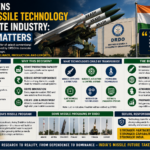
Operation Sindoor was not just a military operation — it was a live demonstration of India’s defence modernisation over the past decade. Several systems performed on a real battlefield for the first time:
- BrahMos supersonic cruise missile — The India-Russia co-developed missile that Pakistan currently has no defence against. Multiple BrahMos strikes hit military bases deep inside Pakistan. India is now expanding BrahMos production for export to countries including Indonesia, Vietnam and the Philippines.
- Rafale fighter jets — French-built fourth-generation fighters that India acquired in 2020. Their SCALP missiles and HAMMER bombs allowed India to strike targets with precision from stand-off distances, outside Pakistani radar range.
- Loitering munitions (kamikaze drones) — India deployed drone swarms that loitered over targets before striking. Defence analysts described the scale of loitering munition use as unprecedented in any South Asian conflict.
- S-400 Triumf air defence — The Russian air defence system protected Indian air space during Pakistani counter-strikes, intercepting multiple incoming threats. India expects another S-400 squadron to be delivered by mid-2026.
- Electronic warfare — Indian jamming systems disrupted Pakistani radar and communication networks, creating windows for strike aircraft.
| The global audience watching: Military analysts in Washington, Beijing, Moscow, and Riyadh closely monitored Sindoor’s conduct. The operation answered several open questions about India’s real-world military capability — questions that had not been tested at this scale since Kargil in 1999. The answers were noted carefully by everyone, including China. |
📊 What Has Changed in One Year: India’s New Doctrine
The biggest consequence of Operation Sindoor is not on any battlefield — it is inside India’s strategic thinking. Here is what has demonstrably changed:
| Area | Before Sindoor | After Sindoor |
| Terror response | Strategic restraint — absorb attacks, respond diplomatically | Strategic proactiveness — strike back with calibrated military force |
| Cross-border strikes | Never crossed into Pakistani territory in peacetime | Will strike deep into Pakistan if terror attacks originate there |
| Nuclear threshold | Avoided all action fearing nuclear escalation | Demonstrated conventional strikes do not trigger nuclear response |
| Defence spending | $84.6B (2024) — moderate growth | $92.1B (2025, SIPRI) — 8.9% jump; 5th globally |
| BrahMos production | Moderate production for domestic use | Expanded production for export; contracts with 6+ countries |
| Drone warfare | Limited deployment in conflict | Loitering munitions deployed at scale; massive procurement drive |
| Air defence | Adequate but untested | S-400 battle-tested; additional squadrons ordered |
| The doctrine shift in plain language: India’s policy used to be: if Pakistan-backed terrorists attack us, we will absorb it, protest diplomatically, and maybe conduct limited strikes near the border (like the 2016 surgical strikes or 2019 Balakot). After Sindoor, the policy is: we will hit your terror infrastructure wherever it is, deep inside your country, and we have both the weapons and the will to do it. |
⚠️ The Questions That Remain Unanswered
An honest account of Operation Sindoor’s anniversary must also engage with the criticisms and unresolved questions that have emerged over the past year:
Did Pakistan’s global standing improve after Sindoor?
Counterintuitively — yes, in some respects. Pakistan positioned itself as a peacemaker between the US and Iran after the conflict, hosting direct US-Iran talks in April 2026. Trump publicly credited Pakistan’s Field Marshal Asim Munir for multiple diplomatic interventions. India’s attempt to isolate Pakistan internationally has faced resistance, partly because Pakistan found new relevance in the West Asia crisis.
Did India lose assets during the conflict?
Multiple accounts from Indian military officials, cited in statements at international defence seminars through 2025–26, confirm that India lost some aircraft and assets during the four-day conflict due to what officials described as “constraints set by political leadership” and underestimation of Pakistani air defence improvements. India has since corrected many of these gaps.
Was the ceasefire really bilateral?
The Indian government maintained the ceasefire was reached bilaterally through DGMO-level talks. However, US Secretary of State Marco Rubio’s public announcement at 5:37 PM IST on May 10, 2025 — crediting American mediation — created a political controversy in India. Opposition parties cited this as evidence of external pressure. The government disputed the framing. The exact sequence of events remains a live political debate inside India.
🇳🇾🇵🇰 India-Pakistan: Where Things Stand One Year Later
Cross-border terrorism from Pakistan-based groups has not stopped. Indian intelligence agencies report continued attempts at infiltration and radicalisation. Pakistan’s military posture is described by analysts as “materially stronger” than before Sindoor — it has acquired upgraded J-10C fighters, new JF-17s with PL-15 missiles, and absorbed doctrinal lessons from the conflict.
India’s military capability was decisively demonstrated. But converting military superiority into lasting strategic peace has proved harder. The ceasefire holds. Diplomatic channels are frozen. The fundamental dispute over cross-border terrorism remains unresolved.
As The Diplomat noted in a May 2026 analysis: “A year later, while India has been trying to isolate Pakistan for being the perpetrator of terrorism, Pakistan’s profile has undergone a major makeover.” The scorecard, one year on, is complicated.
| The Indian armed forces’ perspective: Former DGMO Lt Gen Rajiv Ghai publicly stated that Pakistan formally requested India to stop operations once the strikes had landed. India’s military views the operation as a success: objectives were met, no nuclear escalation occurred, and India demonstrated a new threshold for how it will respond to terror attacks. “We moved from strategic restraint to strategic proactiveness,” as Maj Gen Dhruv Katoch put it. |
❓ Frequently Asked Questions: Operation Sindoor
What was Operation Sindoor?
Operation Sindoor was a military operation launched by India at 1:05 AM on May 7, 2025, targeting nine terror infrastructure sites in Pakistan and Pakistan-occupied Kashmir. The 22-minute operation used missiles, air strikes, and drone swarms to destroy bases linked to Lashkar-e-Taiba and Jaish-e-Mohammed, in retaliation for the April 22, 2025 Pahalgam terrorist attack that killed 26 civilians.
Why was it called Operation Sindoor?
Sindoor is the red powder applied by married Hindu women as a symbol of their marital status. The operation was named after it as a tribute to the wives and families of the 26 victims killed in the Pahalgam attack — many of whom were men whose sindoor-wearing spouses became widows in that attack.
How long did Operation Sindoor last?
The initial strikes lasted exactly 22 minutes — from 1:05 AM to 1:27 AM on May 7, 2025. The subsequent India-Pakistan military conflict that followed lasted four days, before a ceasefire was agreed on May 10, 2025.
What weapons did India use in Operation Sindoor?
India deployed BrahMos supersonic cruise missiles, Rafale jets with SCALP missiles and HAMMER bombs, loitering munitions (suicide drones) at unprecedented scale, and electronic warfare systems that jammed Pakistani radar. The S-400 air defence system was used to intercept Pakistani counter-strikes.
What happened after Operation Sindoor?
Pakistan launched retaliatory strikes on May 8–9, most of which were intercepted by Indian air defences. A ceasefire was agreed on May 10. In the year since, India has significantly increased its defence spending, expanded BrahMos production, and accelerated procurement of drones and counter-drone systems. India’s security doctrine formally shifted from “strategic restraint” to “calibrated proactiveness”.
Disclaimer: This article is for informational and educational purposes only. It is based on publicly available reports and policy updates. It should not be considered financial, investment, legal or business advice.