
















Modi in the Netherlands: Chips, AI, and a €20 Billion Partnership That Could Define India’s Tech Future

Photo Credit: Narendra Modi / @narendramodi (Instagram)
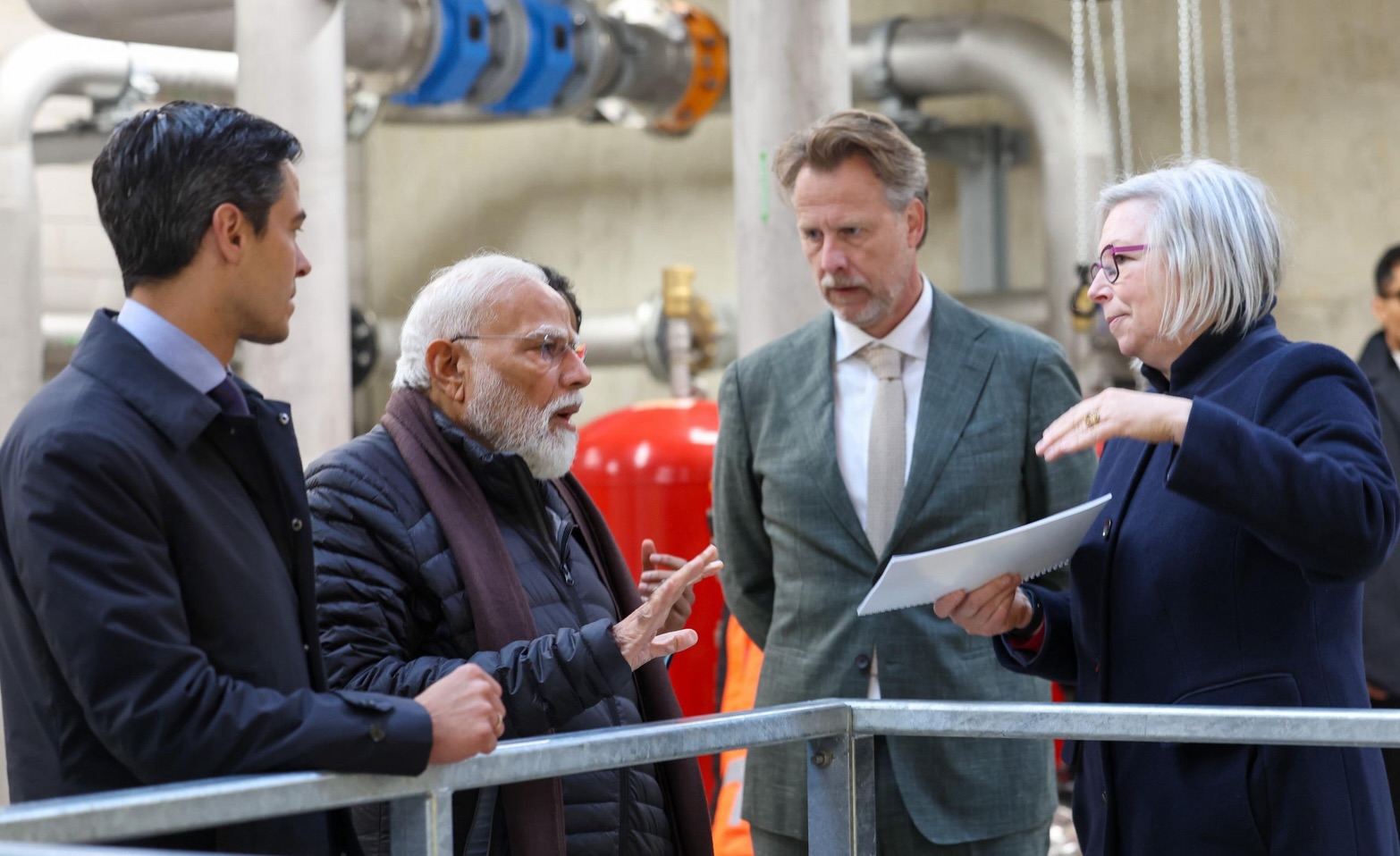
| When PM Narendra Modi arrived in The Hague on May 16, 2026, it was more than a diplomatic visit. Within 48 hours, India and the Netherlands had signed 17 major agreements, elevated bilateral ties to a Strategic Partnership, and announced one of the most consequential technology deals in India’s industrial history — the Tata Electronics–ASML semiconductor MoU. Here is the full story, clearly explained. |
Setting the Scene: Why the Netherlands?
To understand why this visit mattered, you need to understand what the Netherlands represents in the global technology order. The country is home to ASML — the only company in the world that manufactures extreme ultraviolet (EUV) lithography machines, the tools that make it possible to produce the most advanced microchips on Earth. Without ASML, there is no cutting-edge semiconductor manufacturing.
That makes the Netherlands not just an important European trading partner for India, but a strategic bottleneck in the global technology supply chain. Securing ASML’s partnership for India’s semiconductor ambitions was, arguably, the single most important technology objective of Modi’s entire five-nation tour.
This was also Modi’s second visit to the Netherlands — the first being in 2017. In the years between, the relationship had grown steadily, but this visit was designed to formalise and dramatically accelerate that growth.
| 17 | Major bilateral agreements announced during the visit |
| $11B | Tata Electronics’ planned investment in the Dholera semiconductor fab |
| 300mm | Wafer size for India’s first commercial semiconductor fab at Dholera |
| 2026–30 | Timeline of the new India-Netherlands Strategic Partnership Roadmap |
The Headline Deal: Tata Electronics Meets ASML
The centrepiece of the Netherlands visit — and perhaps the single most strategically significant business agreement of Modi’s entire five-nation tour — was the Memorandum of Understanding signed between Tata Electronics and ASML on May 16, 2026.
What ASML Actually Does
ASML is Europe’s most valuable technology company by market capitalisation. It manufactures lithography machines — the enormous, extraordinarily precise tools that use light to etch microscopic circuit patterns onto silicon wafers. Without these machines, no advanced chip gets made. ASML holds a near-monopoly on EUV lithography, the technology needed for the most advanced chips used in AI, smartphones, electric vehicles and defence systems.
In short: if you want to make cutting-edge semiconductors, you need ASML’s equipment. There is no alternative.
What the Deal Covers
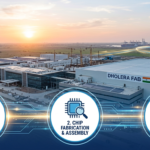
Under the MoU, ASML will support Tata Electronics in establishing and ramping up production at the Dholera semiconductor fabrication plant in Gujarat — India’s first commercial 300-millimetre fab. The agreement covers:
- Supply of advanced lithography tools and solutions for chip production
- Metrology and process control systems for quality and yield
- Workforce training and talent development programmes
- Supply chain resilience and local service capability
- Research and development collaboration for long-term innovation
| The Dholera Fab in Context: Tata Electronics plans to invest $11 billion in the Dholera facility, making it one of the largest technology infrastructure investments in India’s history. The plant will produce chips for AI applications, automotive systems, and mobile devices — placing India squarely inside the global semiconductor supply chain for the first time at this scale. |
Both PM Modi and Dutch PM Rob Jetten were present as Tata Electronics CEO Randhir Thakur and ASML CEO Christophe Fouquet signed the agreement — a visible signal that this was not a routine corporate deal but a government-backed strategic commitment on both sides.
Why It Matters for India’s AI Ambitions
The chips produced at the Dholera fab are specifically earmarked for artificial intelligence applications. This is not coincidental. India has been positioning itself as an AI powerhouse — Modi’s own India AI Impact Summit in February 2026 drew global leaders to New Delhi. But AI ambitions without domestic chip manufacturing capacity are built on sand. The Dholera fab, backed by ASML’s technology, is the foundation that makes India’s AI industrial stack self-sustaining.
For context: the United States, China, South Korea, Taiwan, and Japan all have significant domestic semiconductor manufacturing. India, with the world’s fastest-growing digital economy, has not had a commercial front-end fab — until now.
The Strategic Partnership: 17 Agreements Across 9 Sectors
The Tata-ASML deal was the most dramatic outcome, but it sat inside a much broader upgrade of the India-Netherlands relationship. The two countries formally elevated ties to a Strategic Partnership and adopted a roadmap for 2026–2030, committing to structured cooperation across nine major sectors.
Full Breakdown of the 17 Outcomes
| 🤝 | Strategic Partnership Elevation Formal upgrade of India-Netherlands relations with a structured roadmap for 2026–2030 |
| 💻 | Tata Electronics–ASML Semiconductor MoU Landmark agreement to build and ramp up India’s first 300mm commercial fab in Dholera, Gujarat |
| 🧠 | AI & Quantum Cooperation Framework Joint commitment to AI as an enabler of economic and social transformation; quantum included as a priority tech |
| 🔬 | Semiconductor Ecosystem Linkage Dutch Semicon Competence Centre linked with India Semiconductor Mission; Indo-Dutch Semicon Online School continued |
| 🛡️ | Defence Cooperation Letter of Intent Expanded defence industrial cooperation including co-development, technology transfer, and joint ventures |
| 🔐 | Cyberspace Collaboration LoI Joint efforts on countering cyber threats, cybercrime, and capacity building; 8th session of cyber school completed |
| ⚡ | Green Hydrogen Roadmap Joint roadmap for green hydrogen cooperation and renewable energy collaboration |
| ♻️ | Circular Economy Partnership Expanded partnership on industrial circularity, waste management and climate-resilient urban systems |
| 🌿 | Global Biofuel Alliance Netherlands joined India’s Global Biofuel Alliance launched during India’s G20 presidency |
| 🚢 | Indo-Pacific Oceans Initiative Netherlands joined IPOI, co-leading the Capacity Building & Resource Sharing pillar with Germany and EU |
| 🤝 | Customs Mutual Administrative Assistance Agreement enabling information exchange between customs authorities to facilitate trade |
| 📊 | Joint Trade & Investment Committee Formal bilateral mechanism to advance trade, investment facilitation and innovation ecosystems |
| 📈 | India-EU FTA Endorsement Both leaders welcomed the India-EU Free Trade Agreement concluded in January 2026 and committed to early implementation |
| 📚 | Startup & Innovation Ecosystem Bridge Digital soft-landing programmes, trade missions and innovation summits to connect both countries’ startup ecosystems |
| 🌊 | Water Management Cooperation Leveraging Dutch expertise in water management for Indian cities and sustainable agriculture |
| 🏛️ | Maritime Museum Partnership Cooperation between the maritime museums in Lothal (India) and Amsterdam |
| 🧬 | Pharma & Medical Devices Cooperation Collaboration framework covering pharmaceuticals and medical devices sectors |
AI, Quantum & the Digital Agenda: A Deeper Look
While the semiconductor deal grabbed the headlines, the AI and digital cooperation commitments are equally significant for India’s long-term technology trajectory.
ICT as an Economic Enabler
The joint statement explicitly stated that both leaders “underlined the importance of an open, free, secure, stable, accessible and peaceful ICT environment, which is seen as an enabler for innovation and economic growth.” This framing — ICT as infrastructure for prosperity, not just a sector — reflects a maturing view of digital policy.
PM Modi also thanked the Netherlands for its participation in the India AI Impact Summit held in New Delhi in February 2026, cementing the AI cooperation track that had been building since then.
Quantum Computing on the Roadmap
For the first time, the Strategic Partnership Roadmap formally included quantum systems as a priority technology area alongside AI and semiconductors. This is significant: quantum computing is expected to be the next frontier after AI, with applications in cryptography, drug discovery, materials science, and complex optimisation problems. Getting quantum into the bilateral agenda now positions both countries well for the decade ahead.
Cybersecurity: From School to Strategy
| The Indo-Dutch Cyber School: One of the quieter but more durable outcomes is the continuation of the Indo-Dutch Semicon Online School and the bilateral cyber school programme, now in its 8th session. These institutions build the human capital — engineers, researchers, and cybersecurity professionals — that technology agreements need to actually deliver results. Hardware deals without talent pipelines stall. India and the Netherlands have built both. |
The Royal Welcome: King Willem-Alexander and Queen Maxima
The visit opened with a ceremonial dimension that underlined its importance. On the morning of May 16, PM Modi was received at the Royal Palace Huis ten Bosch in The Hague by King Willem-Alexander and Queen Maxima — one of the most distinguished welcomes a visiting head of government can receive in the Netherlands. Their Majesties also hosted a luncheon for the Prime Minister.
The royal reception was followed by restricted and delegation-level talks with Dutch PM Rob Jetten, and a formal dinner in the evening — a full-day programme that gave the diplomatic relationship considerable political weight and media visibility in the Netherlands.
The India-EU FTA: The ‘Mother of All Deals’
The Netherlands visit took place against the backdrop of a landmark development: the conclusion of negotiations for an India-EU Free Trade Agreement in January 2026 — which Modi himself called “the mother of all deals.”
The Netherlands, as a founding EU member and one of Europe’s most trade-oriented economies, is a natural champion of this agreement. PM Jetten’s endorsement of the FTA and commitment to its early implementation adds political momentum to a deal that could reshape India-Europe economic relations for a generation.
| What the India-EU FTA Means for the Netherlands: The Netherlands serves as a strategic gateway to Europe for Indian exporters via the Port of Rotterdam — the largest in Europe. An India-EU FTA would significantly reduce tariff barriers, making Indian goods more competitive across all 27 EU member states. For Dutch companies, India’s vast market and skilled talent pool become more accessible at lower cost. |
Defence, Maritime, and the Indo-Pacific
The Netherlands visit was not just about technology. The two sides also signed a Letter of Intent on Defence Cooperation, agreeing to explore co-development, technology transfer, and joint ventures for defence manufacturing.
On maritime security, the Netherlands agreed to join India’s Indo-Pacific Oceans Initiative (IPOI), co-leading the Capacity Building and Resource Sharing pillar alongside Germany and the EU. This signals a meaningful shift in Dutch strategic orientation toward the Indo-Pacific — an area where India has long sought European engagement.
Both leaders also condemned terrorism in all its forms and called for zero tolerance. PM Jetten specifically condemned the terrorist attack on civilians in Pahalgam, Jammu & Kashmir in April 2025, expressing the Netherlands’ solidarity with India — a politically significant statement for the bilateral relationship.
What This Visit Means for India’s Tech Future
Step back from the individual deals and a larger picture emerges. The Netherlands visit was part of a deliberate, multi-year strategy by India to secure its position in the global technology supply chain — particularly in semiconductors, AI, and clean energy.
The logic is straightforward: India has the talent pool, the market size, and the political ambition to be a major technology power. What it has lacked is access to the advanced manufacturing tools, process know-how, and long-term industrial partnerships that turn ambition into production. The Tata-ASML deal directly addresses the most critical gap.
Combine the Dholera fab with India’s existing IT services strengths, its rapidly growing startup ecosystem, and the India-EU FTA’s market access — and the outline of a genuinely formidable technology economy comes into view.
| The Bigger Strategic Play: China currently dominates global semiconductor manufacturing. The United States and Europe are actively seeking to diversify supply chains away from Chinese dependence. India — with ASML’s tools, Tata’s capital, and government backing — is positioning itself as the credible alternative. The Netherlands visit was a critical step in making that positioning real. |
Frequently Asked Questions
What is ASML and why is it important?
ASML (Advanced Semiconductor Materials Lithography) is a Dutch company and the world’s sole manufacturer of extreme ultraviolet (EUV) lithography machines — the tools essential for producing the most advanced microchips. Without ASML’s equipment, no country can manufacture cutting-edge semiconductors. It is Europe’s largest technology company by market value.
What is the Dholera semiconductor fab?
The Dholera fab is India’s first commercial 300-millimetre semiconductor fabrication plant, being built in Dholera Special Investment Region in Gujarat. Tata Electronics is investing $11 billion in the facility, which will produce chips for AI applications, automotive systems, and mobile devices. The Tata-ASML MoU signed during Modi’s Netherlands visit provides the lithography technology backbone for this plant.
What is the India-Netherlands Strategic Partnership?
Formally announced during Modi’s May 2026 visit, the India-Netherlands Strategic Partnership is a bilateral framework covering nine major sectors: technology, defence, cyber, clean energy, trade, maritime, health, agriculture, and culture. It is governed by a Strategic Partnership Roadmap for 2026–2030, which sets structured cooperation goals across all areas.
What is the India-EU Free Trade Agreement?
The India-EU FTA, whose negotiations concluded in January 2026, is a comprehensive trade agreement between India and all 27 European Union member states. PM Modi called it “the mother of all deals.” It is expected to significantly reduce tariffs, open new market access for Indian exporters across Europe, and increase European investment in India.
Was this Modi’s first visit to the Netherlands?
No. This was PM Modi’s second visit to the Netherlands. His first was in 2017. The 2026 visit was significantly larger in scope and marked the formal elevation of ties from a standard partnership to a full Strategic Partnership.
Disclaimer: This article is for informational and educational purposes only. It is based on publicly available reports and policy updates. It should not be considered financial, investment, legal or business advice.