















































India-Australia Uranium Deal: A Big Boost for India’s 100 GW Nuclear Power Dream

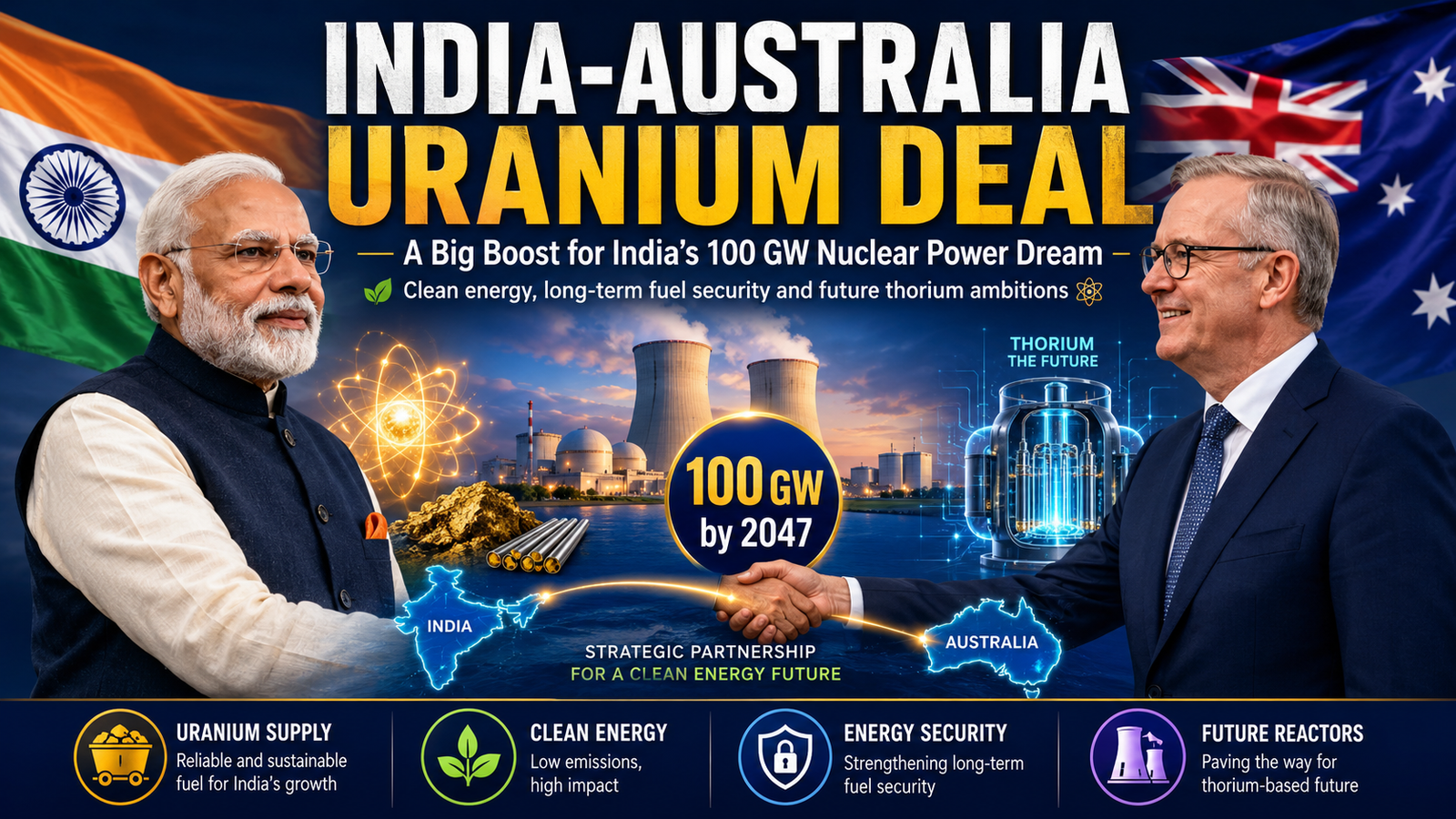
India and Australia have taken a major step in their strategic partnership by finalising a deal that allows Australian uranium exports to India for peaceful nuclear energy use. The agreement was completed during Prime Minister Narendra Modi’s visit to Australia and is being seen as a major boost for India’s clean energy and nuclear power ambitions. Reuters reported that the deal will support India’s target of reaching 100 GW of nuclear energy capacity by 2047.
This is not just another energy deal. It is a statement of trust.
India is not a signatory to the Nuclear Non-Proliferation Treaty, or NPT, but Australia’s decision to supply uranium shows that New Delhi is increasingly seen as a responsible nuclear power with a strong record of civilian nuclear safeguards and strategic reliability. AP reported that Australia had earlier held back uranium exports to India due to proliferation concerns, but the new administrative agreement helps implement the earlier civil nuclear pact.
Why Uranium Matters for India
India is one of the world’s fastest-growing major economies, and its electricity demand is rising rapidly. Solar and wind are growing, but India also needs stable, round-the-clock clean power. This is where nuclear energy becomes important.
Unlike solar and wind, nuclear power can generate electricity continuously, regardless of weather or time of day. That makes it valuable for India’s factories, cities, data centres, railways and future electric mobility ecosystem.
The Indian government has announced a nuclear mission targeting 100 GW of nuclear energy by 2047, which it says could contribute around 10% of India’s total energy needs. The government is also opening the nuclear sector to private players and focusing on Small Modular Reactors.
Why Australia Is Important
Australia has some of the world’s largest known uranium resources. For years, India wanted access to Australian uranium to support its civilian nuclear energy programme. Now, with this deal moving forward, India can diversify its nuclear fuel supply chain and reduce dependence on a limited group of suppliers.
Reuters reported that the new arrangement will ensure that Australian uranium is used only for peaceful purposes such as power generation. Australian policy also says its uranium exports are meant for exclusively peaceful purposes and are governed through safeguards agreements.
That makes the deal important not only for energy, but also for diplomacy.
India’s NPT Position and Global Trust
India has not signed the NPT because it considers the treaty discriminatory, as it formally recognizes only countries that tested nuclear weapons before January 1967 as nuclear-weapon states. AP noted that despite India’s non-NPT status, the Nuclear Suppliers Group granted India a waiver in 2008, allowing it to conduct civilian nuclear trade with participating countries.
Australia’s uranium deal strengthens that global acceptance. It shows that India is being treated not as a risk, but as a trusted partner.
This matters because nuclear trade requires deep confidence. A country does not supply uranium unless it believes the buyer will follow safeguards, separate civilian and military programmes, and use the material responsibly.
Boost for 100 GW Nuclear Target by 2047
India’s current nuclear power share is still small compared with its long-term needs. AP reported that nuclear energy contributes only around 3% of India’s electricity, even though India has doubled installed nuclear power capacity over the past decade.
To reach 100 GW by 2047, India needs fuel security, reactor construction, private investment, advanced technology and international partnerships. Australian uranium can help provide long-term fuel confidence, making it easier for India to expand nuclear capacity without worrying about supply shocks.
This is especially important as India balances three goals: economic growth, energy security and climate responsibility.
Link With India’s Thorium Future
India’s long-term nuclear vision is not limited to uranium. India has one of the world’s most ambitious thorium-based nuclear programmes. The government has highlighted that India’s nuclear expansion plan includes development of its thorium reserves, which account for about 21% of the world’s total.
Imported uranium will not directly “fuel” thorium reactors in the simple sense. But it can support India’s broader three-stage nuclear programme by strengthening the first stage of nuclear power generation, building technical capacity, and helping create the foundation for future breeder and thorium-based reactors.
A 2026 PIB factsheet said India’s three-stage nuclear programme is moving from “limited uranium resources to a future powered by thorium.”
In simple words, Australian uranium can help India today, while India prepares for a thorium-powered future tomorrow.
Strategic Importance Beyond Energy
This deal also strengthens India-Australia relations in the Indo-Pacific. Both countries are members of the Quad and share concerns about supply chain security, clean energy, maritime stability and China’s growing influence in the region.
Energy security is now national security. Countries that control fuel supply chains, critical minerals, clean energy technology and nuclear cooperation will shape the future global order.
For India, this deal supports its rise as a responsible great power. For Australia, it opens a major long-term market beyond China and deepens ties with one of the world’s fastest-growing economies.
Final Thoughts
The India-Australia uranium supply deal is a major milestone in India’s clean energy journey. It supports India’s 100 GW nuclear power target by 2047, strengthens fuel security, boosts trust between two Indo-Pacific democracies and prepares the ground for future thorium-based nuclear development.
Despite not being part of the NPT, India has earned global confidence through its responsible nuclear conduct and commitment to peaceful civilian nuclear energy.
This deal proves one thing clearly: India is no longer just an energy buyer. It is becoming a trusted strategic power in the global clean energy order.
FAQs
What is the India-Australia uranium deal?
It is an agreement that allows Australia to export uranium to India for peaceful civilian nuclear energy use.
Why is the deal important for India?
It strengthens India’s nuclear fuel supply chain and supports the country’s target of reaching 100 GW of nuclear power capacity by 2047.
Is India part of the NPT?
No. India is not a signatory to the Nuclear Non-Proliferation Treaty, but it has received international acceptance for civilian nuclear trade under safeguards.
How does this help India’s thorium reactors?
Australian uranium can support India’s current nuclear expansion and strengthen the broader ecosystem needed for future breeder and thorium-based reactors.
Disclaimer: This article is for informational and educational purposes only. It is based on official statements and credible media reports available at the time of writing. It should not be considered investment, energy policy, diplomatic or financial advice.