
















































Europe Heatwave 2026: Roads Melt, Deaths Rise and Climate Reality Hits the Continent

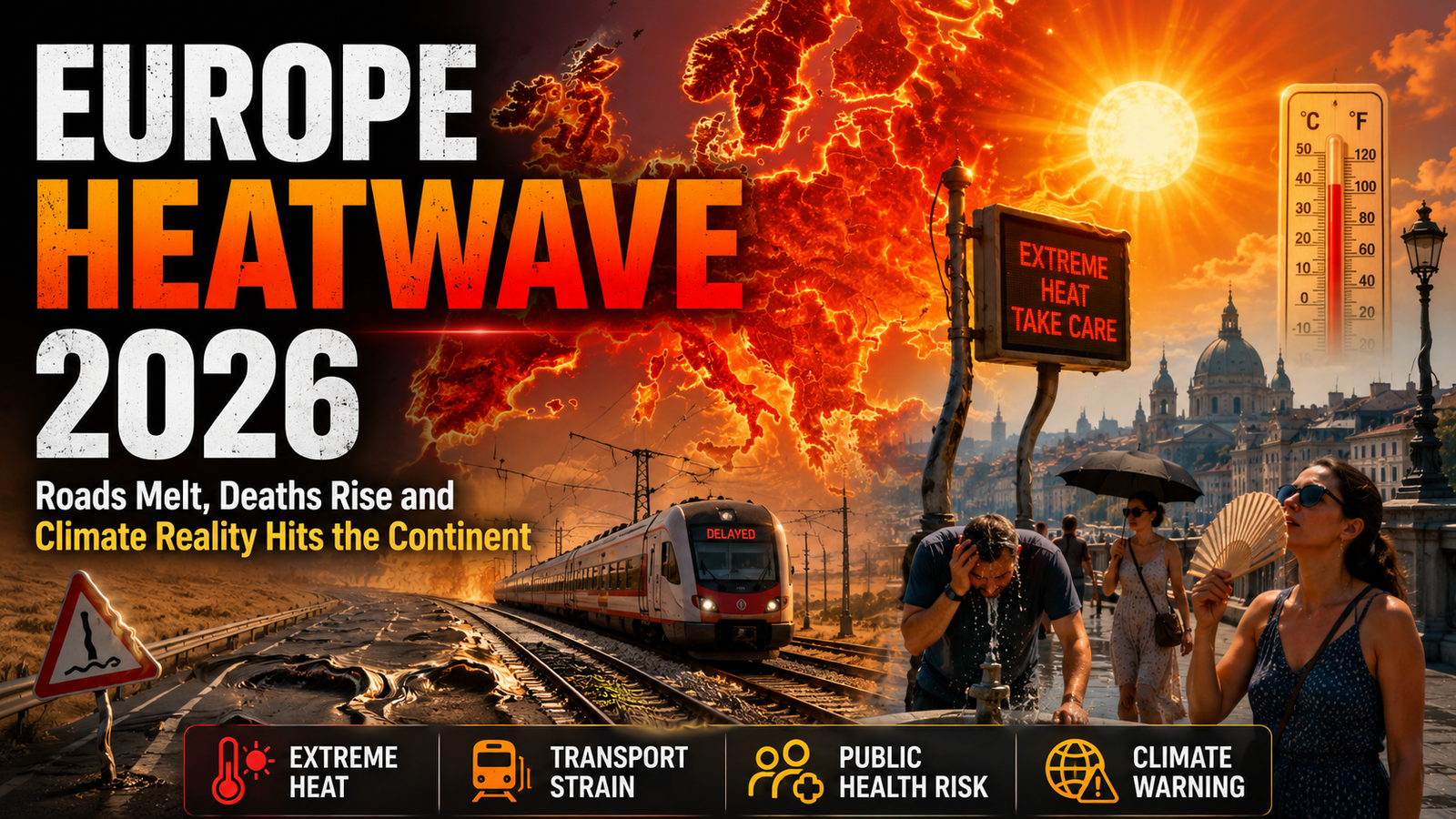
Europe is facing one of its most brutal heatwaves in recent memory. Temperatures have crossed dangerous levels across France, Spain, Italy, Germany, the UK and other parts of the continent. People are dying, roads are melting, rail tracks are buckling, schools are shutting, hospitals are under pressure and families are rushing to buy fans and air conditioners.
For years, Europe was seen as a cool-climate region where heatwaves were rare. That old idea is now collapsing.
The heat is no longer just uncomfortable. It is deadly.
People Are Dying in the Heat
France has reported around 1,000 excess deaths during the recent heatwave. Many victims were elderly people, but the danger is not limited to one age group. Children, outdoor workers, homeless people, patients and people living in poorly ventilated homes are also at risk.
Another tragic pattern has emerged: drownings. As people rush to rivers, canals, lakes and unsafe water bodies to escape the heat, deaths have increased. Many people are taking desperate risks because their homes, streets and workplaces are becoming unbearable.
This shows how extreme heat becomes a public safety crisis. It does not only raise body temperature. It breaks normal life.
Roads, Rails and Traffic Lights Are Struggling
Europe’s infrastructure was built mainly for cold and mild weather. Many buildings were designed to trap heat, not release it. Roads, rail lines, public transport systems and power grids were not prepared for repeated 40°C-plus summers.
During the current heatwave, reports and videos have shown roads softening, rail tracks buckling and even traffic signals and street infrastructure warping under extreme heat.
This is a warning sign. Climate change is not only about forests burning or glaciers melting. It is also about daily systems failing — roads, trains, hospitals, schools, offices and homes.
The Fight for Fans and Air Conditioners
In countries where air conditioning was once considered unnecessary or even culturally disliked, people are now rushing to buy ACs and cooling fans.
Shops in parts of Europe have seen panic-like demand. Portable air conditioners and fans are selling out. Some videos have shown people clashing over limited cooling appliances.
This is more than a consumer trend. It shows Europe is entering a new climate reality. Homes that were comfortable 30 years ago may now become dangerous heat traps.
But AC alone is not the solution. More air conditioning means more electricity demand. If that power comes from fossil fuels, the cycle becomes worse. Europe needs cooler homes, greener buildings, shaded cities, public cooling centres, renewable power and better heat planning.
Why Is Europe Heating So Fast?
Scientists have repeatedly warned that Europe is warming faster than the global average. Heatwaves are becoming stronger, longer and more frequent.
This is linked to human-driven climate change caused by decades of fossil fuel use, industrial emissions and land-use changes.
Europe also carries a major historical responsibility. During the industrial age, European countries were among the biggest polluters in history. For a long time, Europe’s factories, coal plants, shipping, colonial industrial systems and consumption patterns helped build wealth while emitting huge amounts of carbon into the atmosphere.
Today, Europe’s annual emissions have fallen compared with the past, and many European countries are investing in clean energy. But historical carbon does not disappear quickly. The atmosphere remembers centuries of emissions.
Mother Earth Is Not Taking Revenge — She Is Responding
Some people may say “Mother Earth is hitting back.” In a poetic sense, it feels true. But scientifically, nature is not taking revenge. Nature is responding to imbalance.
When human beings burn fossil fuels for generations, trap heat in the atmosphere and destroy ecosystems, the planet changes. Heatwaves become stronger. Droughts become harsher. Floods become more intense. Wildfires spread faster.
Europe is now experiencing the consequences of the same warming process that many developing countries have warned about for decades.
Climate change is no longer a future headline. It is now a daily-life emergency.
A Lesson for the World
The European heatwave should be a lesson for every country, including India.
No nation can escape climate risk. India faces heatwaves, floods, cyclones and water stress. Europe faces deadly heat, drought, wildfires and infrastructure failure. The climate crisis is global.
But responsibility is not equal. Rich industrialized countries that polluted the most historically must lead with stronger emissions cuts, climate finance and technology support for the Global South.
At the same time, developing countries must build smarter cities, protect water, expand renewable energy and avoid repeating the same mistakes.
What Europe Must Do Now
Europe needs urgent adaptation. Governments must redesign cities for heat, plant more trees, improve public cooling centres, upgrade hospitals, protect outdoor workers and make homes heat-resilient.
Schools, old-age homes, hospitals and public transport must have proper heat-response plans. Cities need shaded streets, water access, reflective surfaces and emergency cooling zones.
The era of treating heatwaves as temporary weather events is over.
Final Thoughts
Europe’s deadly heatwave is a warning to the world. People are dying. Roads and railways are failing. Families are fighting for cooling. Citizens are jumping into rivers and lakes just to survive the heat.
This is not normal summer weather. This is climate change becoming visible.
Europe helped build the industrial world, but that growth came with a heavy carbon cost. Now the continent is experiencing the consequences of a warming planet.
The lesson is clear: the climate crisis does not respect borders, wealth or history. The countries that polluted first are now also facing the heat.
Mother Earth is not silent anymore. The question is whether humanity will finally listen.
Disclaimer: This article is for informational and educational purposes only. Weather and casualty figures can change quickly. Readers should follow official local health and weather advisories during heatwave conditions.