

































PM Modi’s Indonesia Visit: Key MoUs, Defence Deals and Why It Matters for India

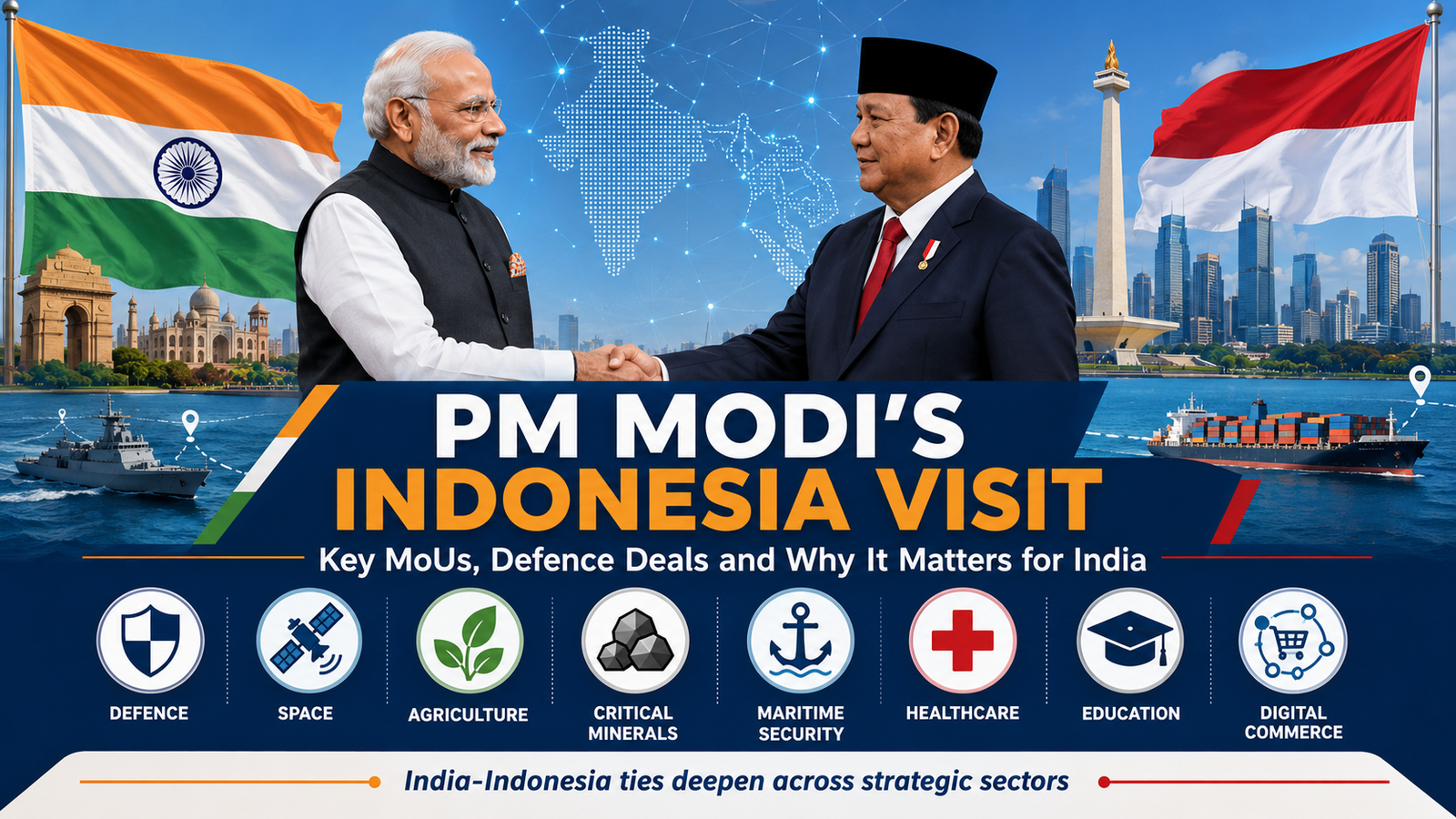
Prime Minister Narendra Modi’s state visit to Indonesia from July 6–8, 2026 has become a major diplomatic moment for India’s Act East policy and Indo-Pacific strategy. During his meeting with Indonesian President Prabowo Subianto at the Istana Merdeka Presidential Palace in Jakarta, both leaders reviewed the full India-Indonesia Comprehensive Strategic Partnership, covering trade, defence, maritime security, digital technology, healthcare, space, critical minerals, tourism, agriculture and people-to-people ties.
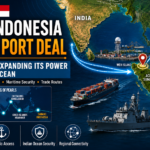
The visit is important because India and Indonesia are not just two large democracies. They are also two major maritime nations located near some of the world’s most critical sea routes. Stronger cooperation between New Delhi and Jakarta can directly influence trade security, regional stability and the future of the Indo-Pacific.
Major MoUs and Agreements Signed
According to the official outcome list, India and Indonesia exchanged 14 MoUs and agreements during PM Modi’s visit. These covered both strategic and economic sectors.
The biggest focus areas included:
Defence cooperation: India and Indonesia moved forward on cooperation related to the BrahMos Missile System and an Air-to-Air Missile Cooperation Agreement. These agreements are significant because they show India’s growing role as a defence technology partner for Southeast Asia.
Space cooperation: Both countries extended the Framework Agreement on cooperation in the exploration and peaceful use of outer space. This strengthens collaboration between India’s space ecosystem and Indonesia’s research institutions.
Critical minerals and steel supply chain: A major MoU was signed on cooperation in minerals and technology for the steel supply chain. A strategic joint venture between Steel Authority of India Limited (SAIL) and PT Krakatau Steel was also announced for setting up a stainless-steel slab manufacturing facility in Indonesia.
Rare earth magnets: India’s Non-Ferrous Materials Technology Development Centre, Midwest Ltd., and Indonesia’s PT PERMINAS signed an MoU on the development of rare earth magnets. This is important because rare earth materials are essential for electric vehicles, defence systems, electronics and clean-energy technology.
Agriculture: The two sides signed an MoU on cooperation in agriculture and allied sectors. India also announced the supply of 100 tonnes of high-quality DWR 162 wheat seeds to Indonesia.
Healthcare and pharmaceuticals: India and Indonesia signed an MoU between CDSCO and BPOM on medical products regulation, along with an implementation agreement on health workforce collaboration. This can support cooperation in medicines, healthcare professionals and regulatory standards.
Maritime security: The two countries extended cooperation on maritime safety and security. This included an implementation agreement linked to maritime cooperation, an important step for security in the Indian Ocean and Indo-Pacific region.
Disaster management, telecom and technology: Agreements were also signed in disaster management, telecommunications, research, technology and innovation, and electoral management cooperation between India’s Election Commission and Indonesia’s General Elections Commission.
BrahMos Deal: Big Boost for India’s Defence Exports
One of the most talked-about outcomes was defence cooperation. Reuters reported that the countries signed deals covering critical minerals, agriculture and defence, including the BrahMos cruise missile system, and that Indian sources had earlier estimated the BrahMos deal at around $630 million. Reuters also reported a separate agreement between Indonesia’s Republikorp and India’s Bharat Dynamics on air-to-air missiles.
This matters because India is trying to become a serious defence exporter, not just a defence importer. If India can successfully expand exports of systems like BrahMos and Astra, it will strengthen both the domestic defence industry and India’s strategic influence in Southeast Asia.
Digital Commerce and Education: India’s Soft Power Grows
The visit was not only about defence. India and Indonesia also welcomed the launch of the Indonesia Open Network (ION), based on India’s ONDC digital commerce architecture. This shows how India’s digital public infrastructure model is gaining international attention.
Another important announcement was the setting up of an Indian Institute of Management Bangalore branch campus at the Singhasari Special Economic Zone in Indonesia. This can become a strong symbol of India’s education diplomacy and help build deeper connections with ASEAN students, businesses and policymakers.
Cultural Diplomacy: Prambanan Temple and Tagore-Dewantara Year
India also announced support for the conservation and restoration of the Prambanan Temple Complex in Yogyakarta, a UNESCO World Heritage Site. This is a powerful cultural bridge because India and Indonesia share deep civilizational connections through Hindu-Buddhist heritage, trade, literature and maritime history.
To mark the centenary of Gurudev Rabindranath Tagore’s visit to Indonesia in 2027, both countries will jointly celebrate “Tagore-Dewantara Year of Cultural and Educational Diplomacy.”
PM Modi Receives Indonesia’s Highest Civilian Honour
During the visit, PM Modi was conferred the Bintang Adipurna of the Republic of Indonesia, the country’s highest civilian honour. The Prime Minister’s Office said the award was given for his leadership and contribution to strengthening India-Indonesia relations.
This recognition adds diplomatic weight to a visit already packed with strategic and economic outcomes.
Why This Visit Matters
PM Modi’s Indonesia visit shows that India’s foreign policy is becoming more practical, strategic and economy-focused. The agreements covered not just traditional diplomacy, but also future-facing sectors such as critical minerals, rare earth magnets, digital commerce, defence exports, space, healthcare and education.
For India, Indonesia is a key ASEAN partner. For Indonesia, India is a rising economic, technological and defence power. Together, both countries can play a bigger role in keeping the Indo-Pacific open, stable and balanced.
Conclusion
PM Modi’s 2026 Indonesia visit was not just a symbolic diplomatic event. It delivered concrete outcomes in defence, trade, technology, space, agriculture, education, healthcare and culture.
The biggest message is clear: India and Indonesia are building a partnership for the future — one that connects security, economy, heritage and the Global South.
FAQs
How many agreements were signed during PM Modi’s Indonesia visit?
According to the official outcome list, India and Indonesia exchanged 14 MoUs and agreements, along with several major announcements.
What were the major defence agreements?
The key defence outcomes included cooperation on the BrahMos Missile System and an Air-to-Air Missile Cooperation Agreement.
What is the importance of the IIM Bangalore campus in Indonesia?
The IIM Bangalore branch campus in Indonesia will strengthen India’s education diplomacy and expand India’s academic presence in ASEAN.
Why is Indonesia important for India?
Indonesia is a major ASEAN economy, a maritime power and a key partner in the Indo-Pacific. Stronger India-Indonesia ties help improve regional security, trade and connectivity.
Disclaimer: This article is for informational and educational purposes only. It is based on official statements and credible media reports available at the time of writing.