














































Monsoon Finally Brings Relief to Mumbai and North India: What El Niño Means for Rainfall, Agriculture and GDP

After weeks of heat, humidity and water worries, monsoon rains have finally started bringing relief to Mumbai and parts of North India. The arrival of showers has cooled temperatures, lifted public mood and raised hopes for farmers waiting to begin the crucial kharif sowing season.
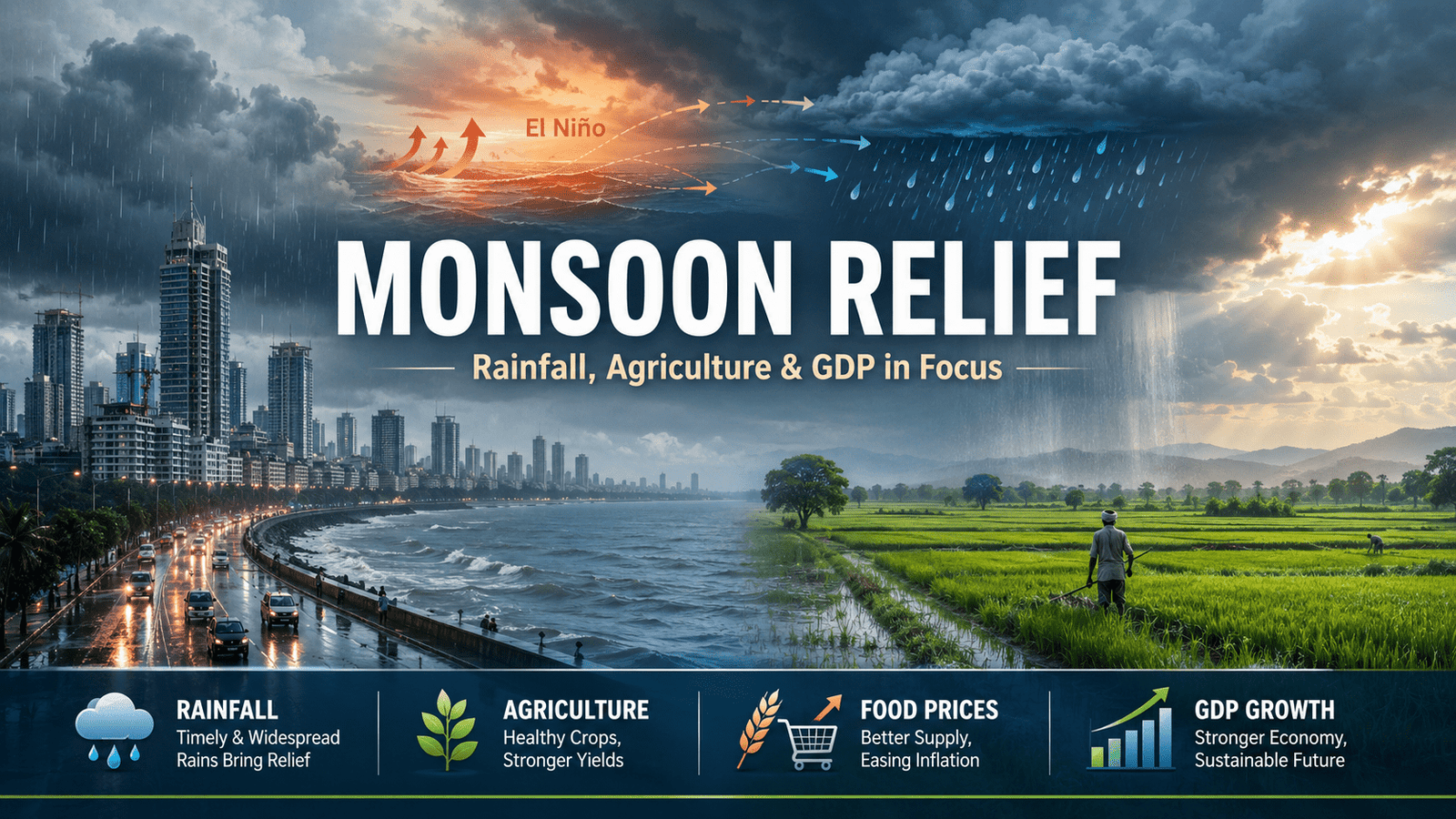
But this year’s monsoon story is not simple. The rain has brought relief, but the season is still under the shadow of El Niño, a climate pattern that often weakens India’s southwest monsoon.
For India, monsoon is not just weather. It is agriculture, food prices, rural income, water security and GDP growth.
Mumbai Finally Gets Rain Relief
Mumbai has been waiting anxiously for the monsoon. The city saw repeated rainy mornings, especially in south Mumbai, after a delayed start to the season. The rains have brought much-needed relief after reservoir levels came under pressure and water restrictions were imposed in some sectors.
For Mumbaikars, even moderate rainfall feels like a psychological relief. The city depends heavily on monsoon rains to refill lakes and reservoirs that supply drinking water. A delayed monsoon can quickly create concern for households, industries, construction activity and local services.
However, while rains have begun, the official monsoon onset depends on IMD confirmation. Conditions have become favourable for the southwest monsoon to advance into Mumbai and other parts of Maharashtra.
North India Gets a Break From Heat
North India has also seen a major weather shift. Delhi-NCR and nearby areas experienced dust storms, strong winds and rainfall after days of uncomfortable heat. For people living through high temperatures, even short spells of rain can bring major relief.
But the rain has come with thunderstorms and warnings. This means people must remain cautious about lightning, strong winds, waterlogging and travel disruption.
The bigger picture is that the monsoon is slowly reviving after a weak and delayed phase. Its movement into central and western India is important because it can support crop sowing and reduce heat stress.
El Niño: The Biggest Risk This Year
The main concern this year is El Niño.
El Niño happens when parts of the Pacific Ocean become warmer than normal. This can disturb global weather patterns and often reduces monsoon rainfall over India.
India’s weather office has already indicated that the 2026 monsoon may be below normal. The season’s rainfall is expected to be around 90% of the long-period average, making it one of the weaker monsoon forecasts in recent years.
That does not mean every region will face drought. Some areas may still receive heavy rainfall, floods or storms. But overall, the country may see uneven and patchy rainfall.
This is the real danger: not just less rain, but badly distributed rain.
How Will Rainfall Be This Year?
This year’s rainfall is expected to remain below normal at the national level. June has already started weak, with rainfall significantly below average in the early part of the season.
If rainfall improves in July and August, agriculture may recover. But if the weakness continues, rain-fed regions could face stress.
The most important period for farmers is June to September. This is when crops like rice, corn, cotton, soybeans, sugarcane and pulses are planted. A delayed or weak monsoon can reduce sowing, lower yields and hurt rural income.
The government has already started contingency planning for vulnerable districts, especially areas with low irrigation coverage. Farmers in rain-dependent regions may be encouraged to shift to shorter-duration or less water-intensive crops such as millets, pulses and oilseeds.
Impact on Agriculture
Agriculture is the first sector affected by a weak monsoon. Nearly half of India’s farmland still depends heavily on rainfall. When rains are delayed or uneven, farmers may postpone sowing or use more groundwater.
A weak monsoon can affect:
- rice production
- pulses and oilseeds
- cotton and soybean sowing
- sugarcane water demand
- rural wages
- food prices
- livestock and fodder availability
If rains improve soon, the damage may be limited. But if July and August also remain weak, crop yields could fall in rain-fed regions.
Impact on Food Prices
A weak monsoon can increase food inflation. If crop output falls, prices of vegetables, pulses, edible oils and grains may rise.
Food inflation affects everyone, but it hits lower-income families the hardest. It also creates pressure on the Reserve Bank of India because high food prices can delay interest rate cuts.
This is why monsoon performance is closely watched not only by farmers but also by economists, investors and policymakers.
Impact on India’s GDP
India’s GDP may still remain strong compared to many other economies, but a weak monsoon can create pressure in three ways.
First, it can reduce agricultural output. Second, it can weaken rural demand because farmers and rural workers earn less. Third, it can raise inflation, which affects consumption and borrowing costs.
Rural India is a major consumer market for motorcycles, tractors, FMCG products, mobile phones, cement, fertilizers and consumer goods. If monsoon rains disappoint, rural spending may slow down.
However, India also has some buffers. The country has foodgrain reserves, growing irrigation coverage, crop insurance systems, better weather forecasting and government contingency planning. These can reduce the damage, but they cannot fully replace a healthy monsoon.
Why This Monsoon Matters for India’s Economy
The monsoon is still one of India’s biggest economic events every year. Good rainfall supports agriculture, lowers food inflation, improves rural demand and helps water reservoirs. Weak rainfall can do the opposite.
This year is especially important because India is already dealing with global uncertainty, oil price volatility, AI-driven market shifts, geopolitical tensions and inflation concerns.
A strong recovery in rainfall could support India’s growth story. A weak monsoon could become a drag on agriculture, rural demand and inflation control.
Final Thoughts
The arrival of monsoon rains in Mumbai and parts of North India is a major relief. It has cooled temperatures, brought hope to farmers and reduced immediate heat stress.
But India cannot relax yet.
El Niño remains a serious risk. The monsoon may still remain below normal, and the real test will come in July and August when sowing activity peaks across the country.
For India, monsoon is not just rain falling from the sky. It is food security, farmer income, inflation control and economic confidence.
If rainfall improves in the coming weeks, India can manage the season well. But if El Niño weakens the monsoon further, agriculture and rural demand may face pressure.
The message is clear: the rains have arrived, but India must stay prepared.
Disclaimer: This article is for informational and educational purposes only. Weather forecasts can change quickly. Readers should follow official IMD alerts and local government advisories for real-time updates.