














































Natural Birth vs C-Section: Are C-Section Babies More Prone to Allergies and Weak Immunity?

A baby’s birth is one of the most emotional moments in a family’s life. But today, many parents are asking an important question: does the way a baby is born affect immunity, allergies and long-term health?
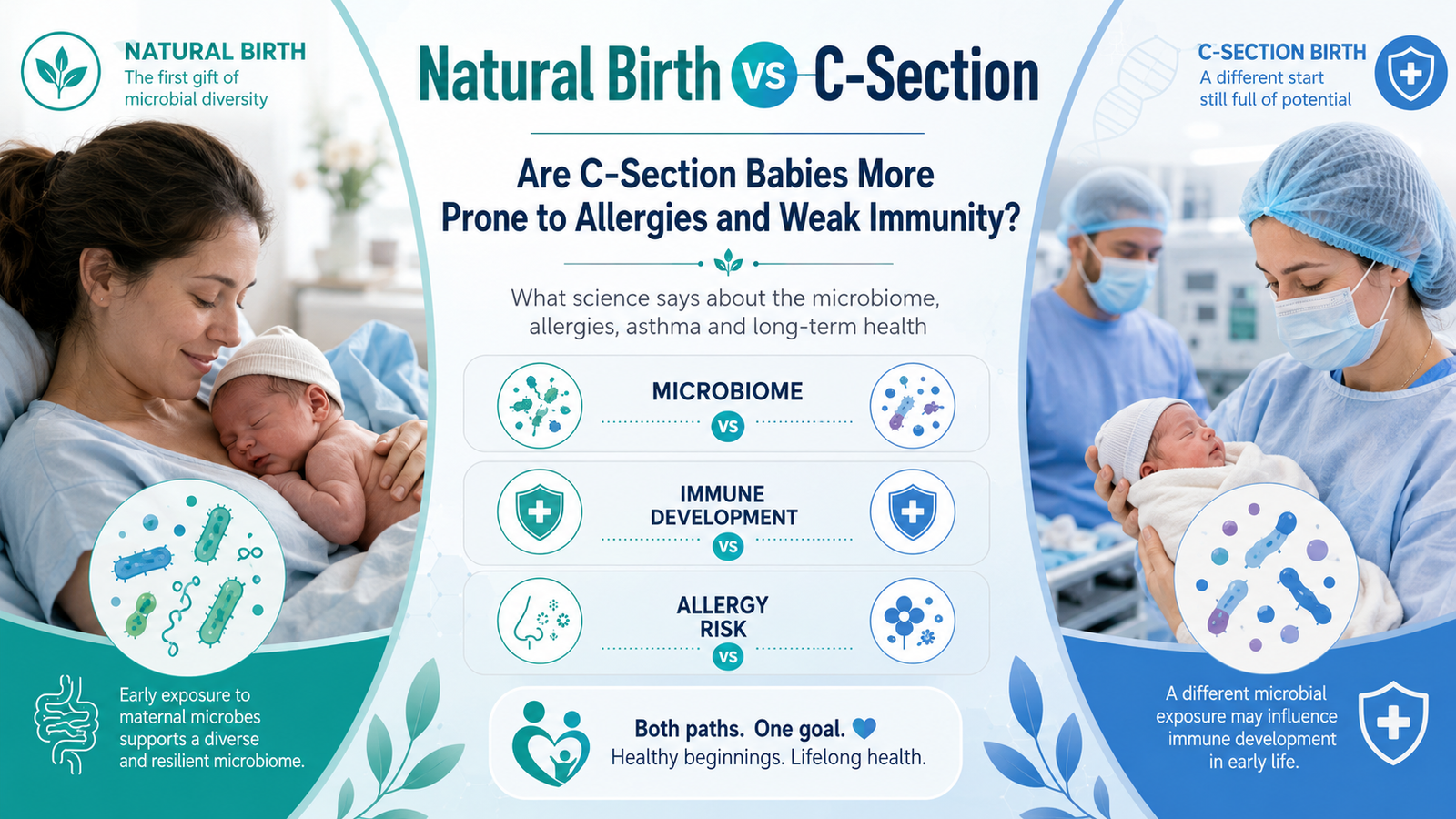
The answer is not black and white. A C-section can be life-saving when there is a medical emergency. But when it is done without medical need, research suggests it may affect a baby’s early microbiome — the healthy bacteria that help train the immune system.
Why Natural Birth May Help a Baby’s Microbiome
During vaginal birth, a baby passes through the birth canal and is exposed to the mother’s natural bacteria. These early microbes help build the baby’s gut microbiome, which plays an important role in digestion, immunity and immune-system development.
Babies born by C-section usually miss some of this early exposure. Studies show that C-section babies often develop a different gut microbiome compared with babies born vaginally. Researchers believe this difference may partly explain why C-section birth has been associated with a higher risk of some immune-related conditions.
Are C-Section Babies More Likely to Have Allergies?
Some research suggests yes — but the word “associated” is important. It does not mean every C-section baby will develop allergies or weak immunity.
A 2024 systematic review that included 113 studies found that children born by C-section had higher risks of several allergic conditions. The review reported about 35% higher risk of food allergies, 20% higher risk of asthma, 19% higher risk of allergic sensitization, and 15% higher risk of allergic rhinitis or conjunctivitis compared with vaginal delivery.
This does not prove that C-section alone causes allergies. Many other factors matter too, including genetics, breastfeeding, antibiotic exposure, pollution, diet, family history and overall lifestyle.
What About Breathing Problems After Birth?
C-section babies may also have a slightly higher chance of short-term breathing issues after delivery. Mayo Clinic notes that babies born by C-section are more likely to develop transient tachypnea, a condition where the baby breathes too fast for a few days after birth.
This is usually temporary, but it is another reason why C-sections should be done when medically needed — not just for convenience.
Does This Mean C-Section Is Bad?
No. This is where public awareness must be balanced.
A medically necessary C-section can save both mother and baby. It may be needed in cases such as fetal distress, placenta complications, abnormal baby position, obstructed labour, previous uterine surgery or serious maternal health risks.
The World Health Organization says C-sections should be performed based on medical need, not simply to meet a target rate. WHO also warns that unnecessary C-sections can expose mothers and babies to avoidable risks.
So the issue is not “natural birth good, C-section bad.” The real issue is unnecessary surgery.
Can Parents Support a C-Section Baby’s Immunity?
Yes. Parents should not panic. A baby’s health is shaped by many things after birth too.
Breastfeeding, skin-to-skin contact, timely vaccination, good nutrition, limited unnecessary antibiotics, clean surroundings and regular pediatric checkups can all support a baby’s immune development. Some experts discuss “vaginal seeding,” but Cleveland Clinic notes that healthcare providers generally do not recommend it because it may carry infection risks.
The safest step is always to follow your doctor’s advice.
What Should Expecting Parents Ask?
Before agreeing to a planned C-section, parents can ask the doctor:
Is this C-section medically necessary?
Is it urgent or elective?
Can labour be safely attempted?
What are the risks of waiting?
What are the risks of surgery?
How will breastfeeding and skin-to-skin contact be supported after delivery?
These questions are not disrespectful. They are part of informed consent.
Final Thoughts
Natural birth may give babies early exposure to helpful microbes that support immune development. C-section birth, especially when not medically necessary, has been linked in research to higher risks of allergies, asthma and some immune-related conditions.
But C-sections are not the enemy. Unnecessary C-sections are the real concern.
Parents deserve honest information, not fear. Doctors deserve trust when surgery is needed. And hospitals must ensure that childbirth decisions are based on health — not convenience, scheduling or profit.
FAQs
Are C-section babies weaker?
Not necessarily. Many C-section babies grow up completely healthy. However, research shows C-section birth may be linked with differences in gut bacteria and a higher risk of some allergic conditions.
Is natural birth better for immunity?
Natural birth may support early microbiome development because the baby is exposed to maternal bacteria during delivery. But immunity also depends on breastfeeding, vaccines, nutrition, environment and genetics.
Should parents avoid C-section?
No. Parents should avoid unnecessary C-sections, not medically required ones. When a C-section is needed, it can be life-saving.
Can breastfeeding help C-section babies?
Yes. Breastfeeding can support gut health, immunity and bonding. Skin-to-skin contact after birth may also help early microbial exposure and emotional connection.
Disclaimer: This article is for general awareness only and should not be taken as medical advice. Always consult a qualified doctor for pregnancy and delivery decisions.