





































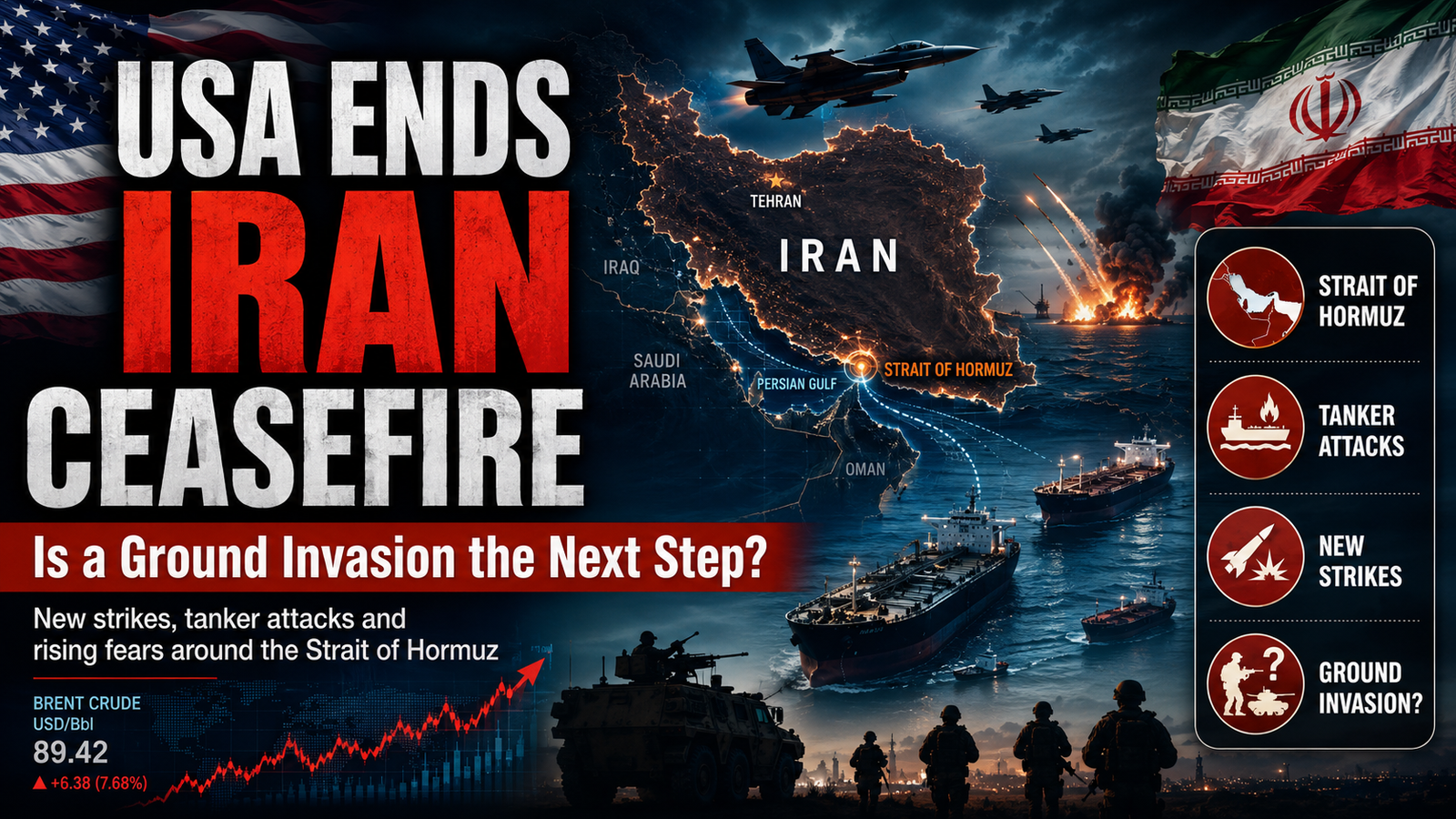
USA Ends Iran Ceasefire: Is a Ground Invasion the Next Step?

The fragile U.S.-Iran ceasefire has officially collapsed, proving once again how unstable the Middle East conflict has become. On July 8, 2026, U.S. President Donald Trump said the interim memorandum of understanding with Iran was “over,” after renewed attacks on commercial vessels near the Strait of Hormuz and another round of U.S. military strikes on Iranian targets.
The ceasefire was meant to create a 60-day window for negotiations toward a long-term agreement. But indirect talks in Qatar failed to make progress, and the situation quickly returned to military escalation.
In simple words, the ceasefire did not even survive one month.
Why the Ceasefire Failed
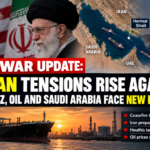
The biggest trigger was the renewed violence around the Strait of Hormuz, one of the world’s most important oil and gas routes. U.S. Central Command said American forces struck more than 80 targets in Iran on July 7, including air defence systems, command-and-control networks, radar sites, anti-ship missile capabilities and more than 60 IRGC small boats.
CENTCOM said the strikes were a response to Iranian attacks on commercial vessels passing through the Strait of Hormuz. Earlier, the U.S. military also accused Iran of violating the ceasefire after attacks on ships including the M/V Ever Lovely and M/T Kiku.
This is why the conflict is so dangerous. The Strait of Hormuz is not just a regional waterway. AP reported that about one-fifth of the world’s traded oil and natural gas passed through the strait before the war. Any disruption here can immediately affect global oil prices, inflation and energy security.
What Did the U.S. Strike?
According to Reuters, the latest U.S. strikes targeted Iran’s military systems connected to maritime threats. These included air defence systems, coastal radar, command networks, anti-ship missile capabilities and IRGC boats operating near the strait.
The message from Washington is clear: the U.S. wants to degrade Iran’s ability to threaten shipping and international commerce in the region.
But Iran has called the strikes an act of aggression and warned of a “crushing response.” AP also reported that Iran’s military warned regional countries that supporting the U.S. could make them a “legitimate target.”
This means the conflict may not remain limited to only the U.S. and Iran. Gulf countries hosting American bases could also face increased risk.
Is the U.S. Planning a Ground Invasion of Iran?
This is the most important question.
As of now, there is no confirmed public evidence that the U.S. has made a final decision to launch a full-scale ground invasion of Iran. However, the risk of limited ground operations cannot be ignored.
Reuters reported earlier in the war that U.S. sources did not believe a deployment of ground forces inside Iran was imminent, while a White House official said there had been “no decision” to send ground troops at that time, but that Trump was keeping all options available.
At the same time, U.S. lawmakers have openly raised concerns. Senator Richard Blumenthal warned after a classified briefing that the U.S. seemed to be on a path toward putting American troops on the ground in Iran. Reuters also noted that Trump had not ruled out sending U.S. ground troops.
So the balanced answer is this: a full ground invasion is not confirmed, but escalation is real. Limited operations, special forces raids, seizure of strategic islands, or attacks on Iran’s oil infrastructure remain possible if the war expands.
Why a Ground Invasion Would Be Extremely Risky
Iran is not a small battlefield. It is a large country with difficult terrain, strong missile capabilities, armed networks, drones, naval assets and influence across the region.
A ground invasion would risk heavy casualties, regional retaliation, attacks on U.S. bases, disruption of oil markets and a wider Middle East war. It could also pull in allies, proxies and neighbouring countries.
That is why the U.S. may prefer airstrikes, naval pressure, sanctions and limited military operations instead of a large Iraq-style invasion.
But wars do not always follow political plans. One major attack on a U.S. base, oil tanker, embassy or regional ally could rapidly change the calculation.
Global Impact: Oil, Inflation and Markets
The collapse of the ceasefire matters for the whole world. If the Strait of Hormuz becomes unsafe again, oil prices can rise sharply. Higher oil prices increase transport costs, food prices, aviation costs and inflation across the global economy.
For countries like India, China, Japan and European economies, instability in the Gulf can directly affect energy imports. This is why every escalation between the U.S. and Iran becomes a global economic issue, not just a military headline.
Final Thoughts
The U.S.-Iran ceasefire has collapsed in less than 30 days, and the Middle East is once again moving toward dangerous escalation. The U.S. has resumed major strikes, Iran is threatening retaliation, and the Strait of Hormuz remains the biggest flashpoint.
A full ground invasion is not officially confirmed. But the possibility of limited ground operations, special forces action or attacks on strategic Iranian assets cannot be ruled out if the conflict keeps expanding.
The world should watch this crisis closely because one wrong move could turn a broken ceasefire into a much larger war.
FAQs
Did the U.S. officially end the Iran ceasefire?
Yes. President Donald Trump said on July 8, 2026, that the interim understanding with Iran was “over,” following renewed attacks and U.S. strikes.
Did the ceasefire last 30 days?
No. The interim ceasefire was meant to create a 60-day negotiation window, but it collapsed before completing even 30 days.
Is America invading Iran with ground troops?
There is no confirmed public evidence of a full ground invasion decision. However, U.S. officials have not ruled out all options, and lawmakers have expressed concern about possible ground operations.
Why is the Strait of Hormuz important?
The Strait of Hormuz is one of the world’s most important energy routes. Disruption there can push oil prices higher and affect global inflation.
Disclaimer: This article is for informational and educational purposes only. It is based on official statements and credible media reports available at the time of writing. It should not be treated as military, political, financial or investment advice.