





































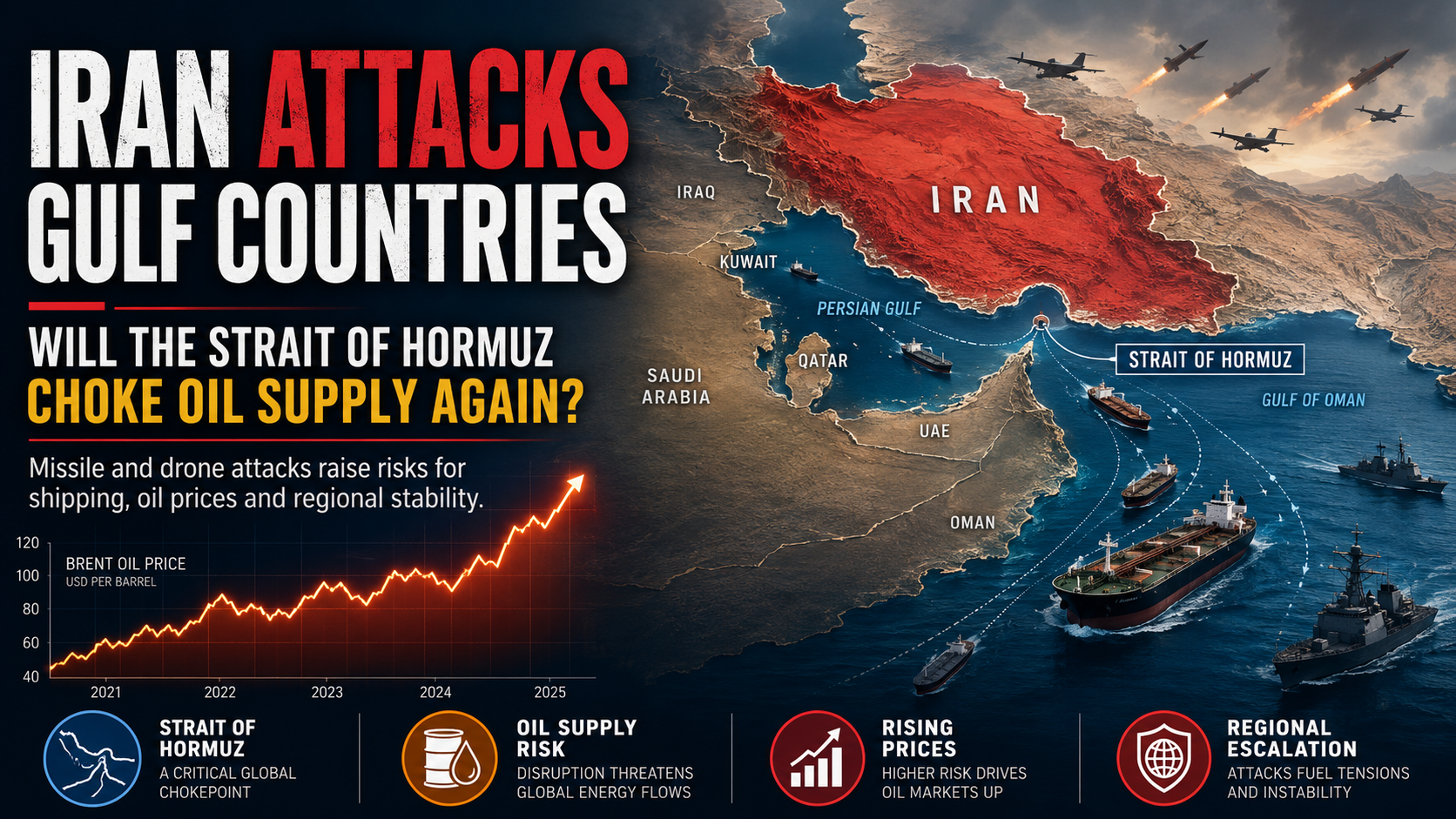
Iran Attacks Gulf Countries: Will the Strait of Hormuz Choke Oil Supply Again?

The U.S.-Israel-Iran conflict has entered a dangerous new phase after Iran launched missile and drone attacks on multiple countries in and around the Gulf region.
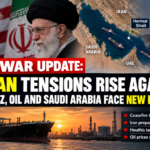
According to AP, Iran responded to fresh U.S. strikes by attacking Bahrain, Kuwait, Qatar, Jordan and Oman, all connected to U.S. military presence or regional logistics. The attacks came after the U.S. hit Iran following an Iranian strike on a container ship in the Strait of Hormuz.
This is no longer a limited exchange between Washington and Tehran. The conflict is now spreading across the Gulf, raising serious concerns about oil supply, shipping security and the risk of wider war.
Why These Attacks Matter
The latest escalation is important because Gulf countries are not just regional players. They are central to global energy, trade and U.S. military operations.
AP reported missile alerts in several Gulf states. Qatar said it intercepted incoming Iranian fire, with three people wounded by shrapnel. Kuwait reported damage to border posts and an offshore drilling platform. Oman said drones struck sites near the waterway and summoned the Iranian ambassador in protest.
This shows how quickly the conflict can move from military targets to civilian risk, energy infrastructure and shipping routes.
Strait of Hormuz: Can Iran Choke the World’s Oil Route?
The biggest fear is the Strait of Hormuz.
This narrow waterway is one of the most important energy chokepoints in the world. AP reported that about one-fifth of all traded oil and natural gas passed through the Strait before the war.
Iran has claimed the strait is closed until calm is restored. But the U.S. has rejected that claim. AP reported that the U.S. military said more than 140 ships had transited the area over the past week, although traffic was continuing at reduced levels.
So the answer is: Hormuz is not fully closed yet, but it is under serious pressure.
Even partial disruption can affect global shipping, insurance rates, tanker movement, fuel prices and inflation.
Will Oil Prices Rise?
Oil prices have already reacted.
Reuters reported that oil prices jumped more than 3% after the U.S. and Iran launched strikes. Brent crude rose to $78.68 per barrel, while U.S. WTI crude rose to $73.89 per barrel as markets feared disruption to energy shipments through the Strait of Hormuz.
If Hormuz remains open, prices may stay volatile but manageable. If tankers stop moving safely, oil prices could rise sharply again.
For countries like India, China, Japan and European economies, this matters directly. Higher oil prices increase transport costs, food prices, airline fuel costs, manufacturing expenses and inflation.
Why Saudi Arabia Is Watching Closely
Reuters reported that Saudi Arabia is considering expanding crude pipeline capacity to its western Red Sea coast, allowing more oil to move without crossing the Strait of Hormuz.
This is a major signal. Gulf countries know that dependence on Hormuz is a strategic weakness. If the waterway becomes unsafe, alternative pipeline routes become more important.
But pipelines cannot replace the full volume of Gulf shipping overnight. That is why the Strait remains the key pressure point.
Is the U.S. Considering a Ground Invasion?
There is no confirmed public evidence that the U.S. has ordered a full-scale ground invasion of Iran.
However, the possibility of limited ground-related operations has been discussed before. Reuters reported in March that the Trump administration was considering deploying thousands of U.S. troops to reinforce West Asia operations, with options including securing safe passage through the Strait of Hormuz and possibly deploying troops near Iran’s shoreline.
At the same time, U.S. officials have also tried to downplay the need for ground troops. Reuters reported that Secretary of State Marco Rubio said Washington could achieve its objectives without ground troops, though some forces were being deployed to give the president “maximum optionality.”
So the realistic answer is: a full Iraq-style invasion is unlikely unless the war escalates dramatically, but limited operations, special forces activity, shoreline security actions or seizure of strategic assets cannot be ruled out.
What Could Happen Next?
There are three possible scenarios.
First, diplomacy may return. Trump has signaled that talks could still resume even after declaring the ceasefire over, according to Reuters.
Second, the conflict could remain limited to airstrikes, drone attacks, missile launches and naval pressure.
Third, a major tanker attack, U.S. casualty event or strike on Gulf energy infrastructure could trigger a much bigger military response.
That third scenario is what global markets fear most.
Final Thoughts
Iran’s attacks on Gulf-region countries have made the West Asia crisis far more dangerous. The Strait of Hormuz is not fully choked yet, but it is under serious threat. Oil prices have already risen, and any prolonged disruption could push inflation higher across the world.
The U.S. is not publicly committed to a ground invasion, but military options are clearly being kept open.
For now, the world is watching three things: shipping through Hormuz, oil price movement and whether Washington and Tehran return to talks before one more strike turns this crisis into a wider regional war.
FAQs
Which countries did Iran attack recently?
Reports say Iran attacked targets in Bahrain, Kuwait, Qatar, Jordan and Oman after fresh U.S. strikes on Iran.
Is the Strait of Hormuz closed?
Iran claims it is closed, but the U.S. says the strait remains open, though traffic is reduced and risk remains high.
Will oil prices rise because of the Iran conflict?
Oil prices have already risen more than 3%. A full or prolonged disruption of Hormuz could push prices much higher.
Is the U.S. planning a ground invasion of Iran?
There is no confirmed full-scale ground invasion order. However, limited ground-related options have been discussed in connection with securing the Strait of Hormuz.
Disclaimer: This article is for informational and educational purposes only. It is based on official statements and credible media reports available at the time of writing. It should not be treated as military, political, financial or investment advice.