


































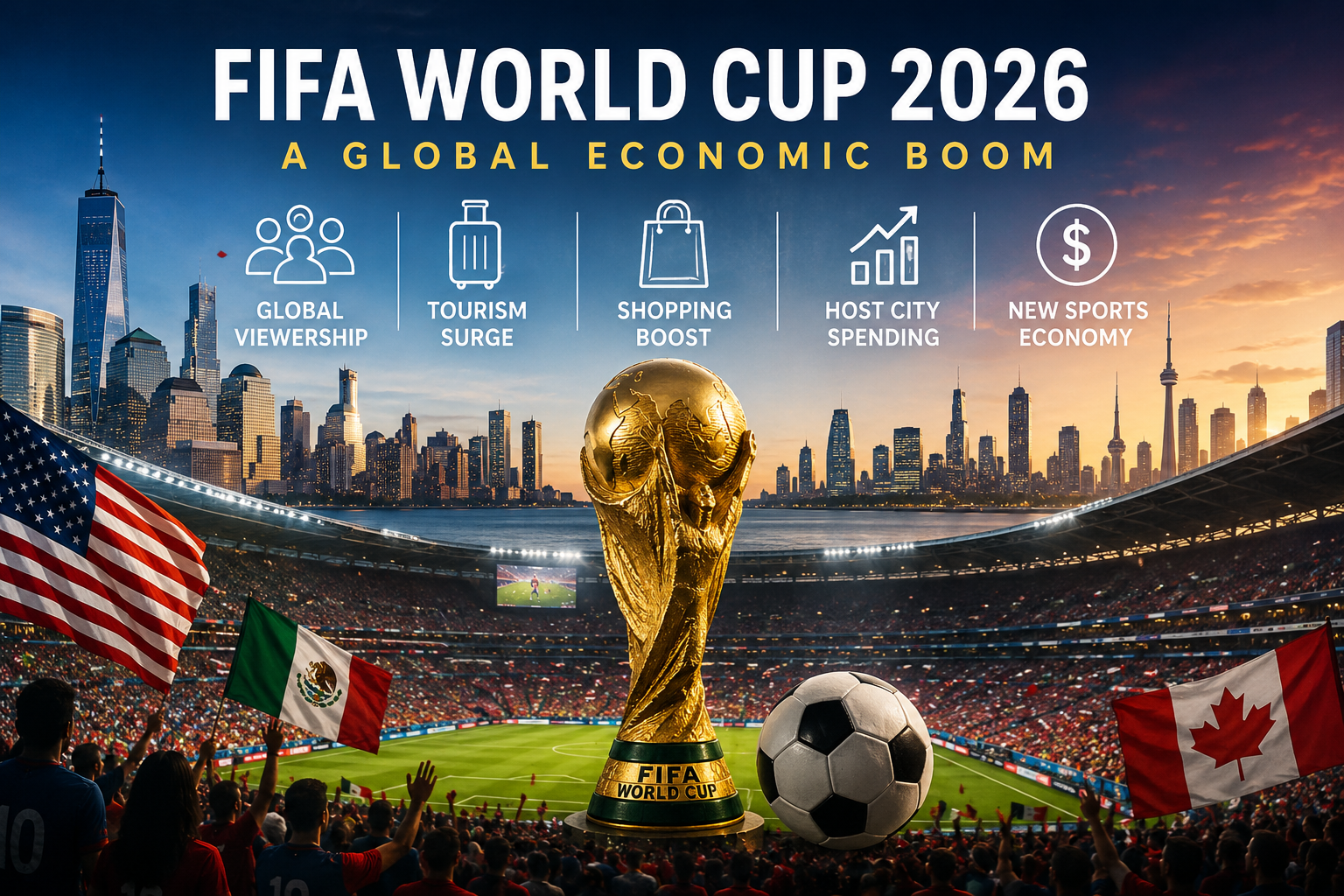
FIFA World Cup 2026: Why the Biggest Football Tournament Is Becoming a Global Economic Boom

The FIFA World Cup 2026 has become one of the biggest global events of the year. Hosted across the United States, Canada and Mexico, this edition is historic because it is the first World Cup with 48 teams, making it the largest tournament in FIFA history.
But the real story is bigger than football.
From packed stadiums to record TV viewership, tourism spending, shopping trends and social media engagement, World Cup 2026 is turning into a global economic and cultural movement.
Record Crowds and Global Fan Energy
Football has always been the world’s most popular sport, but this World Cup is showing how strongly the game is growing in North America.
FIFA reported that the group stage set new benchmarks, including a record 527,402 fans attending matches on June 24, while Mexico City’s FIFA Fan Festival saw 201,500 visitors in one day.
The Guardian reported that the tournament has created a wave of enthusiasm in the United States, with stadium occupancy near full capacity and average attendance above 64,000 fans per match.
This is exactly why the World Cup is so powerful. It brings people from different countries, languages and cultures into one shared global moment.
TV and Streaming Records Are Being Broken
World Cup 2026 is also changing the sports media business.
NBCUniversal said FIFA World Cup 2026 pushed Telemundo and Peacock to record viewership. Mexico vs England became the most-watched soccer match ever in Spanish-language media history by total audience.
The Financial Times reported that more than 50 million Americans watched the United States lose to Belgium, making it the most-watched football match in U.S. history. The report also said future U.S. World Cup TV rights could attract bids worth $1.5 billion to $2 billion per tournament.
This shows how football is moving from a “global sport” to a massive media economy in the American market.
Tourism and Shopping Are Exploding
World Cup tourists are not only buying tickets. They are spending money on hotels, restaurants, transport, malls, merchandise and local experiences.
Forbes reported that card-based purchases in the 16 host cities increased 6.3% year-over-year, driven by a 16.7% rise in spending from non-local visitors.
Business Insider also reported a surprising trend: World Cup tourists are filling suitcases with American products from Target, Walmart and outlet malls, turning the tournament into a shopping tourism boom.
This means the World Cup is benefiting more than stadiums. Retail stores, restaurants, hotels, airlines, ride-share companies and local businesses are all getting a share of the global fan economy.
But Who Really Profits?
The World Cup creates excitement, but the economic story is not always simple.
North Carolina State University noted that World Cup economic impact claims can sometimes be overstated because FIFA captures major revenue from media rights, sponsorships and ticketing, while host cities often carry large public costs.
This is important. A tournament can bring tourism and visibility, but cities must manage security, transport, infrastructure and public spending carefully.
So, the real question is not whether the World Cup creates money. It clearly does. The question is how much of that money stays with local communities.
Why This Topic Is Trending Worldwide
FIFA World Cup 2026 is trending because it connects multiple high-interest topics:
Football
Global tourism
Economy
Streaming wars
Celebrity culture
National pride
Social media
Local business growth
That makes it one of the best content topics for worldwide engagement. Even people who do not follow football closely are interested in the travel, economy, culture and entertainment around the tournament.
Final Thoughts
FIFA World Cup 2026 is proving that football is more than a sport. It is a global business engine, a tourism magnet, a media powerhouse and a cultural celebration.
The tournament is bringing record crowds, rising viewership, international tourism and major consumer spending across North America. At the same time, it raises an important question: how can host cities turn short-term excitement into long-term economic benefit?
One thing is clear — the world is watching, and World Cup 2026 has become one of the biggest global stories of the year.
FAQs
Why is FIFA World Cup 2026 historic?
It is the first FIFA World Cup with 48 teams and is being hosted across the United States, Canada and Mexico.
Is World Cup 2026 helping the economy?
Yes, host cities are seeing increased tourism, spending, shopping and media attention, although the long-term economic benefit depends on local planning and cost management.
Why is the World Cup trending globally?
It combines football, tourism, national pride, entertainment, social media and global business in one mega-event.
Who benefits from the World Cup?
FIFA, broadcasters, sponsors, hotels, restaurants, retailers, airlines, tourism businesses and host cities can benefit, but public costs must also be considered.
Disclaimer: This article is for informational and educational purposes only. It is based on publicly available reports and official updates available at the time of writing. It should not be considered financial, investment or business advice.