






































Riyadh Attack Explained: Houthis Claim Missile and Drone Strikes on Saudi Capital

Riyadh Attack Explained: What Happened Near Saudi Arabia’s Capital?
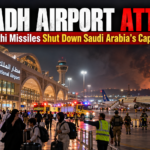
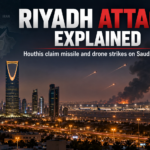
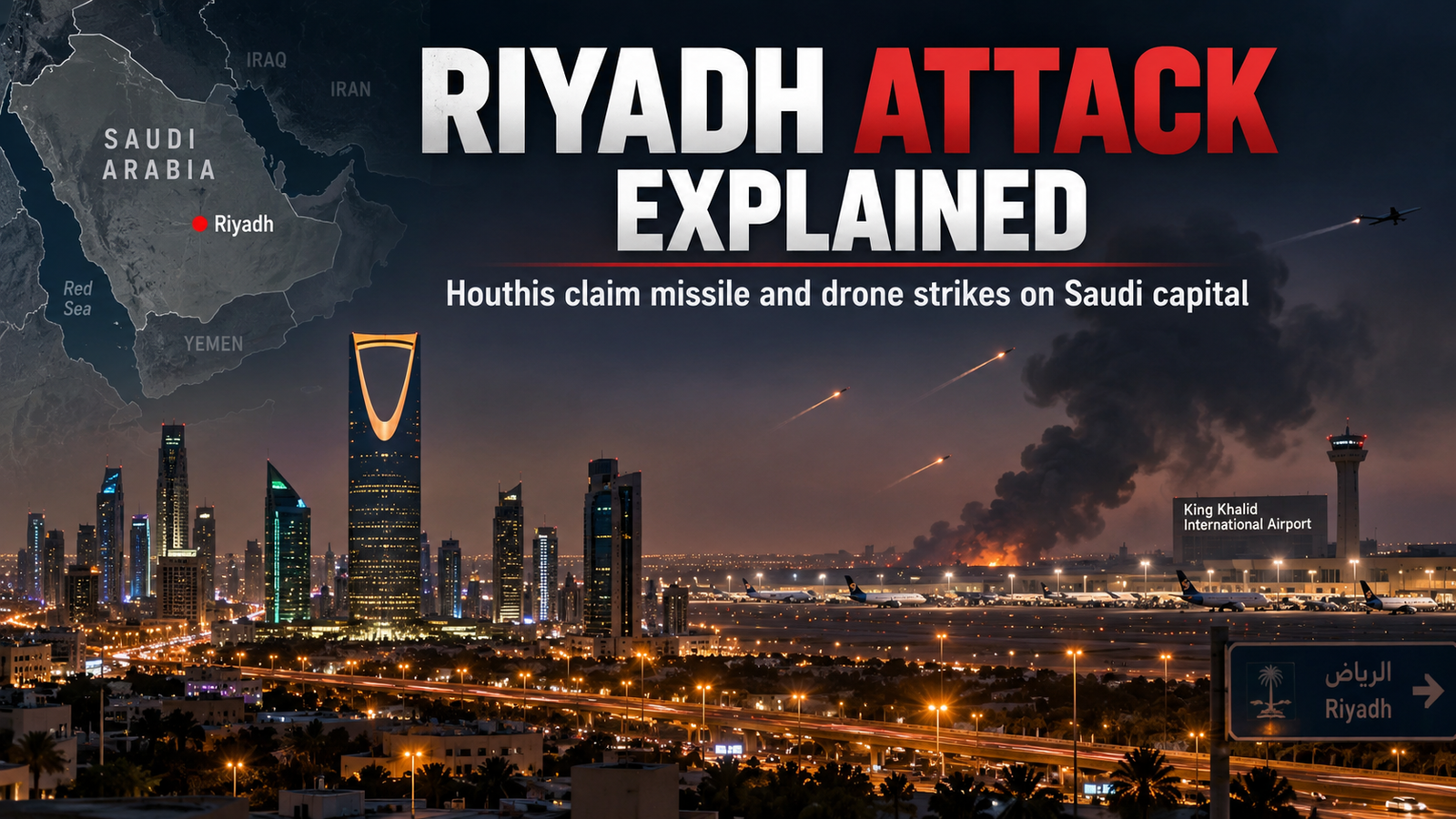
Saudi Arabia faced a serious security alert on September 19 after explosions were heard in Riyadh and thick black smoke appeared near King Khalid International Airport.
Yemen’s Houthi movement later claimed that it had attacked “sensitive” locations in the Saudi capital using missiles and drones. Saudi authorities said their air defences intercepted and destroyed a ballistic missile fired towards Riyadh.
The incident represents the most direct reported Houthi threat against the Saudi capital since the latest conflict began escalating in July. However, several important details—including the precise cause of the fire near the airport—remain unconfirmed.
What Happened in Riyadh?
Saudi civil defence authorities sent emergency alerts to mobile phones during the night, warning residents of a potential aerial threat around Riyadh and the nearby city of Al-Kharj.
Explosions were heard in parts of the capital before authorities issued an all-clear on Saturday morning. Videos and photographs showed a large column of smoke rising near King Khalid International Airport, with flames visible behind what appeared to be fuel-storage tanks.
The Saudi-led military coalition subsequently announced that its air-defence systems had destroyed a Houthi ballistic missile heading towards Riyadh.
According to Reuters’ report on the Riyadh attack, the coalition also claimed to have prevented attacks against civilians and infrastructure in Taif, Yanbu, Bish and the Farasan Islands.
No deaths were reported from the Riyadh incident in the initial official accounts. The full extent of any physical damage has not been independently established.
Was Riyadh Successfully Bombed?
Some reports have described the incident as a bombing, but the available information requires a more careful explanation.
Saudi Arabia confirmed that it intercepted a ballistic missile heading towards Riyadh. The Houthis claimed attacks using both missiles and drones, but they did not identify the exact locations targeted inside the capital.
A fire was visible near the airport, although Saudi authorities had not publicly confirmed whether it was caused by a missile, drone, falling debris or a separate incident at the time of reporting.
Therefore, it is accurate to describe what happened as a claimed Houthi missile-and-drone attack on Riyadh. It is not yet possible to confirm that every claimed weapon reached its target.
Who Claimed Responsibility?
The Houthis claimed responsibility for the operation, saying that missiles and drones had been launched against “sensitive” sites in Riyadh.
The group also claimed to have attacked a Saudi Aramco facility in Yanbu, an important oil-export centre on Saudi Arabia’s Red Sea coast. Saudi Aramco did not immediately confirm the Houthi claim.
The Houthis said their operation was retaliation for Saudi attacks on Yemen’s capital, Sanaa. Saudi Arabia, meanwhile, has accused the group of targeting civilian communities, energy facilities and commercial shipping.
The claim appears to represent the first reported Houthi attempt to strike Riyadh since the latest Saudi-Houthi escalation began in July.
Why Is the Riyadh Attack Significant?
Riyadh is Saudi Arabia’s political and economic centre. It contains government institutions, foreign embassies, major businesses and one of the country’s busiest international airports.
Even an unsuccessful attack on the capital carries symbolic importance. It demonstrates that the Houthis want to show they can threaten locations far from the Saudi-Yemeni border.
The incident also places additional pressure on Saudi Arabia’s air-defence network. Intercepting ballistic missiles and small drones requires different systems, and repeated attacks can consume expensive interceptor missiles.
This creates an uneven financial calculation: relatively inexpensive drones can force a defending country to use much more costly defensive weapons.
Could the Attack Affect Flights and Oil Supplies?
The immediate effect on aviation appears to have been disruption and heightened security around King Khalid International Airport. Flight operations can be delayed when airspace is temporarily restricted, even if an incoming missile is successfully intercepted.
The larger economic concern involves Saudi energy infrastructure.
Yanbu is particularly important because it provides Saudi Arabia with a Red Sea export route. That route has gained strategic value while traffic through the Strait of Hormuz remains heavily disrupted.
Houthi attacks have increasingly targeted Saudi cities, oil infrastructure and shipping. A successful strike on pipelines, processing facilities or export terminals could reduce supplies and place additional upward pressure on global oil prices.
The present Riyadh incident does not by itself indicate a major reduction in Saudi oil production. However, it increases uncertainty at a time when global energy markets are already under pressure.
How Has Saudi Arabia Responded?
Saudi Arabia has used air-defence systems to intercept incoming missiles and drones while conducting strikes against Houthi-controlled areas in Yemen.
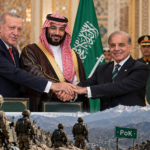
The government has also looked towards regional partners for assistance. Turkish Foreign Minister Hakan Fidan said Ankara was prepared to help meet Saudi military or technical requirements under the recently signed trilateral defence agreement involving Saudi Arabia, Türkiye and Pakistan.
The agreement states that an armed attack against one member will be considered an attack against all three. However, Pakistan has said that no immediate discussions about a military response have taken place.
Reuters reported that U.S. President Donald Trump has rejected Saudi requests for direct American military intervention against the Houthis.
This leaves Riyadh facing difficult choices between military retaliation, greater regional defence cooperation and negotiations aimed at preventing a longer war.
A Dangerous Return to the Yemen Conflict
Saudi Arabia and the Houthis had experienced several years of reduced cross-border fighting following the 2022 truce. The recent escalation threatens to reverse that progress.
The Houthis control Yemen’s most populated regions and much of the north. Their territorial advances along the Red Sea coast have increased concerns about the security of the Bab al-Mandeb Strait, an important route connecting the Red Sea with the Gulf of Aden.
The United Nations Security Council has condemned Houthi attacks affecting Saudi civilian and energy infrastructure. It has also condemned the military escalation inside Yemen, where large numbers of civilians have been displaced.
Further Saudi airstrikes and Houthi missile attacks would deepen Yemen’s humanitarian crisis while increasing risks for neighbouring countries and international shipping.
What Could Happen Next?
Three possible developments now deserve attention.
First, Saudi Arabia could intensify airstrikes against missile-launching sites and other Houthi military positions.
Second, the Houthis could continue targeting Saudi cities and energy facilities to increase economic and political pressure on Riyadh.
Third, regional mediators—including Qatar, Pakistan and Türkiye—could push both sides towards negotiations before the conflict becomes more difficult to contain.
Diplomacy remains possible, but every additional attack increases the risk of miscalculation. A missile causing significant civilian casualties or major damage to an oil facility could trigger a far more severe response.
Conclusion
The Riyadh attack marks a dangerous expansion of the renewed Saudi-Houthi confrontation.
Saudi Arabia says it intercepted a ballistic missile targeting the capital, while the Houthis claim that missiles and drones struck sensitive locations. Smoke and flames were documented near Riyadh’s airport, but the exact cause and complete damage assessment remain unclear.
The incident did not produce confirmed reports of deaths, but its strategic importance should not be underestimated. It brings the conflict directly to the Saudi capital and increases the threat to airports, energy infrastructure and regional trade routes.
The next Saudi response—and whether regional defence partners become more directly involved—could determine whether this remains a contained confrontation or develops into a broader Middle Eastern conflict.
Frequently Asked Questions
Who attacked Riyadh?
Yemen’s Houthi movement claimed responsibility for launching missiles and drones towards sensitive locations in the Saudi capital.
Did a missile hit Riyadh?
Saudi Arabia said its air defences intercepted and destroyed a ballistic missile heading towards Riyadh. The cause of the visible fire near the airport was not immediately confirmed.
Were there casualties in the Riyadh attack?
No deaths were reported in the initial official accounts. Authorities had not released a complete public damage assessment at the time of writing.
Was King Khalid International Airport attacked?
Smoke and flames were visible near the airport, but neither the exact target nor the cause of the fire was conclusively confirmed.
Why are Saudi Arabia and the Houthis fighting again?
The renewed conflict is connected to Houthi attacks on Saudi territory and shipping, Saudi airstrikes in Yemen and the broader regional war involving Iran and the United States.
Could the attack increase oil prices?
One incident may not significantly change supply, but repeated attacks on Saudi pipelines, oil facilities and export routes could create shortages and push prices higher.
Disclaimer: This article is based on official statements and credible news reports available as of September 20, 2026. The Houthis’ claims regarding their targets and the weapons used have not been independently verified in full. Saudi authorities confirmed intercepting a missile towards Riyadh, but the precise cause of the fire near King Khalid International Airport and the complete extent of any damage remained unclear. Details may change as additional information becomes available. This article is intended for news and educational purposes only.
