

































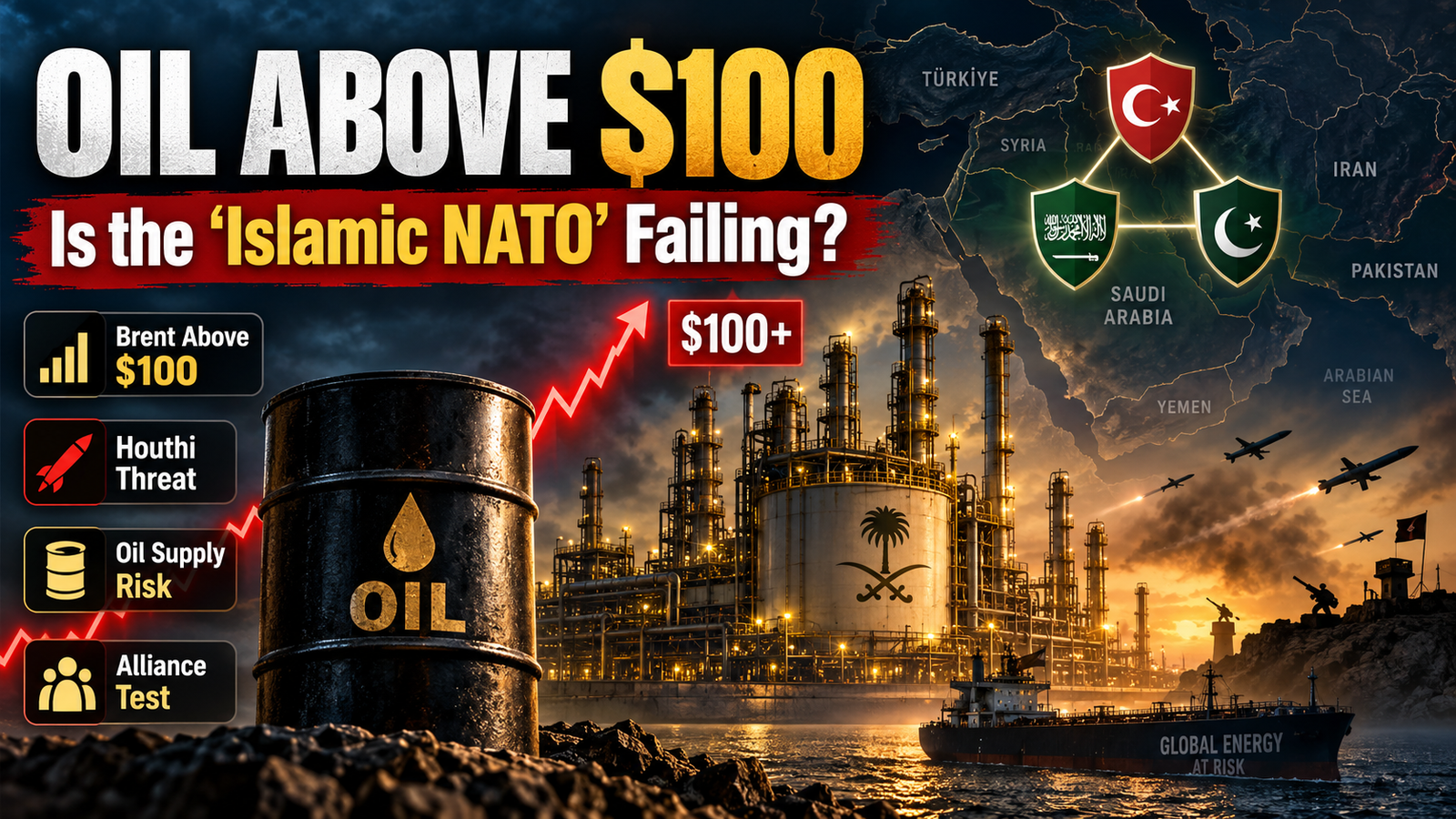

Oil Above $100 as Saudi–Houthi Conflict Escalates: Is the “Islamic NATO” Only on Paper?
Crude oil has crossed the psychologically important level of $100 per barrel as war and instability threaten two of the world’s most important energy routes.
Brent crude settled at $101.21 per barrel on September 9, rising 3.4% in a single session. West Texas Intermediate, the American benchmark, closed at $96.05.
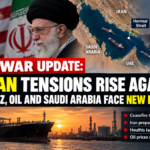
The latest increase was driven primarily by renewed attacks involving the United States and Iran near the Strait of Hormuz. However, missile and drone attacks by Yemen’s Houthi movement on Saudi cities and oil infrastructure have created an additional danger around the Red Sea.
The crisis has also produced the first serious test of the recently created Saudi–Türkiye–Pakistan defence alliance—frequently described by commentators as an “Islamic NATO.”
Will this pact protect Saudi Arabia, or was its impressive collective-defence promise mainly political symbolism?
Why Has Crude Oil Crossed $100?
The immediate trigger was a major escalation around the Strait of Hormuz.
Iran said it attacked ships near the strait after the United States struck Iranian tankers. Traders reacted to the possibility that continued attacks could reduce shipping, increase insurance costs and further restrict Middle Eastern oil supplies.
Consequently, Brent settled above $100 for the first time since late May.
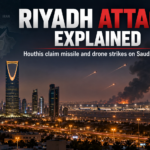
The Houthi attacks have widened the danger. According to the Saudi-led coalition, ballistic missiles and drones targeted Abha, Khamis Mushait and Jazan on two consecutive days. Earlier strikes injured 73 people and caused fires at oil installations and other infrastructure.
Saudi Arabia has promised a measured response, while fighting between Saudi-backed forces and the Houthis has intensified.
It is therefore inaccurate to blame the entire oil-price increase on the Houthis. The bigger immediate driver is the wider US–Iran confrontation. Nevertheless, Houthi attacks have added another layer of risk to an already vulnerable energy market.
Two Important Oil Routes Are Now Under Threat
The Arabian Peninsula is bordered by two strategically important maritime routes.
The Strait of Hormuz connects the Persian Gulf with the Arabian Sea. The US Energy Information Administration estimates that approximately 20 million barrels of oil passed through it daily in 2024—equivalent to about one-fifth of global petroleum consumption.
When Hormuz becomes unsafe, Saudi Arabia can move some crude through its East–West pipeline to Yanbu on the Red Sea. This route helps Saudi oil bypass the strait.
However, tankers leaving Yanbu may need to travel through the Red Sea and the Bab el-Mandeb Strait, where the Houthis have repeatedly threatened shipping.
The US Energy Information Administration says Saudi Arabia’s East–West pipeline has a normal capacity of around five million barrels per day and can be temporarily expanded. It is an important alternative, but it cannot eliminate every disruption.
This creates a dangerous situation:
- Iran can threaten shipping around the Strait of Hormuz.
- The Houthis can threaten Saudi infrastructure and Red Sea traffic.
- Tanker insurance and freight costs can rise.
- Oil companies may delay or reroute shipments.
- Traders may add a geopolitical-risk premium to every barrel.
Even if physical production remains available, fear that the oil may not reach buyers safely can push prices higher.
Is Saudi Arabia at War With the Houthis Again?
Saudi Arabia and the Houthis have not issued a formal declaration of war. But the current escalation represents a serious revival of their long conflict.
The Houthis seized Yemen’s capital, Sanaa, in 2014. A Saudi-led coalition intervened in 2015 to support Yemen’s internationally recognised government.
The war produced years of missile attacks, airstrikes, displacement and humanitarian suffering. A UN-brokered truce in 2022 sharply reduced direct fighting between Saudi Arabia and the Houthis, although it did not produce a permanent peace settlement.
That period of relative calm is now under severe pressure.
The Houthis declared a naval blockade against Saudi Arabia in July 2026, while Saudi-backed Yemeni forces began new operations against Houthi-held territory. Missile and drone attacks on Saudi soil, followed by retaliatory military action, have increased the danger of a return to sustained warfare.
The most accurate description is therefore a renewed Saudi–Houthi conflict that could develop into a broader war.
What Is the So-Called “Islamic NATO”?
“Islamic NATO” is not the alliance’s official name.
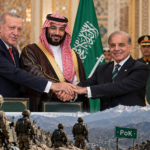
Saudi Arabia, Türkiye and Pakistan signed the Mecca Joint Defence Agreement on August 7, 2026. The agreement says that an armed attack against one member will be considered an attack against all three.
Turkish Foreign Minister Hakan Fidan described the provision as technically similar to NATO’s Article 5. However, he also said the allies would determine the degree and form of assistance through consultation.
The agreement is open to possible expansion, with Egypt mentioned as a potential future member. A secretariat has been established in Saudi Arabia and will initially be led by a Pakistani secretary-general.
These measures show that the pact has moved beyond an informal political discussion. It has a signed collective-defence commitment and an emerging administrative structure.
However, its operational details were still being developed when the latest Saudi–Houthi crisis began.
This agreement should also not be confused with the older Saudi-led Islamic Military Counter Terrorism Coalition, which was created primarily to coordinate counterterrorism efforts.
Is the Alliance a Joke or Only on Paper?
Calling it a joke may produce an attractive headline, but it goes further than the available evidence.
A more defensible conclusion is that the alliance is real but incomplete, untested and not yet comparable to NATO.
The three countries have established a secretariat and announced plans for military exercises, air-defence cooperation, intelligence sharing, drone technology, logistics and joint weapons production.
Yet no publicly confirmed information shows that the pact currently has:
- A permanent integrated military command
- A standing multinational combat force
- A common air-and-missile defence network
- Pre-approved deployment procedures
- Joint rules of engagement
- A shared military budget
- Binding troop-contribution requirements
- A tested mechanism for responding to attacks
- A publicly defined nuclear-deterrence policy
By comparison, NATO has spent more than seven decades developing command structures, operational planning, multinational forces, shared standards and regular exercises.
Even NATO’s Article 5 does not automatically force every member to declare war. Its official explanation of collective defence says assistance may or may not involve armed force, with each ally taking the action it considers necessary.
Therefore, the Saudi–Türkiye–Pakistan agreement should not be judged solely by whether Pakistani or Turkish forces immediately bomb Yemen. The more important question is whether the three members can quickly coordinate air defence, intelligence, maritime protection and military logistics.
So far, that capability has not been demonstrated publicly.
How Have Pakistan and Türkiye Responded?
Pakistan has become diplomatically involved in the crisis.
Pakistani officials reportedly delivered a Saudi warning to Iran, asking Tehran to restrain the Houthis. Pakistani and Turkish military representatives also met Saudi officials in Riyadh.
However, Pakistani officials said their country’s military role would be limited to defending Saudi territory. They indicated that Pakistani forces would not participate in offensive operations inside Yemen unless a different political decision was made.
Pakistan is therefore attempting to fulfil its defence commitment without entering another Middle Eastern war.
This caution reflects several realities:
- Pakistan has economic and defence ties with Saudi Arabia.
- It also shares a long border with Iran.
- A direct attack on the Houthis could provoke retaliation.
- Participation in Yemen would be politically controversial.
- Pakistan cannot afford a prolonged foreign military operation.
- Türkiye has its own security and economic interests across the region.
The allies’ current preference for diplomacy and territorial defence does not automatically prove the pact has failed. It does, however, reveal the limits of its collective-defence language.
Why Saudi Arabia May Not Want a Massive Allied Attack
Saudi Arabia itself has reasons to avoid an uncontrolled war.
The kingdom spent years trying to exit the Yemen conflict and concentrate on economic development under Vision 2030. Sustained missile attacks could threaten oil production, airports, tourism projects and foreign investment.
A major joint attack involving Türkiye and Pakistan could also:
- Expand the conflict beyond Yemen
- Produce direct confrontation with Iran
- Increase Houthi attacks on Saudi cities
- Disrupt more oil shipments
- Push crude prices considerably higher
- Create another humanitarian disaster in Yemen
Saudi Arabia may therefore prefer intelligence cooperation, missile defence and diplomatic pressure over a large ground or air campaign.
An alliance can sometimes deter war without visibly entering one. But if Houthi attacks continue and Saudi infrastructure remains vulnerable, the pact’s credibility will face much greater scrutiny.
What Would Make the Alliance Credible?
The Mecca agreement will remain closer to a political promise than a NATO-style military organisation unless its members build practical institutions.
Credibility would require:
- A combined military headquarters
- Integrated radar and early-warning systems
- Joint missile and drone interception
- Regular multinational exercises
- Shared maritime patrols
- Secure intelligence-sharing networks
- Pre-positioned equipment and ammunition
- Agreed financial responsibilities
- Clear procedures for activating mutual defence
- Parliamentary and legal authority for deployments
These capabilities take years to create. The alliance was signed only in August 2026, making instant NATO-level integration unrealistic.
Its first test is not necessarily whether it launches a war. The test is whether it can protect Saudi territory, reduce attacks and prevent the energy crisis from worsening.
What Does Expensive Oil Mean for India?
India is particularly exposed because it is one of the world’s largest oil importers.
A sustained rise in crude prices can affect the country in several ways.
Pressure on the Rupee
Indian refiners need dollars to purchase crude. Higher prices increase demand for foreign currency and can weaken the rupee.
On September 9, the rupee fell beyond ₹95 per dollar and closed at ₹95.1050 as Brent moved above $100. The Reserve Bank of India was believed to have intervened to limit the decline, according to Reuters.
A Larger Import Bill
If India pays more for the same quantity of oil, its merchandise-import bill rises. This can widen the trade deficit and place additional pressure on the current account.
Inflation Risk
Higher crude prices eventually affect more than petrol.
Diesel powers trucks, buses, agricultural machinery and backup generators. More expensive transportation raises the cost of delivering food, medicine and consumer products.
Aviation fuel, plastics, chemicals, paints and fertilisers can also become more expensive.
Pressure on Government Finances
The government may face demands to reduce fuel taxes or provide relief to consumers. State-owned oil-marketing companies may also suffer if domestic prices are prevented from reflecting higher international costs.
Difficult Decisions for the RBI
Expensive oil can increase inflation while weakening economic growth. This makes monetary policy more complicated because lower interest rates may support growth but could also intensify inflation and currency pressure.
Retail petrol and diesel prices do not necessarily rise immediately with every movement in Brent. Taxes, refinery costs, company pricing and government policy determine how quickly international prices reach consumers.
Could Crude Oil Rise Further?
Nobody can predict the exact price reliably during a military crisis.
Prices could fall if attacks on tankers stop, negotiations restart or shipping through the Strait of Hormuz becomes safer.
Prices could remain high—or rise further—if:
- More tankers are attacked
- Saudi oil facilities suffer serious damage
- Houthi strikes disrupt exports from Yanbu
- Shipping companies avoid the region
- Iran restricts traffic through Hormuz
- The Saudi-led coalition expands operations in Yemen
- Türkiye or Pakistan becomes directly involved
The market is reacting not only to the oil currently unavailable but also to the possibility of a much larger disruption.
Conclusion
The crude-oil surge above $100 is not solely the result of Saudi–Houthi fighting. Renewed US–Iran attacks around the Strait of Hormuz remain the immediate driver.
However, Houthi attacks on Saudi oil facilities have widened the crisis by threatening the Red Sea alternative used when Gulf shipping becomes dangerous.
The so-called “Islamic NATO” is neither a fully operational NATO equivalent nor an entirely imaginary organisation. Saudi Arabia, Türkiye and Pakistan have signed a collective-defence pact and created a secretariat, but they have not publicly demonstrated the integrated command and military systems required for a credible multinational alliance.
For now, it exists somewhere between a political promise and a functioning defence organisation.
If it can protect Saudi territory, coordinate missile defence and secure energy routes without expanding the war, the pact may gain credibility. If attacks continue while its members issue statements and avoid meaningful coordination, criticism that it exists mainly on paper will become increasingly difficult to dismiss.
Frequently Asked Questions
Why has crude oil crossed $100?
The main cause is renewed US–Iran military activity around the Strait of Hormuz. Houthi attacks on Saudi oil infrastructure have added another supply risk.
Are Saudi Arabia and the Houthis officially at war?
There has been no formal declaration of war. However, missile attacks, military offensives and retaliatory strikes represent a dangerous renewal of the Saudi–Houthi conflict.
What is the “Islamic NATO”?
It is an unofficial description of the Mecca Joint Defence Agreement signed by Saudi Arabia, Türkiye and Pakistan in August 2026.
Will Pakistan attack the Houthis?
Pakistani officials have indicated that their immediate role would be limited to defending Saudi territory. No decision to join offensive operations inside Yemen has been announced.
Is the alliance comparable to NATO?
Not yet. It has a mutual-defence promise and a secretariat, but it lacks NATO’s mature joint command, standing forces, common planning and decades of military integration.
How will higher crude prices affect India?
If sustained, higher prices could weaken the rupee, increase India’s import bill, raise inflation and make petrol, diesel, transportation and manufactured products more expensive.
Disclaimer: This article is based on energy-market data, official information and credible reporting available as of September 10, 2026. Oil prices and military conditions can change rapidly. Some battlefield claims have not been independently verified. “Islamic NATO” is an informal media description and not the official name of the Mecca Joint Defence Agreement. This article provides news and geopolitical analysis and does not constitute financial or investment advice.
