
















































Plague Scare in Russia: Has It Spread to China, and Is Another Pandemic Coming?

The word “plague” is enough to make almost anyone nervous.
It evokes the Black Death, one of the deadliest pandemics in human history.
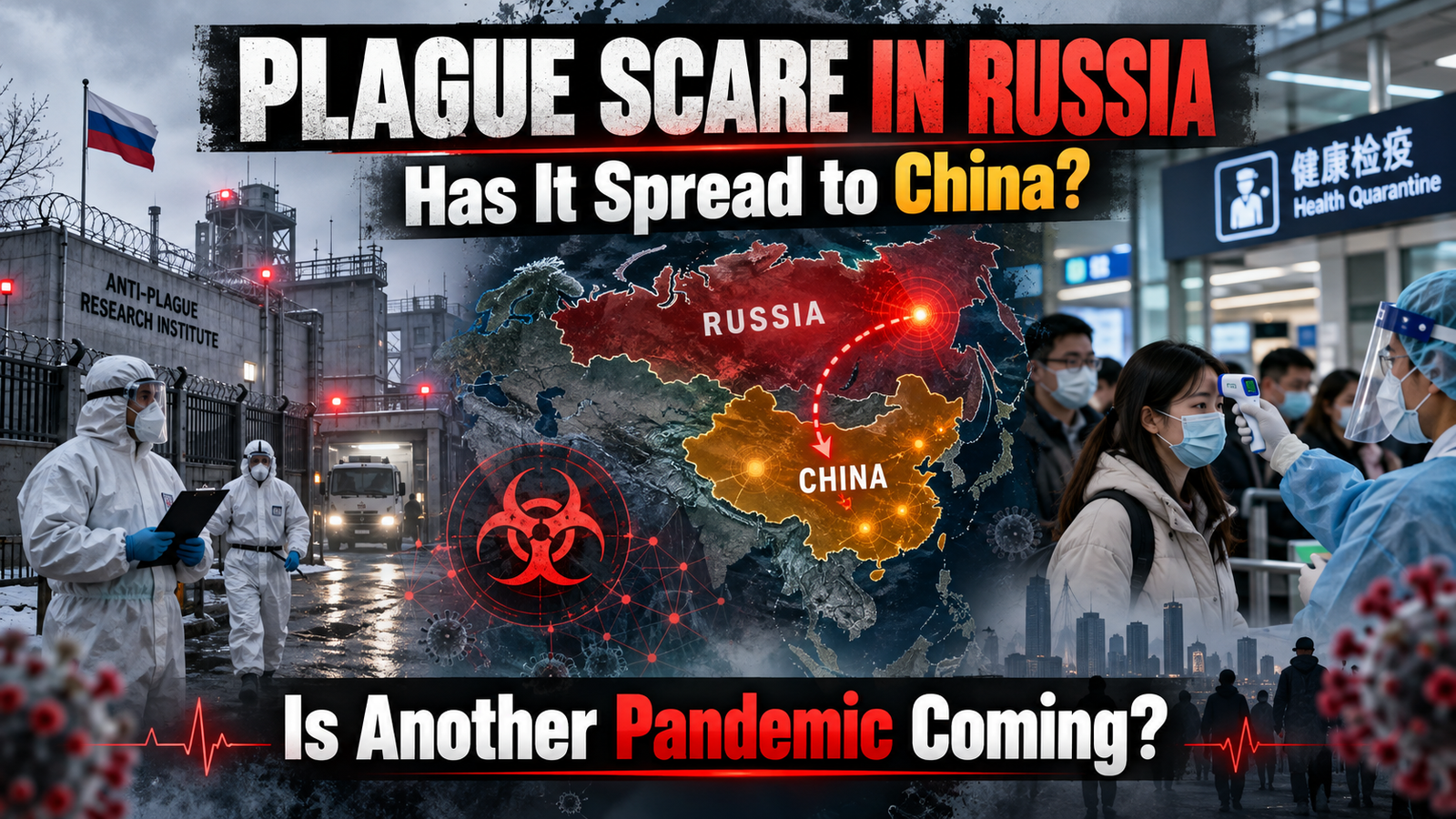
So when a young researcher working at a Russian anti-plague institute suddenly died from severe pneumonia, reports quickly spread online suggesting that a new plague outbreak had begun—and that it had already reached China.
But the facts available today tell a much less dramatic story.
As of October 11, 2026, there is no confirmed plague outbreak in Russia, no evidence that this Russian incident has spread internationally, and no verified evidence that it has reached China.
The situation still deserves close monitoring.
But based on current evidence, this is not another COVID-19 moment.
What Actually Happened in Russia?
The concern began at the Irkutsk Anti-Plague Research Institute of Siberia and the Far East.
A 28-year-old laboratory worker, Darya Shipilova, developed severe pneumonia and was hospitalized on September 29.
She died on October 2.
Because she worked at an institute that studies dangerous infectious diseases—including plague—reports quickly suggested she might have contracted pneumonic plague through an accidental laboratory exposure.
Russian authorities responded aggressively.
Around 200 contacts were initially placed under medical observation or quarantine, while thousands of laboratory tests were carried out.
That response understandably increased public concern.
If this was simply ordinary pneumonia, why such a strong containment response?
That question remains part of the controversy.
Russia Says It Was Not Plague
Russian authorities told the World Health Organization that no plague case had been registered in Irkutsk Oblast.
They said tests of the deceased worker and her contacts did not detect the dangerous pathogens being investigated.
By October 9, everyone who had been monitored remained asymptomatic, and the observation period was ended.
WHO therefore stated:
it has found no evidence of ongoing transmission associated with the event.
But there is still one important unanswered question.
Authorities have not identified exactly what caused Shipilova’s fatal pneumonia.
WHO describes her illness as “pneumonia of undetermined etiology.”
So health officials have not confirmed plague—but they also have not yet identified the pathogen that killed her.
That uncertainty explains why the case continues to attract international attention.
Has It Spread to China?
At the moment, there is no credible evidence that it has.
Claims circulating online that plague has spread from Russia into China are not supported by the available official data.
China CDC’s latest published national infectious-disease report recorded:
Plague cases: 0
Plague deaths: 0
in the reporting period covered by its latest release.
WHO has also not reported any international transmission from the Russian incident.
That does not mean China never experiences plague.
China, Mongolia, Russia and several other countries contain natural plague reservoirs among wild rodents.
Sporadic plague cases have occurred historically in parts of northern and western China.
But that is completely different from saying that the current Russian incident has spread into China.
There is currently no verified evidence supporting that claim.
What Exactly Is Plague?
Plague is caused by a bacterium called Yersinia pestis.
It still exists today.
The disease usually circulates among rodents and fleas.
Humans can become infected through:
infected flea bites,
contact with infected animals,
or—in the case of pneumonic plague—close exposure to respiratory droplets from an infected person.
There are three major forms.
Bubonic plague usually affects the lymph nodes.
Septicemic plague spreads through the bloodstream.
Pneumonic plague infects the lungs and is the most concerning form because it can spread directly between people.
Is Pneumonic Plague Dangerous?
Absolutely.
Untreated pneumonic plague can progress extremely quickly.
Symptoms can include:
fever,
weakness,
chest pain,
shortness of breath,
cough,
and sometimes bloody sputum.
The incubation period can be extremely short—sometimes around one day following inhalation exposure.
That sounds frightening.
But there is one enormous difference between plague today and plague during medieval Europe:
we have antibiotics.
Modern plague is treatable if identified quickly.
That dramatically changes its pandemic potential.
Does It Spread Like COVID?
No.
This is perhaps the most important fact.
COVID-19 spread efficiently through airborne particles, including from people with mild or no symptoms.
Pneumonic plague transmission normally requires close exposure to respiratory droplets from a symptomatic patient.
The CDC says Yersinia pestis does not behave like pathogens such as measles that remain suspended in the air for long periods.
Person-to-person spread usually requires close contact.
Historically estimated transmission rates for pneumonic plague have also been relatively limited compared with highly contagious respiratory viruses.
This makes large-scale uncontrolled global transmission considerably harder.
Then Why Are Health Authorities Taking It So Seriously?
Because plague is extremely dangerous if missed.
Health agencies do not need a disease to be highly contagious to treat one suspected case seriously.
Pneumonic plague can kill rapidly without treatment.
So when a worker at a laboratory specialising in plague dies from unexplained pneumonia, health authorities are expected to investigate aggressively.
The precautionary quarantine in Russia therefore does not prove there was a plague outbreak.
It may instead show officials acting cautiously because of the worker’s occupation and the severity of her illness.
Could Plague Cause Another Pandemic?
In theory, any infectious disease with person-to-person transmission deserves attention.
But based on what we know about plague today, a COVID-style global pandemic is unlikely.
There are several reasons.
First, plague is caused by bacteria, not a novel virus.
Doctors already understand the organism.
Diagnostic methods already exist.
Effective antibiotics exist.
Public-health protocols already exist.
And pneumonic plague generally requires close contact for transmission.
That does not make it harmless.
A delayed local outbreak could still cause significant deaths.
But controlling a known bacterial disease is fundamentally different from confronting a newly emerging virus with no treatment, vaccine or existing immunity.
Could Plague Be Used as a Biological Weapon?
This is another reason the disease receives intense attention.
The CDC classifies Yersinia pestis among high-priority biological threats because an intentional release could potentially cause pneumonic disease and person-to-person transmission.
That does not mean the Russian incident was a biological attack.
There is currently no evidence supporting that conclusion.
US President Donald Trump said American officials did not believe the Russian incident involved a bioweapon.
Speculation about biological weapons therefore should not be confused with evidence.
The Bigger Concern Is Transparency
Perhaps the most legitimate concern surrounding the Russian case is not an imminent pandemic.
It is information.
WHO had to request further details from Russian authorities after reports of the death appeared publicly.
The organization has said it still does not know what pathogen caused Shipilova’s pneumonia.
After COVID-19, unexplained severe pneumonia associated with a high-security infectious-disease laboratory will inevitably attract international scrutiny.
Rapid transparency matters because early information allows neighbouring countries and international health agencies to respond intelligently instead of relying on rumours.
What Would Signal That the Situation Is Getting Worse?
There are several developments that would materially change the risk assessment.
Confirmed Yersinia pestis infection in the Russian worker.
New unexplained pneumonia cases among her contacts.
Confirmed person-to-person transmission.
Cases appearing without a clear exposure chain.
Confirmed related cases outside Russia.
None of those conditions has currently been established.
That is why describing this as a new pandemic today would be premature.
What About China?
China deserves monitoring simply because it borders Russia and contains regions where plague naturally exists.
But that geographical fact should not be mistaken for evidence of spread.
At present:
WHO has identified no ongoing transmission associated with the Russian incident.
China’s latest publicly available national infectious-disease data show zero plague cases in the reported period.
And there is no verified evidence connecting any Chinese illness to the Irkutsk case.
So headlines saying “Russian plague spreads to China” are currently ahead of the evidence.
Conclusion: Watch Closely, But Don’t Panic
The Russian incident is unusual.
A young researcher at an anti-plague institute died from rapidly progressing pneumonia.
The exact cause of her illness remains unknown.
Authorities quarantined around 200 contacts.
WHO requested additional information.
Those facts justify scrutiny.
But several other facts are equally important.
No plague infection has been confirmed.
No linked cases have been detected.
All monitored contacts remained well.
WHO has found no evidence of ongoing transmission.
And there is currently no verified evidence that this incident has spread to China.
Another pandemic is therefore not supported by the evidence available today.
The lesson from COVID should not be to panic whenever unexplained pneumonia appears.
The better lesson is:
investigate quickly, demand transparency, monitor the data and distinguish confirmed evidence from viral speculation.
If that evidence changes, the risk assessment should change with it.
But for now, the world is watching a mysterious Russian pneumonia case—
not the beginning of a confirmed plague pandemic.
Frequently Asked Questions
Is there currently a plague outbreak in Russia?
No confirmed outbreak has been reported. Russian authorities told WHO that no plague case had been registered in Irkutsk, and WHO says it has found no evidence of ongoing transmission linked to the laboratory worker’s death.
Did a Russian plague-lab worker die?
Yes. A 28-year-old employee of the Irkutsk Anti-Plague Research Institute died on October 2 after developing severe pneumonia. The exact cause remains undetermined.
Has the Russian plague spread to China?
There is currently no verified evidence that it has. China’s latest published national surveillance data reported zero plague cases for the period covered.
Can plague spread from person to person?
Pneumonic plague can spread through respiratory droplets during close contact with an infected symptomatic person. Bubonic plague generally does not spread person to person.
Can plague be treated?
Yes. Antibiotics can effectively treat plague, especially when treatment begins early.
Is another pandemic coming?
Current evidence does not indicate that this Russian incident is becoming a pandemic. Health authorities continue monitoring it because the cause of the fatal pneumonia has not been identified.
Disclaimer: This article reflects publicly available information as of October 11, 2026. The cause of the Russian laboratory worker’s fatal pneumonia remains undetermined. No confirmed plague transmission associated with the incident has been identified, and claims of spread to China are not currently supported by official surveillance data.
