
































India–Russia FTA Talks Accelerate: Can Trade Reach $100 Billion?
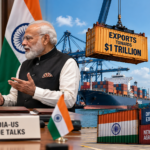
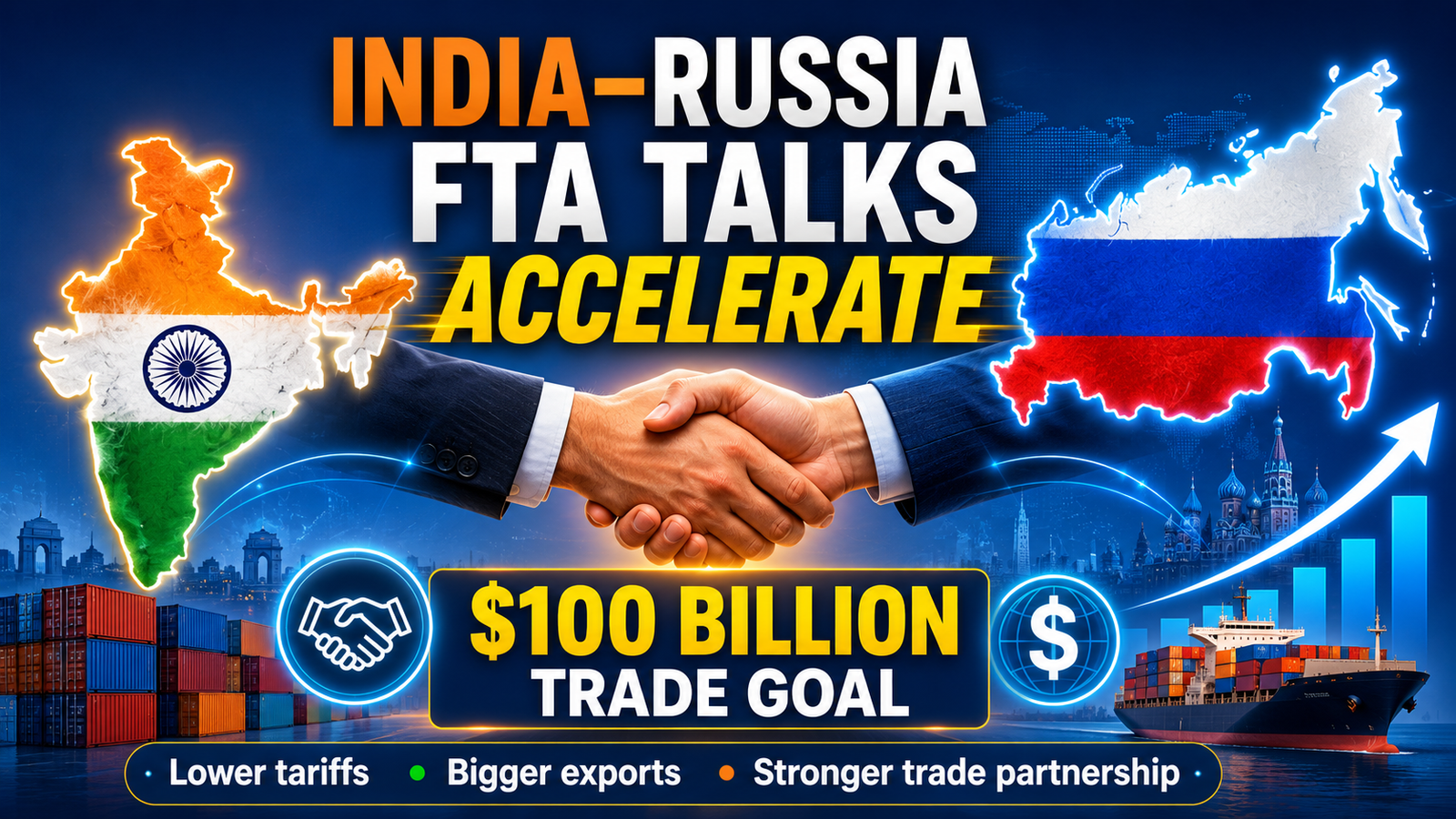
India and Russia are accelerating work on a proposed free trade agreement that could lower commercial barriers and open new markets for Indian exporters.
Russian First Deputy Prime Minister Denis Manturov said preparations for the agreement were in an “active stage” during the latest India–Russia Inter-Governmental Commission meeting in Moscow.
External Affairs Minister S. Jaishankar also highlighted the rapid expansion of economic cooperation during his August 23–24 visit to Russia. He met President Vladimir Putin and discussed trade, energy and the broader strategic partnership.
However, one important fact is often missing from headlines: this is not a Russia-only FTA. India is negotiating with the Eurasian Economic Union, or EAEU, comprising Russia, Armenia, Belarus, Kazakhstan and Kyrgyzstan.
What Is the Latest India–Russia FTA News?
India and the EAEU formally launched the trade process by signing the Terms of Reference on August 20, 2025.
The document created an 18-month work programme for negotiating an agreement in goods. The first formal negotiating round was subsequently held in New Delhi.
During the August 2026 economic commission meeting, Manturov described the proposed FTA as a potential “new driver” of sustainable trade growth. He said negotiations needed to maintain their momentum as the two countries attempted to diversify commerce beyond oil and fertilisers.
Jaishankar told Russian President Vladimir Putin that bilateral economic cooperation had grown significantly.
The latest statements indicate political support at a high level. But no final agreement, signing date or complete list of tariff reductions has been announced.
Why Is the Agreement Called the India–EAEU FTA?
Trade policy for Russia and the other EAEU members is negotiated collectively through the Eurasian Economic Commission.
Therefore, an agreement would provide India with preferential access not only to Russia but also to:
- Armenia
- Belarus
- Kazakhstan
- Kyrgyzstan
Together, the markets could create new opportunities across energy, critical minerals, agriculture, manufacturing and consumer goods.
Russia would remain the most important partner because it accounts for the overwhelming majority of India’s trade with the bloc.
India–Russia Trade Has Grown—but It Is Unbalanced
India–Russia trade reached a record $68.7 billion in FY 2024–25, according to an official Ministry of External Affairs brief.
Total trade moderated to approximately $60 billion in FY 2025–26 but remained more than four times its 2021–22 level.
Most of this growth came from Indian imports of Russian crude oil, petroleum products, fertilisers, coking coal, metals and sunflower oil.
India mainly exports:
- Pharmaceuticals
- Chemicals
- Iron and steel products
- Marine products
- Machinery
- Textiles and apparel
- Tea, coffee and other agricultural goods
The imbalance is significant. In FY 2025–26, India exported only around $4.9 billion worth of goods to Russia while importing approximately $55.4 billion.
For New Delhi, the success of an FTA will therefore depend on whether it increases Indian exports—not simply whether it makes Russian imports cheaper.
How Could the FTA Benefit India?
Bigger Market for Indian Pharmaceuticals
Russia and other EAEU countries offer strong demand for affordable medicines. Lower duties and simplified registration rules could help Indian pharmaceutical companies expand their presence.
However, tariff reductions alone will not be enough. Regulators must also address product approvals, certification requirements and local standards.
New Opportunities for Farmers and Fishermen
India could gain improved access for rice, tea, coffee, spices, fruits, processed food and marine products.
The existing roadmap specifically aims to create new markets for Indian MSMEs, farmers and fishermen, according to the Eurasian Economic Commission.
Simplified sanitary and phytosanitary rules will be especially important for food and agricultural exports.
Growth for Textiles, Leather and Engineering Goods
The departure or reduced presence of some Western companies in Russia has created gaps in consumer and industrial markets.
Indian businesses could compete in:
- Garments and home textiles
- Leather goods and footwear
- Automobile components
- Industrial machinery
- Telecom equipment
- Chemicals and ceramics
Preferential tariffs could make these products more competitive against suppliers from China, Türkiye and other Asian economies.
Better Access to Energy and Critical Minerals
Russia can offer India long-term supplies of energy, fertilisers and strategically important minerals.
The two countries are also discussing cooperation in mining and processing rare earths and non-ferrous metals. Such partnerships could support India’s electronics, renewable-energy, electric-vehicle and defence industries.
What Does Russia Gain?
Russia wants to diversify its trade relationships and strengthen access to one of the world’s fastest-growing major markets.
An agreement could help Russian companies sell more:
- Crude oil and natural gas
- Fertilisers
- Coal and metals
- Sunflower oil
- Agricultural commodities
- Nuclear-energy equipment
- Mining and industrial technology
Russia also wants greater Indian investment in pharmaceuticals, manufacturing, information technology and energy projects.
The Biggest Obstacles to the Trade Deal
Payment Difficulties
Western financial sanctions have complicated international payments involving Russian banks. Businesses need reliable and legally compliant mechanisms for settling transactions.
Local-currency trade may help in some cases, but the large trade imbalance makes a fully rupee-based system difficult because Russia earns far more rupees than it can easily spend in India.
Expensive and Slow Logistics
India and Russia do not share a land border. Cargo may travel through costly and complicated maritime or overland routes.
The International North–South Transport Corridor and the proposed Chennai–Vladivostok maritime route could reduce travel time, but infrastructure and customs coordination still need improvement.
Non-Tariff Barriers
Product certification, food-safety rules, customs procedures and technical standards can block trade even when import duties are reduced.
India and Russia have agreed to increase regulator-to-regulator engagement, but businesses will judge the pact by how effectively these practical obstacles are removed.
Sanctions and Geopolitical Risk
The war in Ukraine and Western sanctions create uncertainty for shipping, insurance, banking and investment.
India has maintained its independent relationship with Russia while also expanding economic partnerships with Europe and the United States. Any FTA will need to support Indian trade without exposing businesses to avoidable sanctions or compliance risks.
Can Trade Reach $100 Billion by 2030?
India and Russia have set a target of $100 billion in annual bilateral trade by 2030.
The goal is achievable in numerical terms because commerce has already approached $70 billion. But reaching it through further growth in oil imports would not create a balanced partnership.
The more important target should be increasing Indian exports and expanding trade into pharmaceuticals, machinery, food, technology, textiles and manufactured products.
An effective FTA could support that transition, provided it includes meaningful market access, predictable regulations and workable payment and transport systems.
Conclusion
The proposed India–EAEU FTA could become an important new pillar of the India–Russia partnership.
It offers India an opportunity to expand exports across Russia and Central Eurasia while securing energy, fertilisers and critical minerals. Russia, meanwhile, would gain deeper access to India’s large and rapidly growing market.
But the deal should not be judged only by total trade. Its real success will depend on whether Indian exporters, farmers, pharmaceutical companies and MSMEs can sell substantially more to the region.
The negotiations are moving forward, but the agreement has not yet been finalised. Until the tariff schedules and market-access commitments are published, its full economic impact will remain uncertain.
Frequently Asked Questions
Has India signed an FTA with Russia?
No. Negotiations are underway, but a final agreement has not been signed.
Is it a bilateral India–Russia FTA?
Not technically. India is negotiating with the five-member Eurasian Economic Union, which includes Russia, Armenia, Belarus, Kazakhstan and Kyrgyzstan.
What is the India–Russia trade target?
The two countries aim to increase annual bilateral trade to $100 billion by 2030.
Which Indian sectors could benefit?
Pharmaceuticals, textiles, engineering goods, machinery, chemicals, agriculture, marine products, leather and automobile components could gain from improved market access.
What is the biggest concern for India?
The large trade deficit is the main concern. India imports far more from Russia than it exports, largely because of energy purchases.
Disclaimer: This article is based on official government information and credible news reports available as of August 30, 2026. The India–EAEU FTA remains under negotiation, and no final tariff schedule, signing date or implementation timeline has been officially announced. Economic benefits discussed in this article are potential outcomes, not guaranteed results. This content is intended for news and informational purposes only and does not constitute investment or business advice.