
















































From 180 Districts to Zero: How India Defeated the Naxal Red Corridor

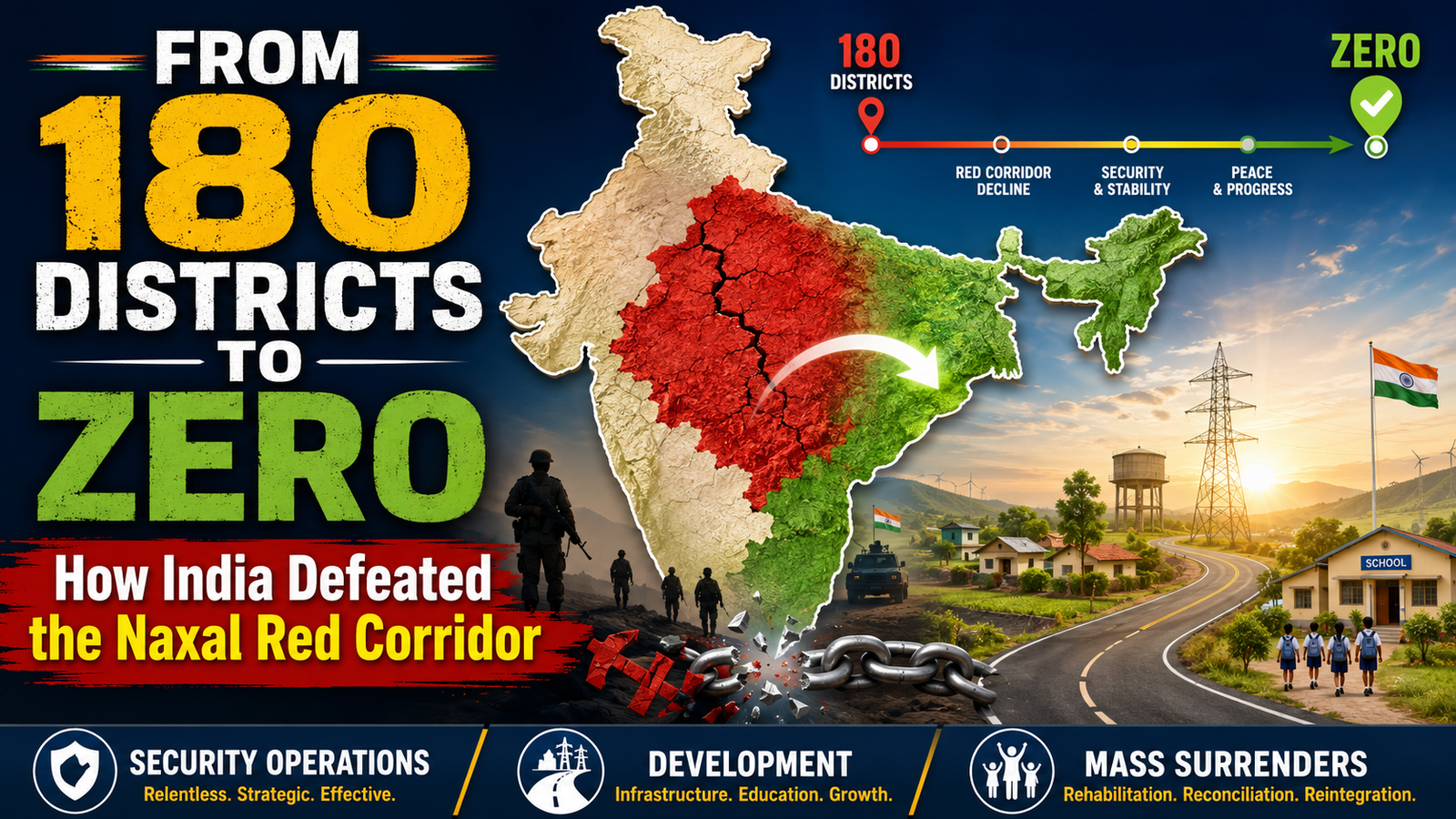
For decades, India’s so-called Red Corridor symbolized fear, violence and administrative failure. At its peak, Naxal influence reportedly extended across nearly 180 districts. The government’s comparable official series counted 126 Naxal-affected districts in 2014.
Today, that number has fallen to zero.
In July 2026, the Ministry of Home Affairs confirmed that no Indian district is officially categorized as Left-Wing Extremism affected. The decline was gradual but dramatic: 126 districts in 2014, 90 in 2018, 70 in 2021, 38 in 2024, eight in December 2025 and zero by March–April 2026. The latest government statement calls it the end of nearly six decades of organized Maoist violence.
Before 2014: India’s Deadly Internal-Security Crisis
The situation before 2014 was grim. Between 2004 and 2014, India recorded 16,463 incidents of Naxal violence, while 1,851 security personnel and 4,766 civilians lost their lives—an average of more than 15 security-force deaths every month.
Previous governments launched security and development programmes, but fragmented coordination, weak intelligence and inaccessible terrain allowed armed groups to preserve strongholds.
The post-2014 period recorded a major reversal. Compared with the previous decade, violent incidents fell by 53%, security-force deaths by 73% and civilian deaths by 70%, according to official government data.
How the Modi Government Changed the Strategy
The breakthrough came from combining security pressure with development rather than treating Naxalism as only a policing problem.
The National Policy and Action Plan of 2015 strengthened cooperation between the Centre and states. New security camps entered previously inaccessible forests, fortified police stations protected personnel, and drones, satellite imagery, mobile tracking and intelligence analysis helped locate armed units.
Specialized forces—including CoBRA commandos, the District Reserve Guard and state police units—targeted leadership, weapons factories, supply routes and remote camps. Operations such as Black Forest, Octopus and Double Bull dismantled long-standing Maoist strongholds.
At the same time, more roads, mobile towers, banking services, schools and healthcare facilities connected isolated tribal communities with the state.
Why Thousands of Naxals Surrendered
The government offered armed cadres a clear choice: face sustained security action or surrender and rebuild their lives.
From 2024 to March 2026, 4,839 Naxals surrendered, while 2,218 were arrested, according to the Home Minister’s parliamentary statement. Rehabilitation programmes now provide surrendered cadres with education, vocational training and financial support. Around 3,000 former cadres are being prepared for dignified reintegration into society. PIB
A Historic Victory—But Vigilance Must Continue
“Naxal-free” is an administrative and security classification; it does not mean every extremist idea or isolated cadre has disappeared. Thirty-seven districts remain under the “Legacy and Thrust” category so security and development support can continue.
India’s achievement is nevertheless historic. Regions once controlled through guns, landmines and fear can now pursue roads, schools, employment and democratic participation.
The Red Corridor did not disappear through force alone. It collapsed because coordinated security operations removed its leadership while development and rehabilitation weakened its ability to recruit.