





































BRICS Summit 2026 in India: Latest Developments and Why They Matter
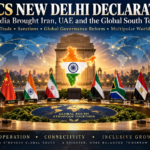
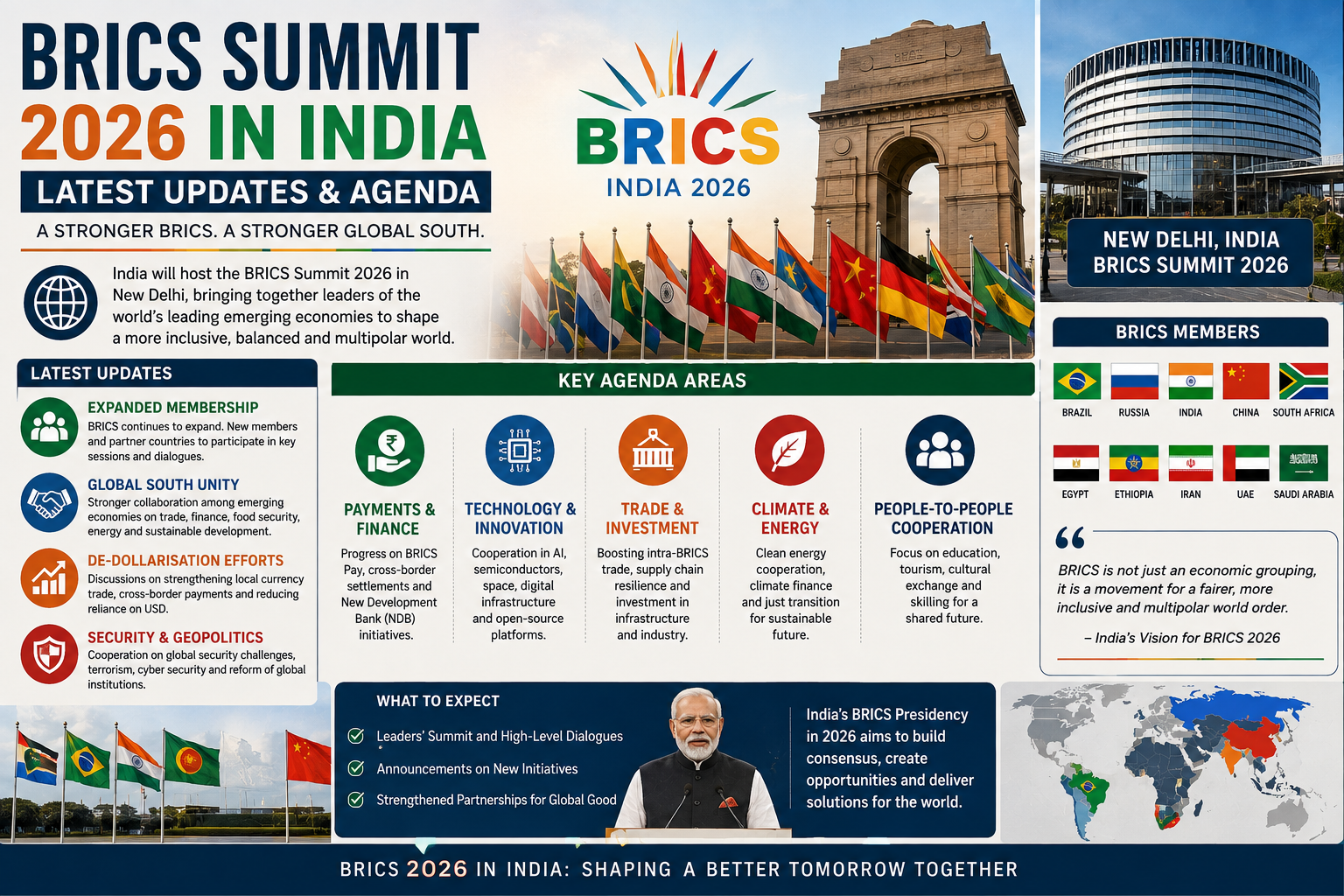
India is preparing to host one of 2026’s most closely watched diplomatic events. The 18th BRICS Summit is scheduled to take place in New Delhi on September 12–13, bringing together leaders from the expanding group of emerging economies.
The summit comes amid trade disputes, geopolitical conflicts and growing demand for reform of institutions such as the United Nations, International Monetary Fund and World Bank.
Under the theme “Building for Resilience, Innovation, Cooperation and Sustainability,” India wants BRICS to deliver practical results instead of becoming only an anti-Western political platform.
Here are the most important developments ahead of the summit.
Xi Jinping Likely to Visit India
Chinese President Xi Jinping is likely to attend the summit with a delegation of approximately 400 officials, according to an August 24 Reuters report.
If confirmed, it would be Xi’s first visit to India in seven years. His participation could create an opportunity for Prime Minister Narendra Modi and Xi to discuss border stability, bilateral trade and regional security.
However, Xi’s travel plans and any Modi-Xi bilateral meeting had not been officially confirmed at the time of publication.
India and China remain strategic competitors. Nevertheless, the expected visit shows that both countries recognise the value of dialogue, particularly when global trade tensions are rising.
BRICS Payment Connectivity Gains Momentum
One of the most significant economic proposals involves connecting the official digital currencies and fast-payment systems of BRICS countries.
The Reserve Bank of India reportedly proposed exploring links between central bank digital currencies, or CBDCs, to make cross-border trade and tourism payments faster and cheaper. The proposal could eventually connect India’s e-rupee with similar systems being tested by other members.
According to Reuters, the plan may be considered during the 2026 summit. However, it remains under discussion and has not been formally adopted.
This is not the launch of a single BRICS currency. India’s immediate focus appears to be payment-system interoperability, greater use of national currencies and lower transaction costs.
India Promotes Its Digital Public Infrastructure
India is also using its BRICS presidency to showcase digital public infrastructure such as identity, payments and digital-service platforms.
During BRICS technology meetings in Pune, India proposed a BRICS Digital Public Infrastructure Repository and pilot projects for sharing digital solutions. Discussions covered interoperability, cybersecurity, privacy, digital sovereignty and affordable access.
India’s experience with UPI gives it an important advantage. If BRICS countries can connect compatible payment systems, Indian tourists, exporters and small businesses could benefit from faster settlements and reduced currency-conversion costs.
However, implementation would require agreement on technology, regulation, data protection and settlement mechanisms.
Jaipur Declaration Strengthens Tourism Cooperation
BRICS tourism ministers adopted the Jaipur Declaration on August 21. The agreement promotes responsible tourism, cultural exchange, investment, skills and greater cooperation among member countries.
The declaration could help India attract more international visitors while creating opportunities for airlines, hotels, travel companies, local artisans and small businesses.
Tourism is particularly valuable because its economic benefits extend beyond major cities to heritage sites and rural communities. India can use BRICS cooperation to promote destinations such as Rajasthan, Kerala, Goa, Varanasi and the Northeast.
Chennai Consensus Focuses on Science and Innovation
BRICS science ministers have unanimously adopted the Chennai Consensus, placing collaborative research, young innovators and the Global South at the centre of scientific cooperation.
The framework supports:
- Shared scientific infrastructure
- Research partnerships
- Talent mobility
- Startup and innovation ecosystems
- Joint responses to global challenges
India has also proposed a BRICS Incubator Network and a BRICS Startup Innovation Fund. These initiatives could help Indian startups find investors, technology partners and new markets across member countries.
The proposals are promising, but their success will depend on funding and measurable implementation after the leaders’ summit.
Youth, Industry and Sports Deliver New Agreements
India has organised BRICS meetings across multiple cities instead of limiting diplomacy to New Delhi.
Youth ministers adopted a joint statement covering education, skills, entrepreneurship, technology and sustainability. Sports ministers agreed to expand cooperation in sports technology, training and manufacturing.
BRICS industry ministers also adopted a declaration supporting cooperation in MSMEs, solar manufacturing, logistics and startups.
This decentralised approach allows India to present its economic and cultural diversity while involving businesses, students, researchers and state governments in the BRICS process.
Why the Summit Matters for India
Hosting BRICS gives India an opportunity to position itself as a bridge between developed economies and the Global South.
India participates in BRICS while maintaining partnerships with the United States, Europe, Japan and other major economies. This multi-alignment allows New Delhi to protect its strategic autonomy without becoming dependent on a single geopolitical bloc.
The summit could support India by:
- Expanding export and investment opportunities
- Promoting UPI and the digital rupee internationally
- Strengthening cooperation in energy and technology
- Increasing tourism and cultural exchanges
- Giving developing countries a stronger global voice
India will also need to prevent internal disagreements among BRICS members from weakening practical cooperation.
What to Watch at the New Delhi Summit
The biggest questions are whether leaders will approve concrete payment initiatives, increase development financing and agree on reforms to global institutions.
Attention will also remain focused on a possible Modi-Xi meeting and the attendance of other major leaders.
Claims that BRICS will immediately introduce a common currency or replace the US dollar should be treated cautiously. The more realistic developments involve national-currency trade, interoperable payment systems and gradual financial cooperation.
Conclusion
The BRICS Summit 2026 could become an important moment for Indian diplomacy. Recent agreements on tourism, science, youth, industry and digital infrastructure show that India is attempting to make its presidency practical and people-focused.
The real test will come after the New Delhi summit. Announcements alone will not transform BRICS. Progress will depend on whether member countries can convert declarations into trade, investment, technology and payment projects that deliver measurable benefits.
For India, successful leadership would strengthen its position as an independent global power capable of working with competing countries while protecting its national interests.
Frequently Asked Questions
When is the BRICS Summit 2026?
The summit is scheduled for September 12–13, 2026, in New Delhi.
What is the theme of India’s BRICS presidency?
The official theme is “Building for Resilience, Innovation, Cooperation and Sustainability.”
Is BRICS launching a common currency?
No common BRICS currency has been confirmed. Current discussions focus mainly on connecting payment systems, CBDCs and increasing national-currency settlements.
Will Xi Jinping attend the summit?
Reuters reports that Xi is likely to attend, but his participation had not been officially confirmed as of August 24, 2026.
How can India benefit from hosting BRICS?
India could gain through greater trade, tourism, investment, digital-payment connectivity, scientific cooperation and increased diplomatic influence.
Disclaimer: This article is based on official statements and publicly available reporting as of August 24, 2026. Summit schedules, attendance and proposed initiatives may change. Reported proposals should not be treated as final agreements until formally confirmed by participating governments. This content is intended for news and informational purposes only.