








































Houthis Attack Saudi Arabia: Is Iran Opening a New Front Against U.S. Allies?

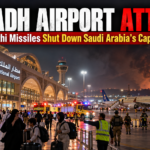
The Middle East crisis has entered a dangerous new phase after Yemen’s Houthi movement launched missiles and drones at Saudi Arabia’s Abha International Airport, breaking years of relative calm between the two sides.
AP reported that the attack came after airstrikes hit Sanaa International Airport in Yemen, with the internationally recognized Yemeni government saying the strikes were meant to prevent an Iranian aircraft from landing. The Houthis then retaliated against Saudi Arabia, marking one of the sharpest escalations since the 2022 truce.
This is not just a Yemen-Saudi issue. It is part of a much bigger regional chessboard involving Iran, Israel, the United States, Saudi Arabia and global oil routes.
Are the Houthis Iran’s Proxy?
The Houthis are often described as Iran-backed or Iran-aligned, but analysts say the relationship is more complex than a simple command-and-control proxy model.
Reuters describes the Houthis as an Iran-aligned movement with missile and drone capabilities, while the Council on Foreign Relations notes that some experts consider them better understood as Iran’s “informal partner” rather than a fully controlled proxy.
Still, the strategic result is clear: when the Houthis strike Saudi Arabia, threaten Red Sea shipping or attack Israel-linked targets, it increases pressure on U.S. allies and gives Iran more leverage without Tehran directly launching every attack itself.
That is why this latest Saudi attack matters.
Why Saudi Arabia Is Under Pressure
Saudi Arabia is a key U.S. partner, a major oil producer and a central player in Gulf security. A Houthi attack on Saudi territory sends a direct message: if Iran faces pressure from the U.S. and Israel, America’s regional partners may also face consequences.
AP reported that the Yemen truce, which had been in place since 2022, is now under serious threat as Saudi Arabia and the Houthis exchange strikes. This could pull Yemen back into wider war after years of fragile calm.
For Saudi Arabia, the risk is not only airport damage. The bigger danger is the return of missile and drone threats against airports, oil infrastructure, ports and shipping lanes.
Red Sea and Bab el-Mandeb: Iran’s Second Pressure Point
The Houthi threat is especially serious because Yemen sits near the Bab el-Mandeb Strait, one of the world’s most important maritime chokepoints. This waterway connects the Red Sea to the Gulf of Aden and is vital for ships moving between Asia, Europe and the Middle East.
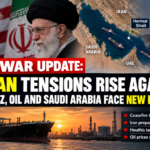
Reuters reported that Iran may be turning toward the Red Sea gateway as a new pressure point after tensions around the Strait of Hormuz, with the Houthis warning that Bab el-Mandeb could be targeted if Saudi attacks continue.
This is why global markets are watching closely. If both Hormuz and Bab el-Mandeb become unstable, oil tankers, LNG shipments, container ships and insurance markets could face serious disruption.
Will Oil Prices Rise Again?
Oil prices are already reacting to the wider U.S.-Iran conflict. MarketWatch reported that global crude prices saw strong back-to-back gains, with Brent rising to around $84.73 per barrel amid fears linked to Hormuz and U.S.-Iran fighting.
The Strait of Hormuz remains the world’s most critical oil chokepoint. The U.S. Energy Information Administration says flows through Hormuz in 2024 and early 2025 made up more than one-quarter of global seaborne oil trade and about one-fifth of global oil and petroleum product consumption.
If the Red Sea also becomes unstable through Houthi escalation, oil prices could rise further because markets would price in a wider shipping risk.
For countries like India, China, Japan and European economies, this matters directly. Higher crude prices can increase inflation, fuel costs, transport expenses and import bills.
Is the U.S. and Israel Planning a Ground Invasion of Iran?
There is no confirmed public evidence that the U.S. or Israel has ordered a full-scale ground invasion of Iran.
However, military escalation is real. Reuters reported that the U.S. said it had completed its latest wave of strikes on Iran on July 14, 2026, under the direction of President Donald Trump.
A ground invasion of Iran would be extremely difficult because Iran is large, mountainous, heavily militarized and politically complex. Airstrikes can damage nuclear sites, missile bases, air defences and command infrastructure, but occupying Iran would be a much larger and riskier operation.
The more likely near-term scenario is continued airstrikes, cyber operations, naval pressure, special operations and sanctions — unless a major event forces a wider war.
Will Iran Survive the Coming Months?
Iran is under serious pressure, but collapse is not guaranteed.
Iran has survived decades of sanctions, internal unrest, regional conflict and military pressure. Its biggest strength is its network of armed partners across the region, including groups in Yemen, Iraq, Lebanon and Syria. Its weakness is that this network is now being tested by direct U.S. and Israeli military pressure.
The Houthi attack on Saudi Arabia shows Iran still has regional cards to play. But it also carries risk. If Iran’s partners escalate too much, the U.S., Israel and Gulf states may respond more aggressively.
In simple words, Iran may survive the coming months as a state, but its regional strategy could become more costly, more isolated and more dangerous.
Why This Matters for the World
This conflict is no longer limited to one battlefield. It now touches:
Oil prices
Global shipping
Red Sea security
Saudi airport and energy infrastructure
U.S. military bases
Israel-Iran tensions
Inflation in oil-importing countries
Insurance and supply-chain costs
That is why the Houthi attack on Saudi Arabia is bigger than one airport strike. It is a warning that the Iran conflict can spread through proxy and partner networks.
Final Thoughts
The recent Houthi attack on Saudi Arabia shows that Iran-aligned forces are increasing pressure on U.S. allies at a very sensitive moment.
Saudi Arabia, the Red Sea, Bab el-Mandeb and the Strait of Hormuz are all part of the same strategic map. If this conflict expands, oil prices could rise, shipping costs could jump and the global economy could feel the impact.
For now, a full U.S.-Israel ground invasion of Iran is not confirmed. But the air war, proxy pressure and maritime threats are real.
The coming months will decide whether this remains a controlled escalation — or becomes a wider regional war.
FAQs
Did the Houthis attack Saudi Arabia recently?
Yes. Reports say the Houthis launched missiles and drones at Saudi Arabia’s Abha International Airport after strikes hit Sanaa airport in Yemen.
Are the Houthis backed by Iran?
Yes, the Houthis are widely described as Iran-aligned or Iran-backed, though analysts say they also have their own local Yemeni political and military interests.
Why does this attack matter?
It threatens the fragile Yemen truce, increases pressure on Saudi Arabia, and raises the risk of wider conflict involving Iran, Israel and the United States.
Could oil prices rise?
Yes. If attacks threaten the Red Sea, Bab el-Mandeb or Strait of Hormuz, oil prices and shipping costs could rise.
Is the U.S. planning a ground invasion of Iran?
There is no confirmed public order for a full-scale ground invasion. Current reports show continued military strikes and escalation, but not a confirmed invasion plan.
Disclaimer: This article is for informational and educational purposes only. It is based on credible public reports available at the time of writing. It does not claim confirmed invasion plans, regime collapse or direct Iranian control of every Houthi action unless verified by official sources.