















Modi’s Norway Visit: A Historic Summit, A Defiant Journalist, and a Racist Cartoon That Shocked the Internet

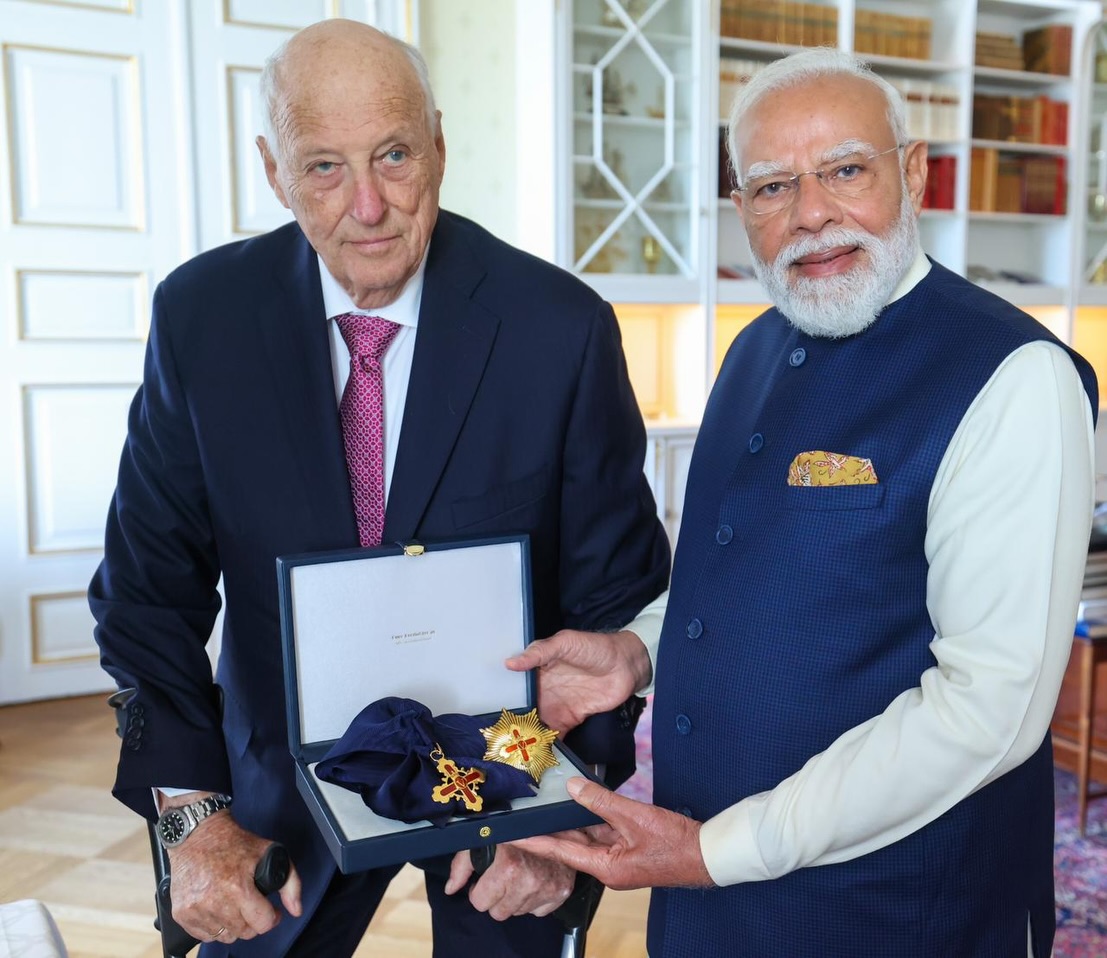
Photo Credit: Narendra Modi / @narendramodi (Instagram)
| When Prime Minister Narendra Modi landed in Oslo, it was the first visit by an Indian prime minister to Norway in 43 years. What should have been a clean diplomatic story quickly became a three-layered controversy — involving a reporter who crossed the line between journalism and activism, a newspaper cartoon that recycled colonial-era stereotypes, and India’s foreign ministry hitting back with a 17-minute rebuttal. Here is everything that happened, clearly laid out. |
First, the Substance: Why Modi’s Norway Visit Was Historic
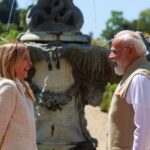
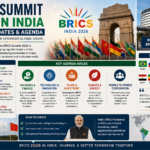
This was the first bilateral visit by an Indian Prime Minister to Norway in 43 years — a fact that alone made it diplomatically significant. PM Modi arrived in Oslo as the fourth leg of his five-nation tour and participated in the 3rd India-Nordic Summit, hosted by Norwegian Prime Minister Jonas Gahr Støre.
Modi himself described the visit as “very fruitful,” and the substantive outcomes back that up.
| 43 yrs | Since the last Indian PM’s bilateral visit to Norway |
| 3rd | India-Nordic Summit held in Oslo, May 2026 |
| $5B+ | India-Nordic total trade at last count |
| $100B | EFTA investment target in India over 15 years (TEPA deal) |
Key Outcomes of the India-Nordic Summit
- Launch of a Green Technology and Innovation Strategic Partnership between India and the Nordic countries
- Agreements on climate action, renewable energy, maritime cooperation, and digital development
- Discussion on Arctic cooperation, blue economy, green hydrogen and green shipping
- Reaffirmation of the India-EFTA Trade and Economic Partnership Agreement (TEPA) implementation
- Commitment to expand trade and investment between India and the Nordic region
| Modi on the Summit: India and the Nordic countries decided to elevate their relationship to a Green Technology and Innovation Strategic Partnership, combining innovation, scale and talent, and advancing shared goals on sustainability. |
The Journalist Controversy: Activism Disguised as Press Freedom?
This is where the Oslo visit took an unexpected turn. During the joint press statement between Modi and Norwegian PM Støre, the two leaders exited without taking questions from media — a standard format for such diplomatic appearances worldwide.
That is when Helle Lyng Svendsen, a reporter for the Norwegian newspaper Dagsavisen, made her move.
What Exactly Happened
As Modi walked away from the podium, Lyng Svendsen called out loudly: “Why don’t you take some questions from the freest press in the world?” Modi did not respond. The exchange was caught on video and quickly went viral online.
The confrontation did not end there. Lyng Svendsen then showed up at a subsequent MEA media briefing, where she doubled down — questioning MEA Secretary (West) Sibi George on issues of “trust,” human rights, and press freedom, and pointedly asking why Norway should trust India.
India’s Response: A 17-Minute Rebuttal
Sibi George, who also serves as India’s Ambassador to Norway, pushed back firmly. He told Lyng Svendsen not to interrupt, reminding her it was his press conference. What followed was a nearly 17-minute defence of India’s democratic institutions, covering the constitution, an independent judiciary, free elections, and India’s track record as the world’s largest democracy.
The response was widely viewed in India as a measured and confident rebuttal. In international media, it was framed differently.
| “Primeminister of India, Narendra Modi, would not take my question. I was not expecting him to. Norway has the number one spot on the World Press Freedom Index. India is at 157th, competing with Palestine, Emirates and Cuba.” — Helle Lyng Svendsen on X, May 19, 2026 |
Where the Journalism Line Was Crossed
The heart of the controversy is this: there is a meaningful difference between a journalist asking a difficult question and a journalist using a diplomatic press event to make political arguments.
Lyng Svendsen did not just ask Modi to take a question. She publicly challenged India’s trustworthiness, compared India’s press freedom ranking to that of Cuba and Palestine, and framed her own intervention as a moral duty. On social media, she appeared to position herself as a champion of Indian journalists, writing: “If I do not dare to ask questions, who will? I know the situation is alarming for my journalist colleagues in India.”
Critics in India and among the diaspora argued this was not objective journalism but advocacy — using the platform of a diplomatic press event to lobby against a foreign government. Some questioned whether she was applying the same standard to Norwegian or other Western leaders.
Lyng Svendsen later denied being a foreign agent, writing on social media: “I never thought I would have to write this, but I am not a foreign spy of any sort, sent out by any foreign government.” She also claimed her Instagram and Facebook accounts were suspended on May 19, 2026, and said she had filed an appeal.
The Bigger Context: Modi and the Press
It is factually accurate that Modi has held very few open press conferences since becoming Prime Minister in 2014. This is well-documented and has been noted by Indian and international journalists alike. It is a legitimate area of public interest and scrutiny.
However, diplomatic press conferences between two heads of state routinely follow agreed formats that do not include open Q&A — this is common across most countries, not unique to India. The Norwegian PM Jonas Gahr Støre, for instance, took questions from Norwegian media but not from Indian journalists at the same event.
The controversy, ultimately, sits at the intersection of a real and debatable issue — press access in India — and a manner of raising it that many found more performative than journalistic.
The Snake Charmer Cartoon: ‘Colonial-Era Racism Dressed Up as Commentary’
Separate from the journalist episode but happening at almost exactly the same time, Norway’s leading daily newspaper Aftenposten published a cartoon depicting PM Modi as a snake charmer.
What the Cartoon Showed
The illustration, published alongside an opinion piece reportedly titled “A clever and slightly annoying man,” showed Modi seated cross-legged in the manner of a traditional snake charmer, playing a flute, with a fuel-station pipe rising from a basket in the shape of a snake. The piece discussed why India was engaging with the Nordic states.
The cartoon was originally published on May 16 but came to wider attention only after Modi’s visit began and went viral amid the press freedom controversy.
The Backlash
The reaction online was swift and overwhelmingly negative — not just from Modi supporters but from a broad cross-section of people who saw the imagery as racially loaded and culturally dismissive.
- “This isn’t journalism. It’s colonial-era racism dressed up as commentary. They can’t stomach India’s rise, so they reach for the same tired stereotypes their grandparents used.” — widely shared social media post
- “This cartoon is blatantly racist. What also stands out is the irony. PM Modi used to speak about how the world once thought of India as a land of snake charmers. And now, during his visit to Oslo, a major European newspaper depicts him exactly that way.”
- “Europeans still can’t come out of their colonial fantasies.”
Social media users across political lines described the image as xenophobic, reductive, and rooted in 19th-century Western caricatures of South Asia.
The Painful Irony: Modi’s Own Words From 2014
| In his landmark 2014 address at Madison Square Garden, New York, PM Modi himself spoke about this exact stereotype. He said that India was once seen by the world as a country of ‘snake charmers’ but had evolved into a nation of ‘mouse charmers’ — driven by software, technology and innovation. Twelve years later, a major Norwegian newspaper reached for that very same image to describe him. The irony was not lost on anyone. |
It is also worth noting this was not an isolated incident. A similar controversy had occurred in 2022 when a Spanish publication used snake-charmer imagery while reporting on India’s economic growth. The pattern suggests that certain parts of Western media have not updated their visual vocabulary for India despite the country’s transformation into the world’s fifth-largest economy.
Putting It All Together: What Does This Moment Tell Us?
The Norway episode is a useful lens for understanding three distinct but overlapping debates:
1. India’s Press Freedom Record Is a Real Conversation
India ranked 157th out of 180 countries on the 2026 World Press Freedom Index. That is a fact, and it is a legitimate subject for international discussion. Critics across the political spectrum have documented narrowing space for media in India, and it is not dishonest to raise it. The question is whether a bilateral diplomatic press conference is the appropriate forum, or whether using that setting transforms journalism into political performance.
2. Not All Criticism Is Journalism
Challenging power is journalism. Framing your own country’s press freedom ranking as a moral credential, publicly asking whether a sovereign nation deserves ‘trust,’ and positioning yourself as the surrogate voice of suppressed Indian journalists — that moves from reporting into advocacy. Readers and viewers are entitled to draw that distinction.
3. Stereotypes in Western Media Are Not Harmless
The snake charmer cartoon deserves to be criticised on its own terms, regardless of one’s views on Modi or India’s politics. Reducing a democratically elected leader of 1.4 billion people to a colonial-era caricature tells us more about the cartoon’s author than about India. It is lazy, it is reductive, and — at a time when Western commentary frequently lectures others on stereotyping — it is strikingly inconsistent.
| The Bottom Line: PM Modi’s Norway visit achieved real and substantive diplomatic outcomes. The India-Nordic relationship was elevated, important agreements were signed, and a historic visit happened after 43 years. That story deserved to be the headline. Instead, a journalist’s confrontational style and a newspaper’s casual racism turned a diplomatic success into a controversy. Both sides of that controversy are worth examining honestly. |
Frequently Asked Questions
Who is Helle Lyng Svendsen?
Helle Lyng Svendsen is an Oslo-based journalist and commentator who works for the Norwegian newspaper Dagsavisen. She became internationally known after her video confrontation with PM Modi at the joint press statement in Oslo went viral in May 2026.
Did Modi answer her question?
No. PM Modi did not respond to Lyng Svendsen’s questions either at the joint press statement or at the subsequent MEA briefing. MEA Secretary (West) Sibi George responded on India’s behalf with a detailed 17-minute defence of India’s democratic institutions.
Which newspaper published the snake charmer cartoon?
Norway’s leading daily Aftenposten published the cartoon, drawn alongside an opinion piece. The illustration showed Modi seated cross-legged, playing a flute before a fuel-station pipe shaped like a snake rising from a basket.
What was the India-Nordic Summit about?
The 3rd India-Nordic Summit, hosted in Oslo, focused on elevating India’s relationship with Nordic countries to a Green Technology and Innovation Strategic Partnership. Key areas included clean energy, climate action, digital development, blue economy, and Arctic cooperation.
Was this Modi’s first visit to Norway?
It was the first bilateral visit by an Indian Prime Minister to Norway in 43 years. Modi had previously engaged with Norwegian PM Støre on the sidelines of other summits, including the 2nd India-Nordic Summit in Copenhagen in 2022, but this Oslo visit was the first dedicated bilateral trip.
Disclaimer: This article is for informational and educational purposes only. It is based on publicly available reports and policy updates. It should not be considered financial, investment, legal or business advice.