

















India & Italy Forge a Special Strategic Partnership: Everything You Need to Know About Modi’s Historic Rome Visit

| Prime Minister Narendra Modi has just concluded his first-ever dedicated bilateral visit to Italy — and it was not just a courtesy call. The two nations walked away with 15 tangible outcomes and a fresh diplomatic status: a “Special Strategic Partnership.” Here’s what that means, and why it matters to you. |
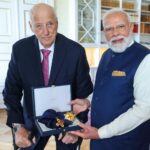
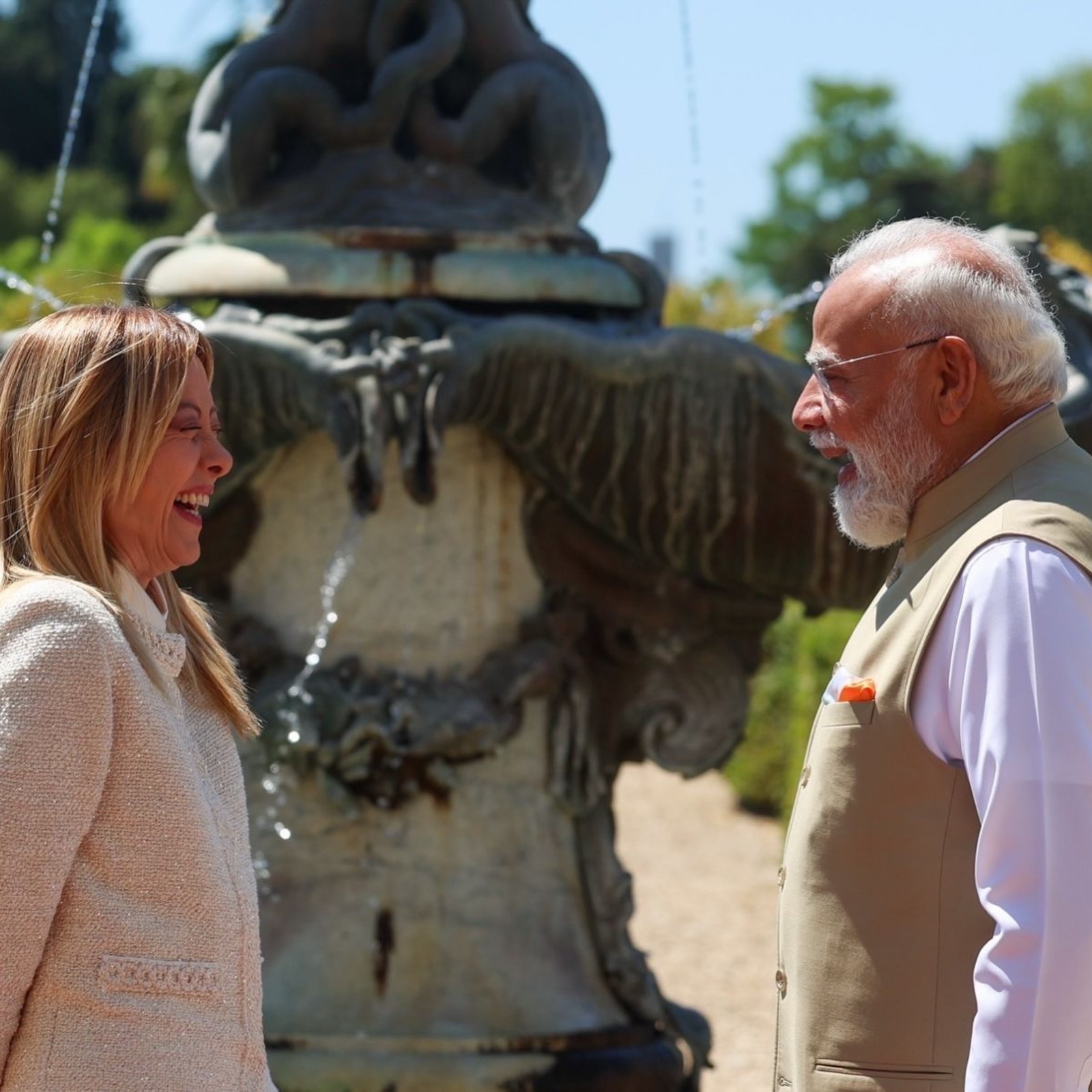
Photo Credit: Narendra Modi / @narendramodi (Instagram)
The Big Picture: Why This Visit Matters
India’s diplomatic calendar in May 2026 has been extraordinarily busy. PM Modi undertook a sweeping five-nation tour spanning the UAE, the Netherlands, Sweden, Norway, and finally Italy — wrapping it up with what many observers are calling the most substantive European bilateral of the tour.
Italy was the final stop, and it delivered the biggest diplomatic upgrade. The two nations — historically friendly but never deeply intertwined — chose this moment to elevate ties to a Special Strategic Partnership, a status that signals long-term, structured engagement across virtually every major sector.
Key Numbers at a Glance
| 15 | Key bilateral outcomes announced from the visit |
| €20B | Bilateral trade target set to be achieved by 2029 |
| $16.77B | Bilateral trade already achieved in 2025 |
| $3.66B | Cumulative Italian FDI in India (April 2000 – Sept 2025) |
Those numbers tell a story of a relationship that was already growing — and one that both governments now want to accelerate deliberately.
How the Visit Unfolded: A Quick Timeline
May 19 – Arrival in Rome
PM Modi landed in Rome and was welcomed at the airport by Italian Deputy PM and Foreign Minister Antonio Tajani. He met members of the Indian diaspora at his hotel, watched classical and folk dance performances, and received a painting of the Varanasi ghats as a gift.
May 19 – Evening: Dinner & The Colosseum
An informal dinner with PM Giorgia Meloni was followed by a visit to the iconic Colosseum. Modi shared on X: “Had the opportunity to meet PM Meloni over dinner followed by a visit to the iconic Colosseum. We exchanged perspectives on a wide range of subjects.”
May 20 – Formal Summit
Formal bilateral meetings took place with Italian President Sergio Mattarella and PM Meloni. The Joint Strategic Action Plan 2025–2029 was reviewed, and the Special Strategic Partnership was officially announced.
May 20 – FAO Headquarters
Modi visited the United Nations Food and Agriculture Organisation (FAO) HQ in Rome, reaffirming India’s commitment to multilateralism and global food security.
May 20 – Departure
The Ministry of External Affairs confirmed 15 outcomes and the elevation of the bilateral relationship. Modi departed for New Delhi, scheduled to arrive the following day.
The 15 Outcomes: What Was Actually Agreed?
The Ministry of External Affairs listed 15 key outcomes from the visit. While the full granular details continue to emerge, the broad pillars are clear:
- Special Strategic Partnership – Formal upgrade of India-Italy bilateral status, the headline deliverable of the visit
- Trade Roadmap to €20 Billion – Target set for bilateral trade to reach €20 billion by 2029, up from $16.77B in 2025
- Clean Energy Cooperation – Joint projects in green technology, renewables and sustainable development
- Defence & Security – Expanded cooperation in defence including technology sharing frameworks
- Science & Technology – Joint research, innovation hubs, and academic exchange frameworks
- Education & Culture – Strengthened university partnerships, scholarships, and cultural exchange
- IMEC Connectivity – Advancing the India-Middle East-Europe Economic Corridor as a strategic priority
- Innovation & Digital – Cooperation in digital infrastructure, AI, and tech-led economic growth
- Mobility & Migration – Improved pathways for professionals, students, and skilled workers
- Food Security & Multilateralism – FAO-centred engagement on global food systems and multilateral commitments
| “A Special Strategic Partnership that will not only benefit our nations but also the entire humanity! The outcomes from my Italy visit will ensure more investment linkages, better trade opportunities, closer cultural linkages and more.” — PM Narendra Modi, May 20, 2026 |
The IMEC Factor: Why Italy Is Strategically Vital
| What is the India-Middle East-Europe Economic Corridor (IMEC)? IMEC is a landmark connectivity project linking India to Europe via rail, sea routes, and digital infrastructure through the Middle East. Italy — and specifically the port of Trieste — sits at the European end of this corridor. For India, securing Italy’s full commitment to IMEC is not just diplomatic optics; it’s a strategic economic imperative worth billions in future trade. |
Italy’s Deputy PM Tajani had hinted at this visit months earlier, explicitly linking it to the IMEC agenda — describing the corridor as running “from India through Israel, through the Gulf countries, to Egypt, through the Mediterranean Sea, to Trieste.” With Modi now having personally reinforced this in Rome, the IMEC roadmap gains significant political momentum.
For India, IMEC is more than logistics. It represents an alternative to China’s Belt and Road Initiative — a Europe-connected trade route that India, the Gulf states, and key European nations collectively shape and control.
India-Italy Relations: Context You Should Know
This was Prime Minister Modi’s first dedicated bilateral visit to Italy. While he had visited the country before — for the G7 Summit in Apulia in June 2024 — that was a multilateral engagement. This time, Rome was the destination, and India-Italy ties were the entire agenda.
| In March 2023, PM Meloni visited India and elevated ties to a “Strategic Partnership.” In September 2023, both leaders met again at the G20 in New Delhi. By November 2025, they met on the sidelines of the G20 in Johannesburg, announcing a joint initiative to combat terror financing. This Rome visit is the culmination of that steady build-up — a natural step forward to “Special Strategic Partnership.” |
Italy is already among India’s most significant trading partners in Europe, with Italian companies active across engineering, automobiles, renewable energy, fashion, and manufacturing. The cumulative FDI flow from Italy into India stands at $3.66 billion — a figure both sides now want to grow considerably.
The Human Moments: Modi at the Colosseum
Beyond the diplomatic machinery, the visit had moments that resonated widely. PM Modi’s informal evening with Giorgia Meloni — the dinner followed by a tour of the Colosseum, one of the world’s most iconic monuments — was widely shared on social media. Meloni welcomed Modi with the words “Welcome to Rome, my friend!”
Modi also connected warmly with the Indian diaspora in Italy. At his hotel, community members performed classical and folk dances, and the Prime Minister signed autographs and received a painting of the ghats of Varanasi — a deeply personal gift.
The Five-Nation Tour: Italy in the Bigger Picture
Italy was the fifth and final stop of what has been one of Modi’s most consequential international tours in recent years. The sequence — UAE, Netherlands, Sweden, Norway, Italy — was designed to deepen India’s engagement across Europe and strengthen its position as a trusted, democratic global partner.
Before arriving in Rome, Modi participated in the 3rd India-Nordic Summit in Norway, signing agreements on climate action, renewable energy, maritime cooperation, and digital development. The Netherlands engagement focused on technology and water management.
Italy was saved for last — and it delivered the diplomatic crown jewel of the tour: a new tier of bilateral partnership, a trade target, and a renewed IMEC push, all in one visit.
What This Means Going Forward
The Joint Strategic Action Plan 2025–2029 reviewed during this visit provides the operational roadmap. Both sides are now working toward institutionalising the partnership through mechanisms like annual heads-of-government summits — a significant step that would make high-level engagement routine rather than occasional.
For Indian businesses, the trade target of €20 billion by 2029 represents a meaningful opportunity across sectors. For Italian companies, India’s manufacturing boom and digital economy offer a massive market with government-level encouragement to invest.
For the broader geopolitical picture, India’s quiet but steady deepening of European partnerships — particularly with countries that sit at critical IMEC nodes — signals a long game that is playing out with increasing coherence and pace.
Frequently Asked Questions (FAQ)
Was this Modi’s first visit to Italy?
This was PM Modi’s first dedicated bilateral visit to Italy. He had previously visited in June 2024, but that was to attend the G7 Summit in Apulia — a multilateral event. This Rome visit in May 2026 was entirely focused on the India-Italy relationship.
What is the difference between a “Strategic Partnership” and a “Special Strategic Partnership”?
India’s foreign policy uses tiered partnership designations to signal depth of engagement. A “Special Strategic Partnership” implies more regular high-level contact, more institutionalised cooperation frameworks, and a broader scope of joint initiatives than a standard “Strategic Partnership.”
What is IMEC and why does Italy matter for it?
The India-Middle East-Europe Economic Corridor (IMEC) is a proposed multimodal trade route linking India to Europe through the Gulf and the Mediterranean. Italy — particularly the port of Trieste — is identified as the European terminal, making Rome a key diplomatic destination for India.
How does India’s trade with Italy currently look?
Bilateral trade reached $16.77 billion in 2025. Italy has also invested cumulatively $3.66 billion in India between April 2000 and September 2025, with Italian companies active in engineering, automobiles, renewables, fashion, and manufacturing.
Which other countries did Modi visit on this five-nation tour?
PM Modi’s five-nation tour covered: United Arab Emirates, the Netherlands, Sweden, Norway, and Italy (the final leg). Each stop had a distinct agenda, culminating in the Special Strategic Partnership focus of the Italy visit.
Disclaimer: This article is for informational and educational purposes only. It is based on publicly available reports and policy updates. It should not be considered financial, investment, legal or business advice.