































U.S. Strike on Commercial Tanker Kills Indian Sailors: UN Maritime Agency Condemns Attack

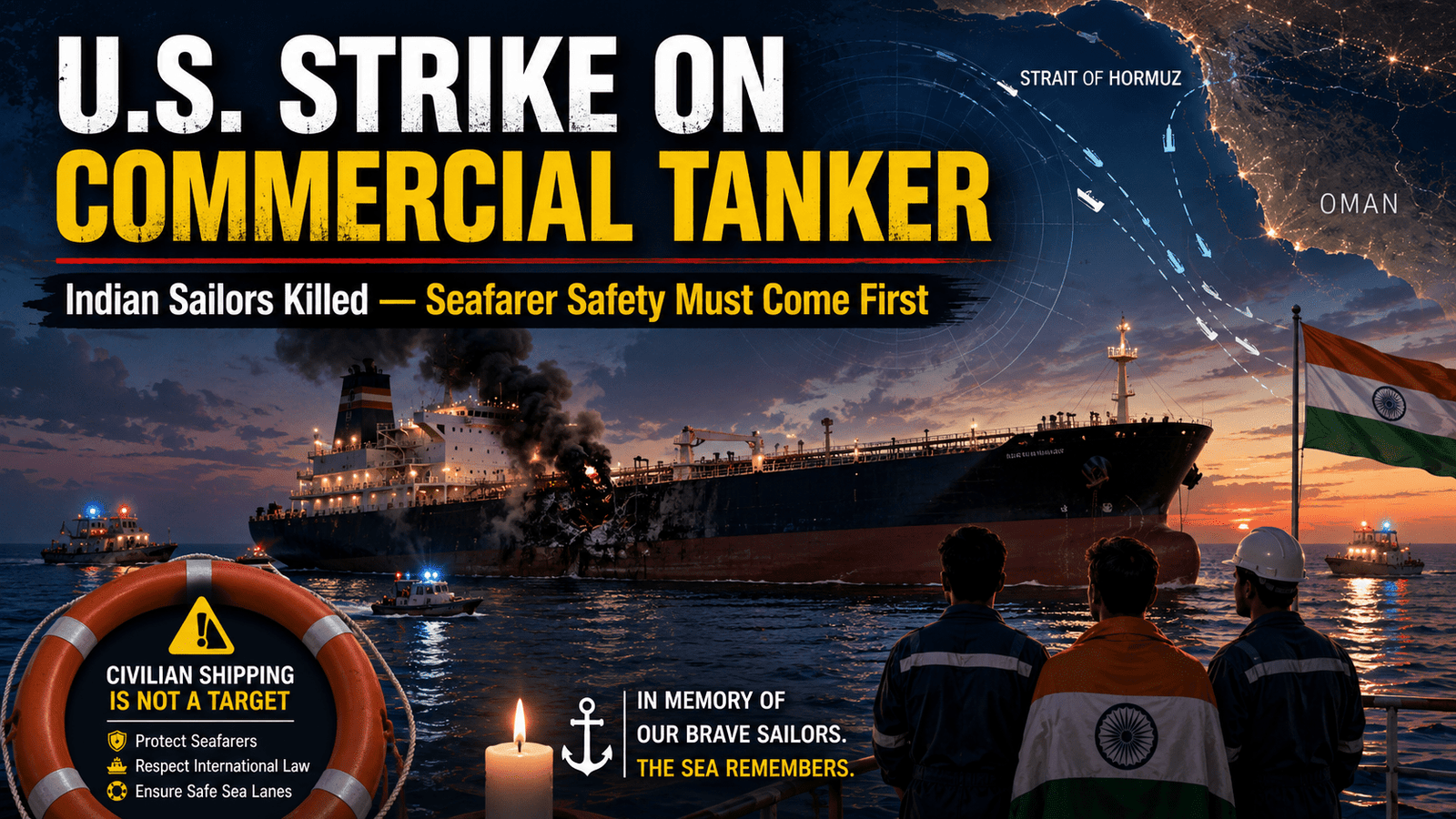
A U.S. military strike on the commercial tanker MT Settebello near Oman has triggered grief in India and serious concern across the global maritime community. The Palau-flagged tanker was carrying 24 Indian crew members when it was struck near the Strait of Hormuz, one of the world’s most important oil shipping routes.
According to U.S. Central Command, American forces disabled the vessel after alleging that it violated a blockade linked to Iranian oil shipments and failed to follow directions. The U.S. account said precision munitions were fired into the ship’s engine room. In related U.S. tanker strikes in the same region, Hellfire missiles were also reported, intensifying public concern over the use of heavy military force around civilian-crewed commercial ships.
The human cost was devastating. Twenty-one Indian crew members were rescued, while three Indian seafarers lost their lives. For their families, this was not just a diplomatic dispute or maritime incident. These were civilian workers earning a living at sea, far from home.
The International Maritime Organization, a United Nations specialized agency, strongly condemned the attack and confirmed three seafarer fatalities. The IMO also stressed that actions endangering seafarers and international shipping are unacceptable and called for protection of life at sea.
This incident raises an important question: was lethal force the only option? Critics argue that if a commercial ship was suspected of violating a blockade, non-lethal maritime enforcement options could have been considered first, where operationally possible. These may include warning shots, disabling communication checks, boarding by a naval or marine team, taking control of the vessel, escorting it to port, and placing it under custody for investigation.
A commercial tanker with civilian crew should not be treated the same way as an armed warship. Until a transparent investigation establishes all facts, the deaths of Indian sailors raise serious humanitarian, legal and ethical concerns.
From a health and wellness perspective, the impact is also deeply human. Survivors may face trauma, anxiety and fear of returning to sea. Families of deceased sailors face emotional pain and financial uncertainty. Indian seafarers working worldwide may now feel more vulnerable in conflict zones.
Peace, restraint and accountability are urgently needed. Civilian sailors must never become collateral damage in geopolitical conflict.
Disclaimer: This article is for informational and educational purposes only. It is based on publicly available reports and should not be treated as legal, diplomatic or emergency guidance.