

















































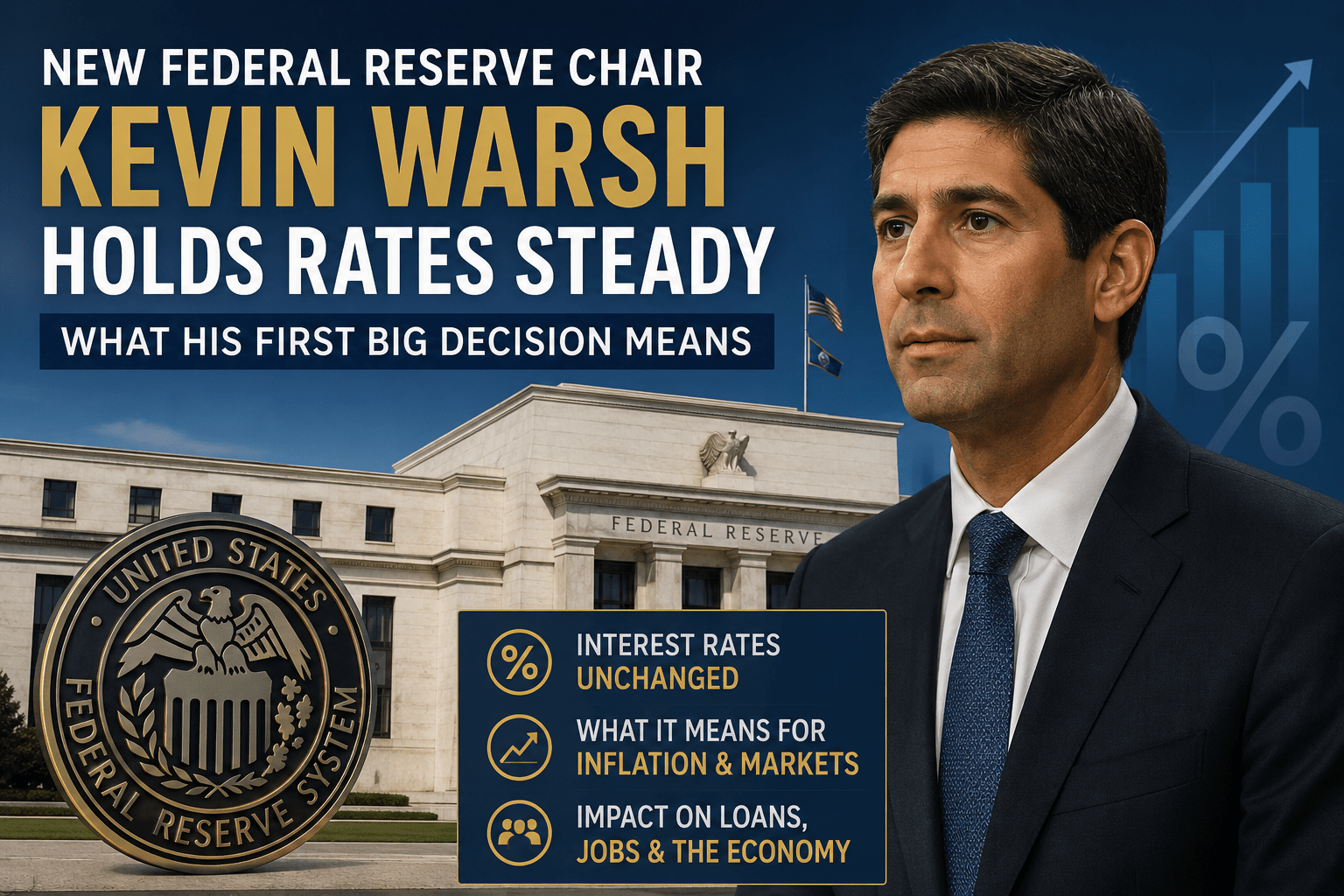
New Federal Reserve Chief Kevin Warsh Holds Rates Steady: What His First Big Decision Means

The Federal Reserve has entered a new era under newly appointed Chair Kevin Warsh, and his first major policy decision has already sent a strong message to Wall Street: the fight against inflation is not over yet.
At the June 2026 Federal Open Market Committee meeting, the Fed decided to keep interest rates unchanged at 3.50% to 3.75%. This means there was no immediate rate cut, despite pressure from some investors and political voices hoping for cheaper borrowing costs.
For everyday Americans, this decision matters because Federal Reserve interest rates affect almost everything — home loans, car loans, credit cards, business borrowing, stock markets and even the value of the U.S. dollar. When rates stay higher, borrowing remains expensive. But the Fed’s goal is to prevent inflation from rising again.
Warsh’s first decision shows that he wants to move carefully. Inflation remains above the Fed’s 2% target, partly because of higher energy costs and global uncertainty linked to the Middle East conflict. The Fed also said economic activity is still expanding at a solid pace, while the job market remains stable. In simple terms, the economy is not weak enough for the Fed to rush into rate cuts.
One of the biggest changes under Warsh is his communication style. Reports suggest he wants the Fed to give less forward guidance and avoid making markets too dependent on future promises. This is a major shift from the previous era, where investors closely watched every sentence for hints about the next rate move.
Warsh has also launched a broad review of how the Federal Reserve operates. New task forces are expected to study inflation measurement, economic data, employment, productivity, communication and the Fed’s large bond holdings. This suggests he is not only focused on short-term interest rates, but also on reshaping the institution itself.
Markets reacted cautiously because investors were hoping for clearer signs of future rate cuts. Instead, the Fed’s projections showed that policymakers are still divided, with some expecting rates to remain high or even rise if inflation stays stubborn.
For consumers, the message is clear: cheaper loans may not come quickly. Mortgage rates, credit card interest and business financing costs could remain elevated for some time. For investors, the new Fed leadership means more uncertainty and possibly more market volatility.
However, the decision also has a positive side. A cautious Fed can help protect the economy from another inflation spike. If inflation cools steadily, future rate cuts may become possible. But if energy prices rise, wages stay strong or inflation remains sticky, the Fed may keep policy tight for longer.
Kevin Warsh’s first major move shows that the Federal Reserve is entering a more disciplined and less predictable phase. Instead of promising quick relief, the new Fed chief appears focused on restoring price stability and rebuilding confidence in the central bank.
The next few months will be crucial. Inflation data, jobs numbers, energy prices and global tensions will decide whether the Fed holds, cuts or surprises markets again.
Disclaimer: This article is for informational and educational purposes only. It should not be considered financial, investment, legal or economic advice. Readers should consult qualified professionals before making financial decisions.