
















































National Heatwave in India 2026: Why Delhi, Rajasthan, and Uttar Pradesh Are Facing Record-Breaking Temperatures

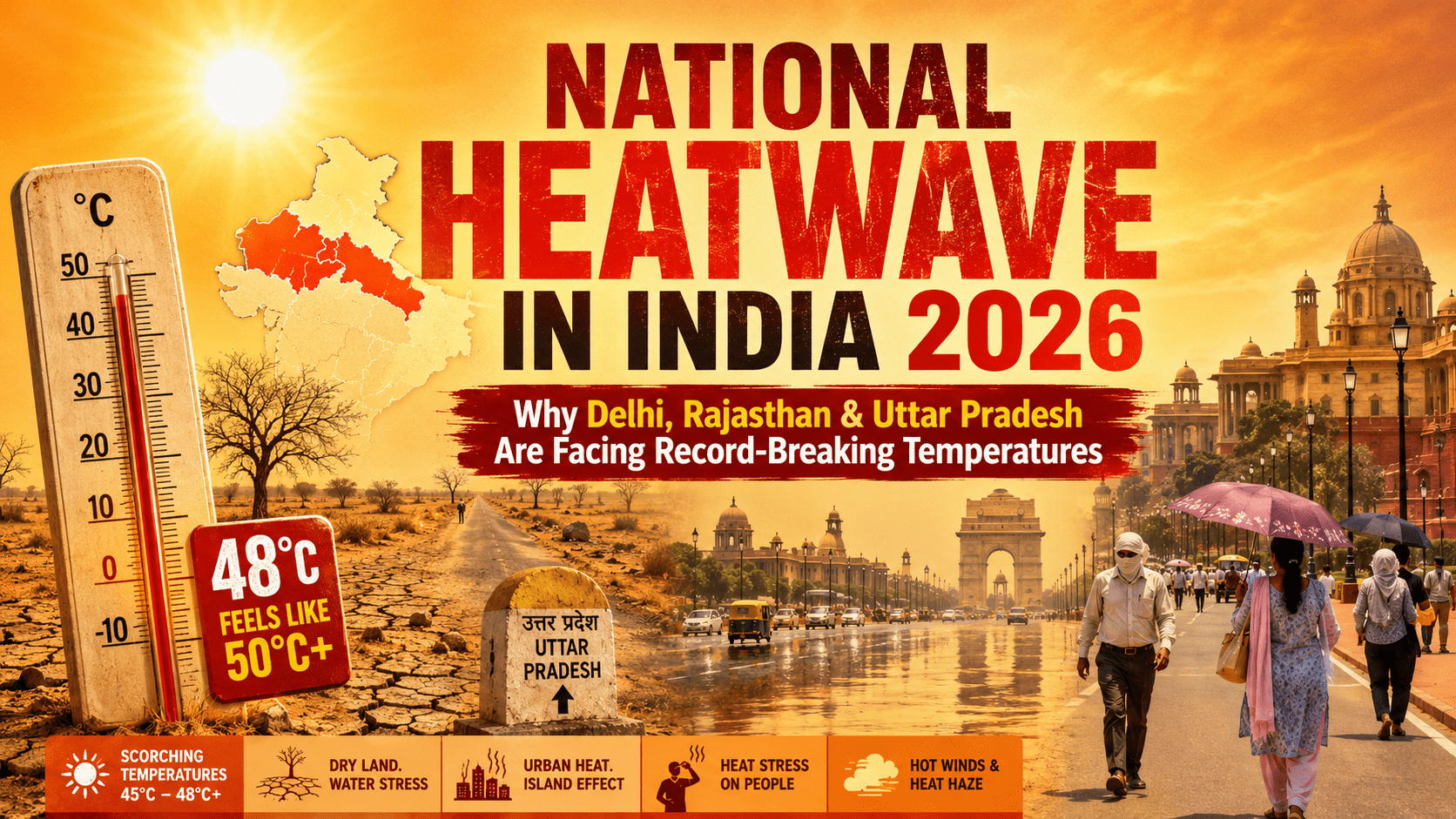
India is currently facing one of its most intense heatwaves in recent years, with temperatures crossing dangerous levels across northwestern and central regions. Major cities and states, including Delhi, Rajasthan, Uttar Pradesh, Haryana, and parts of Madhya Pradesh, are experiencing extreme heat conditions that have prompted health advisories and emergency warnings from authorities.
Hospitals are reporting an increase in heat-related illnesses, while meteorological experts continue to monitor the situation closely. As millions struggle with scorching daytime temperatures, many are asking the same question: What is causing this severe heatwave, and is it becoming the new normal?
What Is Happening Across Northern India?
Over the past several days, temperatures in many parts of northern India have remained significantly above seasonal averages. In some locations, daytime temperatures have climbed above 45°C (113°F), creating dangerous conditions for outdoor workers, elderly individuals, children, and people with pre-existing medical conditions.
The impact has been widespread:
- Increased cases of heat exhaustion and heatstroke
- Higher electricity demand due to air conditioning use
- Water shortages in some areas
- Reduced outdoor activity during peak afternoon hours
- Increased stress on healthcare services
Authorities have urged residents to avoid unnecessary exposure to sunlight, stay hydrated, and remain indoors during the hottest parts of the day.
Why Is India Experiencing Such an Extreme Heatwave?
Several meteorological and environmental factors are contributing to the current heatwave.
1. Persistent High-Pressure System
One of the primary causes is the presence of a strong high-pressure system over northern India.
High-pressure systems cause air to sink toward the Earth’s surface. As the air descends, it compresses and warms, creating clear skies and intense sunshine. Without cloud cover, solar radiation reaches the ground more effectively, causing temperatures to rise rapidly.
This atmospheric setup can persist for days or even weeks, leading to prolonged periods of extreme heat.
2. Delayed Pre-Monsoon Activity
Normally, pre-monsoon thunderstorms and weather disturbances help provide temporary cooling during late spring and early summer.
This year, many regions have experienced weaker-than-normal pre-monsoon rainfall. The lack of cloud cover and rain has allowed heat to accumulate continuously, intensifying daytime temperatures.
3. Dry Winds From Desert Regions
Hot, dry winds known as “Loo” are common across northern India during summer. These winds originate from desert regions, particularly the Thar Desert in Rajasthan.
When these dry winds move eastward toward Delhi, Uttar Pradesh, and surrounding states, they significantly increase temperatures while reducing humidity. This creates extremely uncomfortable and potentially dangerous conditions.
4. Urban Heat Island Effect
Large cities such as Delhi experience an additional warming phenomenon known as the Urban Heat Island Effect.
Concrete buildings, asphalt roads, and limited green spaces absorb and retain heat throughout the day. At night, these surfaces slowly release stored heat, preventing temperatures from dropping significantly.
As a result, urban populations often experience higher temperatures than nearby rural areas.
5. Climate Change and Global Warming
Scientists increasingly link the growing frequency and intensity of heatwaves to climate change.
Global average temperatures have been rising due to greenhouse gas emissions from human activities. Warmer baseline temperatures mean that naturally occurring heat events become more extreme.
Research suggests that heatwaves in South Asia are becoming:
- More frequent
- More intense
- Longer-lasting
- More dangerous to human health
While no single heatwave can be attributed solely to climate change, experts agree that global warming is making such events more likely.
Health Risks Associated With Extreme Heat
Heatwaves can pose serious health risks, especially when temperatures remain elevated for several consecutive days.
Common Heat-Related Illnesses
Heat Exhaustion
Symptoms may include:
- Heavy sweating
- Weakness
- Dizziness
- Nausea
- Headaches
- Muscle cramps
Heatstroke
Heatstroke is a medical emergency and may cause:
- Body temperature above 40°C (104°F)
- Confusion
- Rapid heartbeat
- Loss of consciousness
- Seizures
Immediate medical attention is required if heatstroke is suspected.
How To Stay Safe During a Heatwave
Experts recommend several practical steps to reduce heat-related risks.
Stay Hydrated
Drink water regularly throughout the day, even if you do not feel thirsty. Avoid excessive alcohol and caffeinated beverages, which may contribute to dehydration.
Avoid Peak Heat Hours
Try to remain indoors between 11 a.m. and 4 p.m., when temperatures are typically highest.
Wear Appropriate Clothing
Choose:
- Lightweight fabrics
- Loose-fitting clothing
- Light-colored garments
Protect Vulnerable Individuals
Check on:
- Elderly family members
- Young children
- People with chronic medical conditions
- Outdoor workers
Use Cooling Methods
Fans, air conditioners, cool showers, and shaded areas can help lower body temperature and reduce heat stress.
When Will the Heatwave End?
Meteorologists expect some relief once stronger pre-monsoon activity develops and the southwest monsoon advances further into northern India.
However, weather patterns can change rapidly, and the duration of the current heatwave will depend on atmospheric conditions over the coming days.
Many experts warn that similar heat events may continue to occur more frequently in the future, making adaptation and preparedness increasingly important.
The Bigger Picture
The current heatwave serves as a reminder of how vulnerable densely populated regions can be to extreme weather events. As temperatures continue to rise globally, governments, cities, and communities will need to invest in climate resilience measures such as urban greening, improved water management, heat action plans, and sustainable infrastructure.
For millions of people across India, understanding the causes of these extreme weather events is the first step toward better preparedness and protection.
Frequently Asked Questions (FAQs)
What causes heatwaves in India?
Heatwaves are typically caused by high-pressure systems, dry desert winds, limited rainfall, and prolonged sunshine. Climate change can further intensify these conditions.
Which states are most affected by the current heatwave?
Delhi, Rajasthan, Uttar Pradesh, Haryana, and parts of Madhya Pradesh are among the hardest-hit regions.
Is climate change making heatwaves worse?
Yes. Scientific studies indicate that climate change is increasing the frequency, intensity, and duration of heatwaves worldwide.
How can people protect themselves during extreme heat?
Stay hydrated, avoid outdoor activities during peak heat hours, wear lightweight clothing, and seek cool environments whenever possible.
Conclusion
India’s ongoing heatwave highlights the growing challenge posed by extreme weather events. While natural atmospheric conditions are driving the current surge in temperatures, climate change is amplifying their severity. As northern India endures scorching temperatures, public awareness, preparedness, and long-term climate adaptation strategies will play a critical role in reducing future risks.
Disclaimer: This article is for informational and educational purposes only. It is based on publicly available reports and policy updates. It should not be considered financial, investment, legal or business advice.