



































Pakistan Occupied Kashmir Unrest: Why Voices for Freedom Are Being Silenced

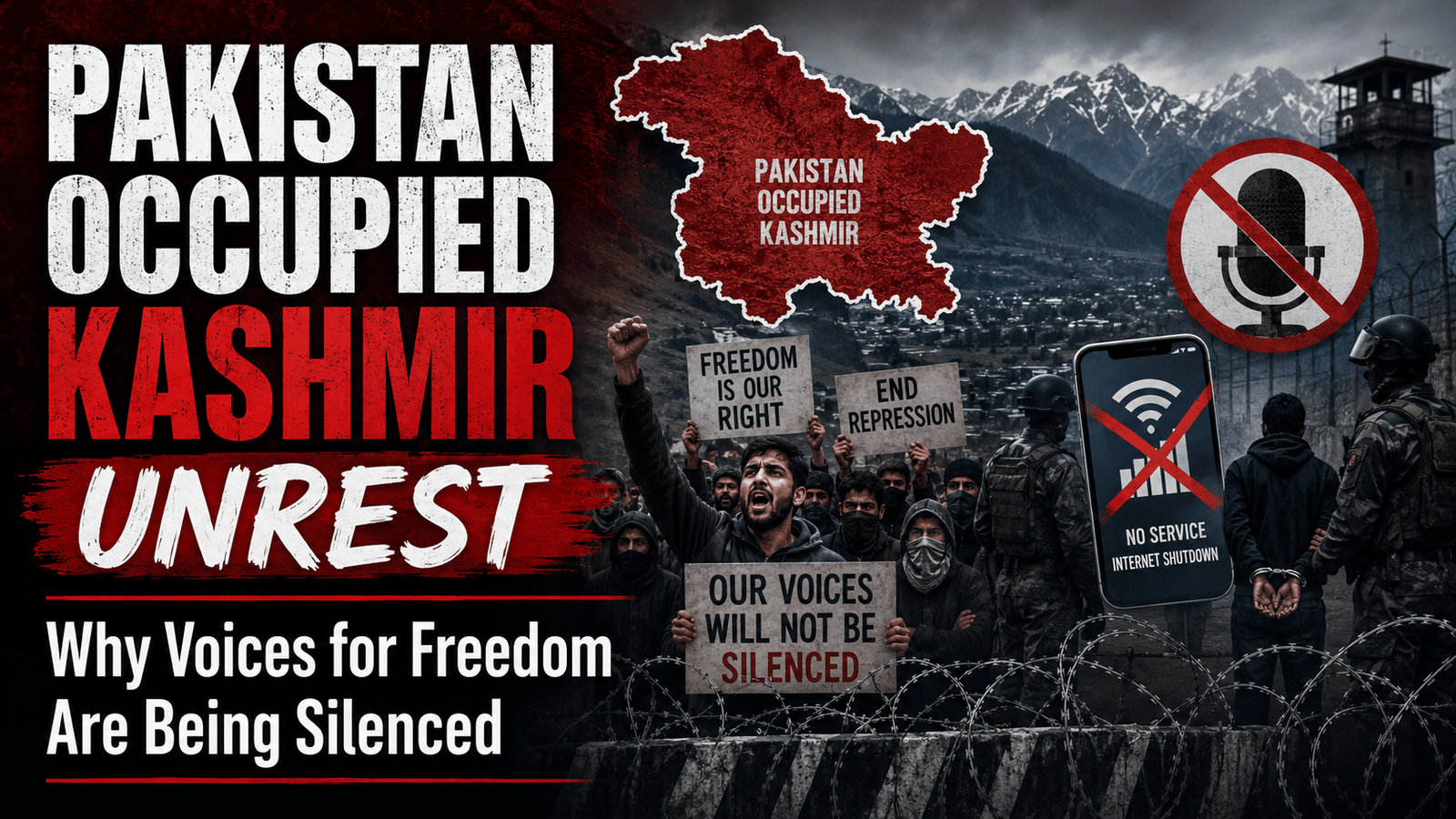
Pakistan Occupied Kashmir, also called Pakistan-administered Kashmir, is once again in the spotlight after fresh protests, deadly clashes and a harsh security crackdown raised serious questions about political freedom in the region.
The latest unrest began after the Joint Awami Action Committee, widely known as JAAC, opposed the continuation of 12 reserved legislative seats for Kashmiri refugees living outside the region. Protesters argue that political representation should belong to the people actually living in PoK, not to non-residents who contest from other parts of Pakistan.
What started as a demand for political rights has now turned into a wider debate about democracy, local identity and freedom of expression. The JAAC, a grassroots movement that includes traders, activists and civil society voices, has been banned under anti-terror laws. Its leaders are facing sedition charges, arrest warrants and bounties, while supporters have been detained.
The crackdown intensified after deadly clashes in Rawalakot. Reports said at least 11 people were killed and dozens were injured during confrontations between protesters and security forces. Authorities then moved to restrict internet services, deploy additional forces and block mass mobilization across cities such as Muzaffarabad, Mirpur and Rawalakot.
For many residents, this is not just about one protest. It is about a long-standing feeling that their voices are controlled from outside the region. Local activists say PoK is called “Azad” or “free,” but real political power remains limited. Defence, foreign affairs, currency and major strategic decisions remain under Pakistan’s control.
The situation became even more serious after Pakistan’s Defence Minister Khawaja Asif reportedly warned protesters and described the unrest as the beginning of sedition. Such language has increased fears that legitimate political demands may be treated as threats instead of being addressed through dialogue.
Human rights groups have also raised concerns. Amnesty International criticized the use of anti-terror laws against a protest movement and warned that internet shutdowns, mass arrests and restrictions on movement can violate basic freedoms. In any democratic society, people should have the right to protest peacefully, question government decisions and demand fair representation.
The Pakistani establishment’s response shows a familiar pattern: when people demand accountability, the state often responds with force, communication blackouts and legal pressure. This may silence the streets temporarily, but it does not solve the deeper problem.
PoK’s unrest matters beyond local politics. The region sits at the heart of the long-running India-Pakistan dispute over Jammu and Kashmir. Any instability there can quickly become a diplomatic and security issue for South Asia. But the first concern must be the ordinary people — shopkeepers, students, workers, families and local leaders who want their voices to be heard.
Real peace cannot be built by silencing people. It requires fair elections, transparent governance, local participation and respect for civil rights. If Pakistan wants stability in PoK, it must listen to its people instead of branding dissent as sedition.
The latest events show that PoK is not silent. Its people are asking for dignity, representation and freedom. The world should pay attention.
Disclaimer: This article is for informational and educational purposes only. It is based on publicly available reports and should not be considered legal, diplomatic or political advice.