
















































A tragic U.S. Air Force B-52 Stratofortress bomber crash in California has shocked the American military community and raised fresh questions about aircraft safety, modernization and the risks involved in test missions.
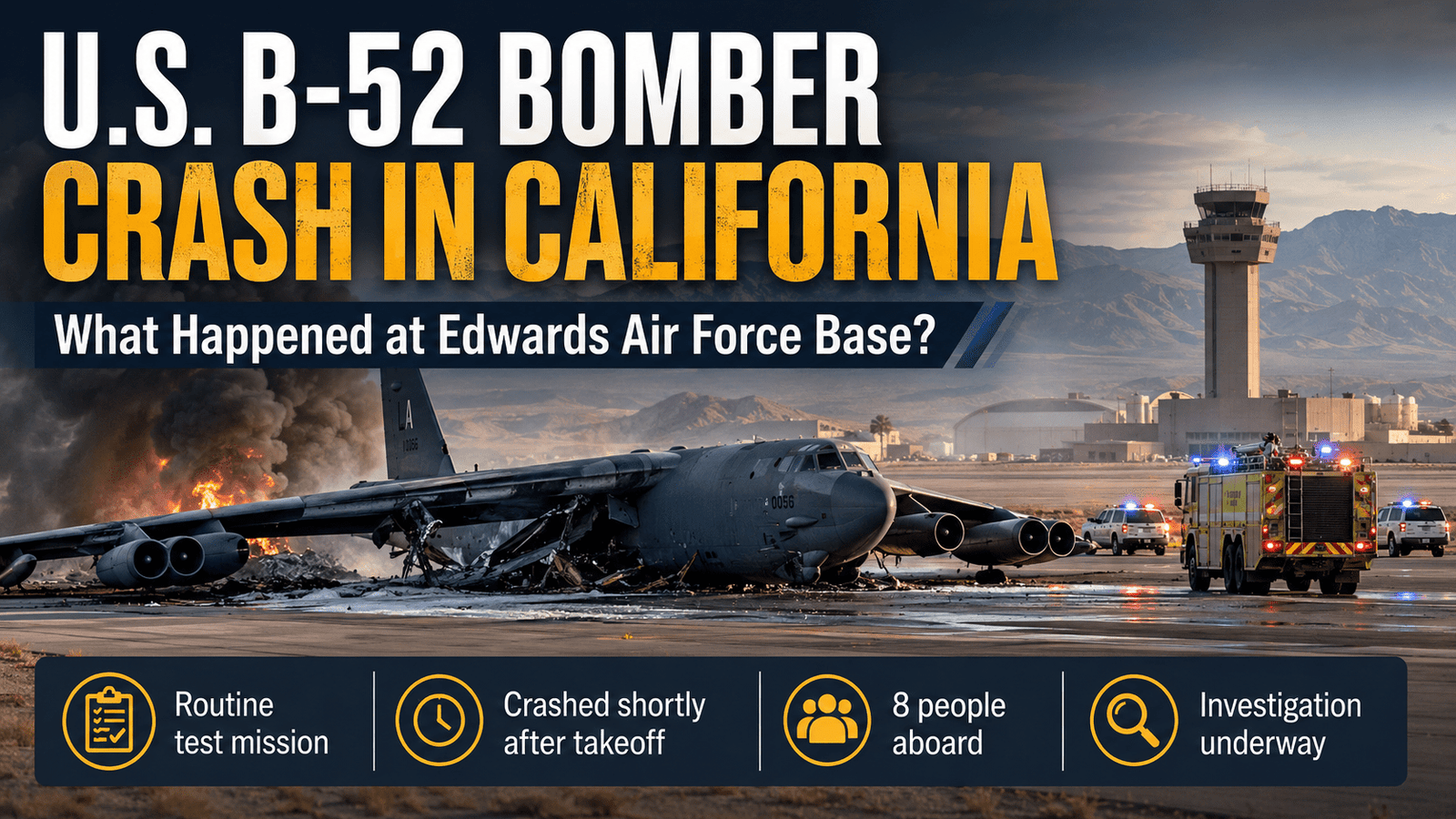
The crash happened on June 15, 2026, at Edwards Air Force Base in Southern California’s Mojave Desert. According to reports, the B-52 went down shortly after takeoff during a routine test mission linked to radar modernization. All eight people on board were killed.
The crew reportedly included U.S. Air Force personnel, government civilians and contractors. Boeing also confirmed that two of its employees were among those who died. Officials have not yet released the full identities of the victims, pending family notifications.
The B-52 Stratofortress is one of the most iconic aircraft in U.S. military history. First introduced in the 1950s, it remains a major part of America’s long-range bomber fleet. The aircraft can carry both conventional and nuclear weapons and is still being upgraded to remain in service for decades.
That is what makes this crash significant. The aircraft involved was reportedly part of a modernization-related test mission. The U.S. military has been working to upgrade the B-52 fleet with new radar systems, engines and advanced technology. These upgrades are designed to keep the bomber relevant in modern warfare, but testing new systems always carries risk.
Edwards Air Force Base is known as one of the most important flight test centers in the world. It has played a major role in U.S. aviation history, including experimental aircraft testing and military aerospace development. Because of that, many advanced and high-risk test programs take place there.
The cause of the crash is still under investigation. Early speculation should be avoided until official findings are released. Investigators will likely examine aircraft systems, maintenance records, flight data, pilot communications, engine performance and any modernization equipment involved in the test.
This tragedy is also a reminder that military aviation carries real human risk. Behind every aircraft are pilots, engineers, technicians and contractors working to test and maintain complex machines. Their work often happens far from public attention, but it remains essential to national defence.
For now, the focus should remain on the families of the victims and the official investigation. The U.S. Air Force will need to determine what went wrong and whether any safety or technical changes are required before similar missions continue.
The California B-52 crash is not just a defence headline. It is a human tragedy, a military safety concern and a reminder of the high cost of advanced aviation testing.
Disclaimer: This article is for informational and educational purposes only. It is based on publicly available reports and should not be considered aviation, military, legal or technical advice.