




























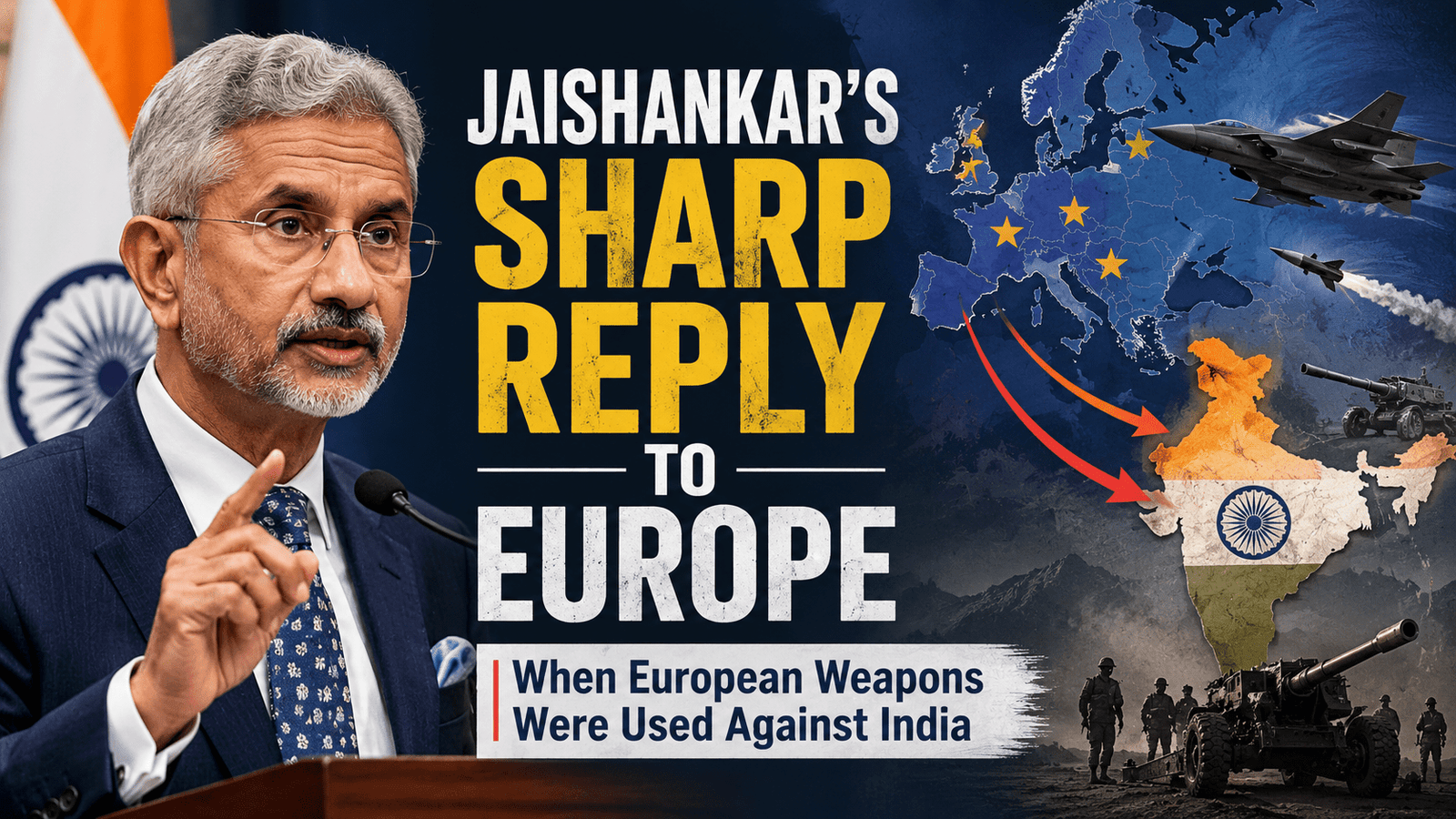
Jaishankar’s Sharp Reply to Europe: When European Weapons Were Used Against India

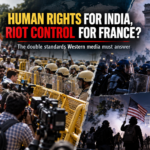
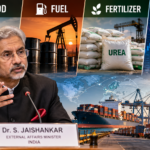
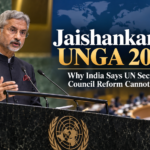
India’s External Affairs Minister Dr. S. Jaishankar has once again exposed what many Indians see as Europe’s selective morality in global politics. Responding to criticism over India’s purchase of Russian oil, Jaishankar made a powerful point: no European country has been attacked with Indian weapons, but European weapons have been used against India.
His remark was not just diplomatic wordplay. It was a direct challenge to Europe’s habit of preaching morality to India while ignoring its own defence exports to countries that have threatened Indian security.
For decades, several European nations supplied military platforms to Pakistan. France supplied Mirage fighter aircraft and submarines. The United Kingdom supplied naval helicopters and defence systems. Sweden supplied Erieye airborne early warning aircraft. Italy, Germany and Ukraine contributed naval equipment, engines, guns, helicopters or armoured platforms. Türkiye, a transcontinental country with territory in Europe and a NATO member since 1952, has also become one of Pakistan’s closest defence partners.
The history matters. During the 1971 India-Pakistan War, Pakistan operated French-origin Mirage aircraft on the western front. In the same war, the French-built Daphné-class submarine PNS Hangor sank India’s INS Khukri off the coast of Diu on December 9, 1971, one of the Indian Navy’s most painful wartime losses.
More recently, during Operation Sindoor in May 2025, India said Pakistan used hundreds of Turkish-origin drones across the western border, from Leh to Sir Creek. Reports also highlighted Turkish-made kamikaze drones targeting Indian locations, including one launched from Lahore toward Jalandhar. This makes Jaishankar’s point even stronger: European and NATO-linked defence ecosystems have repeatedly found their way into India’s security challenges.
This is why India rejects lectures on “moral ambiguity.” Europe continues to defend its own energy, security and defence interests, yet questions India when New Delhi buys affordable energy to protect its people from inflation.
India’s position is simple: strategic autonomy is not hypocrisy. Every major power acts in its national interest. India is doing the same.
The larger lesson is clear. If Europe wants a serious partnership with India, it must move beyond preaching and acknowledge India’s security concerns honestly. Mutual respect, not selective criticism, should guide India-Europe relations.
Jaishankar’s reply reflects a new India: confident, practical and unwilling to accept double standards.
Disclaimer: This article is for informational and educational purposes only. It is based on publicly available reporting and should not be treated as legal, diplomatic or defence advice.