

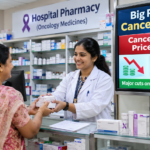








































Big Relief for Cancer Patients in India: Prices of 1,085 Medicines Revised, Some Cut by Over 90%

For thousands of Indian families, a cancer diagnosis brings not only emotional challenges but also enormous financial pressure.
Chemotherapy, immunotherapy, hospital visits and long-term medication can place a heavy burden on household savings.
But India has announced an encouraging development that could make cancer treatment more affordable.
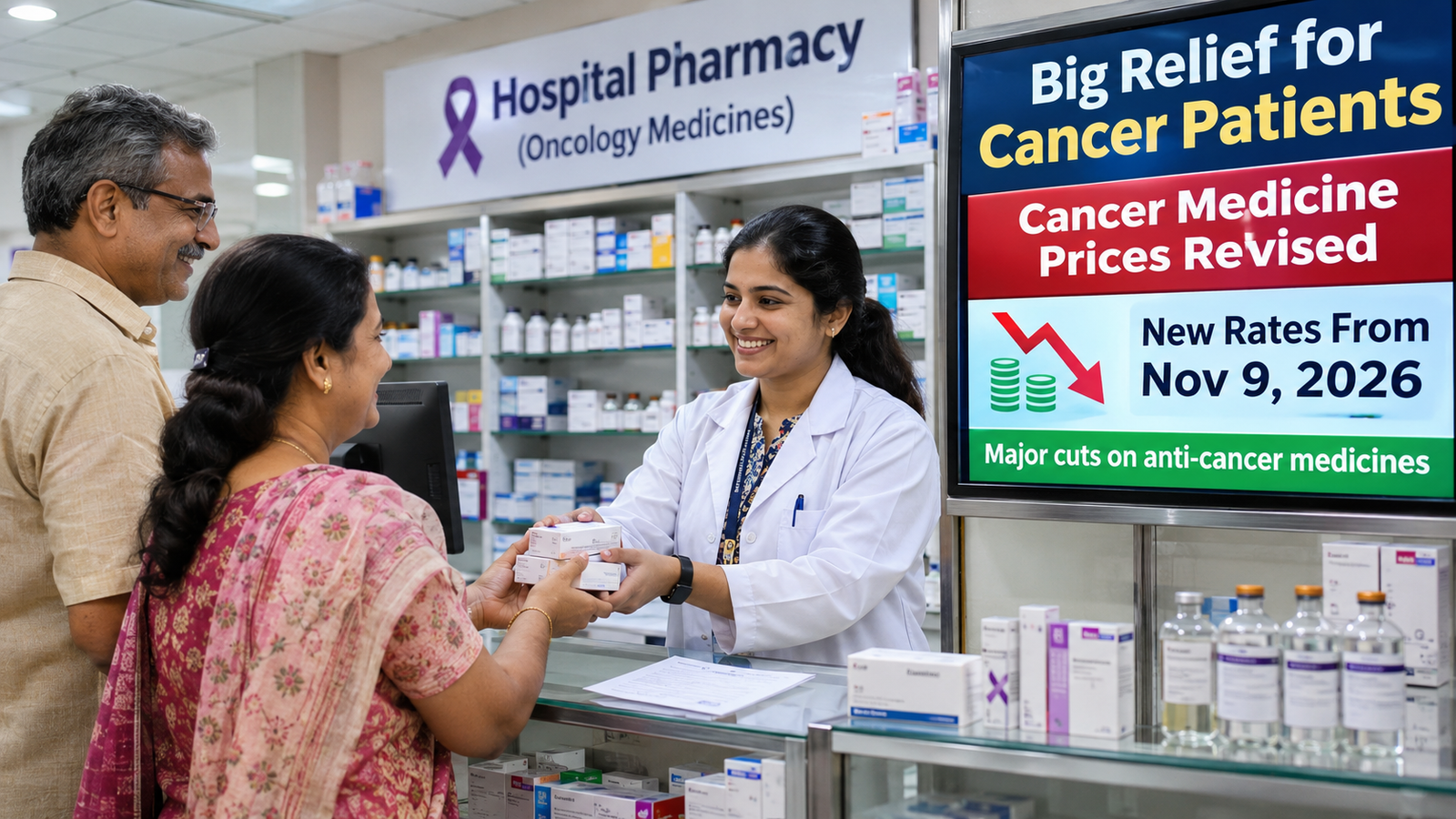
On November 3, 2026, the National Pharmaceutical Pricing Authority (NPPA) updated its list of anti-cancer medicines with revised maximum retail prices.
The list now covers 1,085 medicine brands and formulations, expanding from the 543 entries announced on October 28.
The revised prices are scheduled to take effect on November 9, 2026.
And some of the reductions are substantial.
For patients who depend on these medicines, the savings could amount to thousands of rupees per purchase.
1. What Has the Government Announced?
The NPPA, operating under India’s Department of Pharmaceuticals, has introduced a pricing intervention aimed at making certain cancer medicines more affordable.
The measure focuses on reducing excessive trade margins within the medicine distribution system.
Under the Trade Margin Rationalisation framework announced on October 17, the government targeted 137 identified non-scheduled anti-cancer drugs.
The regulator subsequently published revised maximum retail prices for different brands, strengths and pack sizes.
Its list has continued expanding as manufacturers submit updated pricing information.
Source: NPPA — Official Revised Medicine Price Lists
2. Some Cancer Medicine Prices Are Falling Dramatically
The extent of the reduction varies between medicines.
However, official price lists and news reports show that some products have received particularly large cuts.
For example:
| Cancer medicine brand | Previous MRP | Revised MRP |
|---|---|---|
| Anarzole, 10 tablets | ₹695.76 | ₹73 |
| Azacytin, 100 mg injection | ₹6,337 | ₹1,495.04 |
| Bevacizab, 4 ml vial | ₹21,767.70 | ₹5,930.13 |
| Samtepa, 100 mg vial | ₹80,071.86 | ₹7,150.33 |
Prices relate to the specified brands, strengths and pack sizes. They should not be assumed to apply to every product containing the same medicine.
Consider the Samtepa example.
A single vial previously carrying an MRP exceeding ₹80,000 has a revised price of approximately ₹7,150.
That is a reduction of more than ₹72,000 per vial.
For patients requiring multiple treatment cycles, lower medicine prices could substantially reduce financial pressure.
Sources: NDTV Profit — Cancer Medicine Price Cuts | Mint — Major Reductions in Cancer Drug MRPs
3. Why Were Cancer Medicines So Expensive?
Drug development, manufacturing, regulatory compliance and distribution all contribute to medicine prices.
However, the retail price also includes margins earned through the supply chain.
In some cases, these margins can become substantial.
The government’s intervention is designed to limit excessive distribution and retail mark-ups on identified medicines.
This is particularly important for cancer treatment, where patients may have limited alternatives and cannot easily postpone essential medication.
By reducing the maximum permitted selling prices, the government aims to make treatment more accessible without requiring patients to negotiate individually with distributors or hospitals.
4. How Will This Help Indian Families?
The economic impact could be meaningful.
Cancer treatment can involve recurring expenses over several months or years.
For households paying directly for medicines, even a moderate reduction can provide relief.
Lower prices may also reduce the financial burden on caregivers and families supporting patients.
For some patients, improved affordability could make it easier to continue prescribed treatment.
However, medicine costs represent only one part of cancer care.
Diagnostic tests, surgery, hospitalization, travel and other treatments can still be expensive.
The price reductions are an important affordability measure, but they do not make cancer treatment universally free or inexpensive.
5. When Will the New Prices Take Effect?
The revised maximum retail prices are scheduled to apply from November 9, 2026.
According to the government’s implementation instructions, manufacturers must publish updated price lists.
Pharmacies, retailers and hospitals are expected to charge the applicable revised prices from the effective date.
Hospitals must also display revised prices prominently on their websites, while pharmacies are required to make the updated information available.
State drug controllers have been tasked with supporting compliance.
Source: Press Information Bureau — Trade Margin Rationalisation on 137 Anti-Cancer Drugs
6. How Can Patients Check Whether Their Medicine Is Included?
Patients and families can check the NPPA’s official updated price list.
The exact brand, strength, formulation and pack size matter.
Two medicines containing the same active ingredient may have different listed prices.
The government also provides the Pharma Sahi Daam platform for checking regulated medicine prices.
If a pharmacy or hospital charges more than the applicable maximum retail price after implementation, consumers can seek clarification and report potential overcharging through the NPPA’s official channels.
Patients should not discontinue or switch prescribed medicines solely because another brand appears cheaper. Any substitution should be discussed with their treating clinician.
Official website: National Pharmaceutical Pricing Authority
7. Why This Is an Important Step for Indian Healthcare
India is already one of the world’s major producers of generic medicines.
However, domestic manufacturing strength does not automatically guarantee that every medicine is affordable for Indian patients.
Pricing policies, hospital procurement, distribution costs and availability all influence what patients ultimately pay.
The latest intervention shows how regulation of trade margins can affect the price of essential medicines.
It could also encourage greater transparency across pharmaceutical supply chains.
At the same time, maintaining medicine availability will remain critical.
A lower regulated price provides limited benefit if a product becomes difficult to obtain.
The government’s framework therefore also emphasizes continuity of supply.
8. What Happens Next?
The immediate priority is implementation.
Hospitals and pharmacies will need to apply the revised MRPs correctly.
Manufacturers will continue submitting pricing information, allowing the NPPA to update its published list.
Patients should be able to identify the correct price without complicated procedures.
Longer term, the effectiveness of the initiative will depend on actual savings at the point of purchase, medicine availability and compliance across healthcare providers.
The strongest measure of success will not simply be the number of brands listed.
It will be whether patients and families consistently pay less for the treatment they need.
Conclusion: A Meaningful Step Toward Affordable Cancer Care
The expansion of revised prices to 1,085 anti-cancer medicine entries is encouraging news for India’s healthcare system.
Some reductions exceed 90%.
Others are smaller but may still produce meaningful savings for patients requiring repeated treatment.
The November 9 implementation date gives families a clear opportunity to review the prices of prescribed medicines.
Cancer remains a difficult and often expensive illness.
But lowering the cost of essential treatment can ease financial stress and improve access.
When life-saving treatment becomes more affordable, the benefits extend beyond individual patients to entire families and communities.
India’s latest medicine-pricing initiative is a positive development worth recognizing—and its real impact will become clearer as the revised prices take effect.
Frequently Asked Questions
How many cancer medicines have received revised prices in India?
As of November 3, 2026, the NPPA’s updated list covers 1,085 anti-cancer medicine brands and formulations.
When will the new prices become effective?
The revised MRPs are scheduled to take effect on November 9, 2026.
Are all cancer medicines becoming 90% cheaper?
No. Price reductions vary by brand, strength and pack size. Some products have reductions exceeding 90%, but the same percentage does not apply to every medicine.
Can hospitals charge more than the revised MRP?
Hospitals and pharmacies must comply with applicable notified maximum retail prices from the implementation date.
Where can patients check the new rates?
Patients can consult the NPPA website and Pharma Sahi Daam price-checking resources.
Does the new policy make cancer treatment free?
No. It lowers the maximum retail prices of specified medicines but does not eliminate other treatment-related expenses.
Editorial Note: The figures relate to the NPPA’s updated lists available on November 3, 2026. Prices and coverage can vary by formulation and may be updated. Patients should verify the applicable price and consult their healthcare professional before changing medication.
