





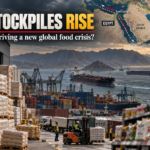


























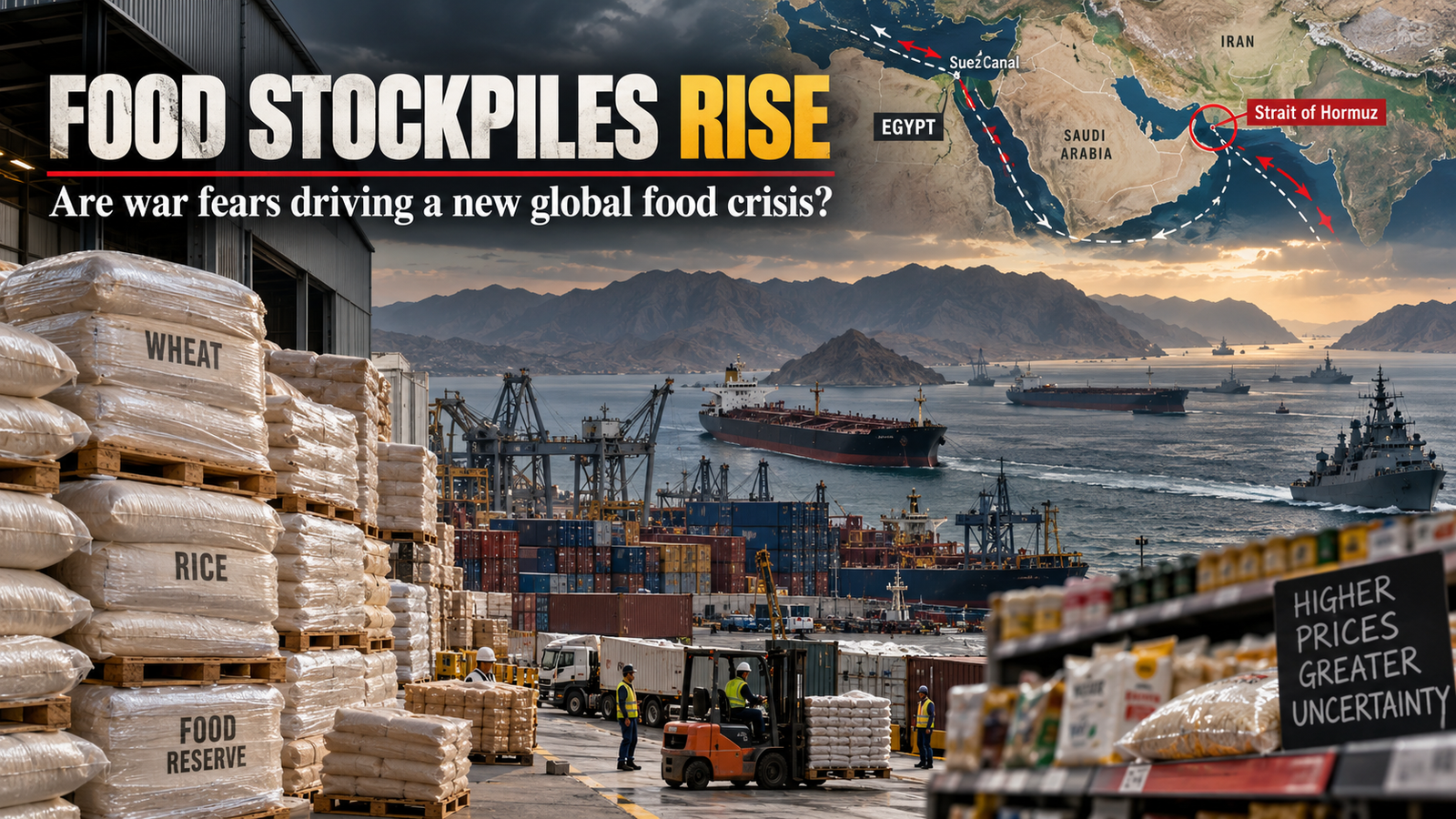
Why Are Countries Stockpiling Food? Is a Major Gulf War and Global Food Crisis Coming After the US Midterm Elections?

Something unusual is happening across the Middle East.
Governments are reviewing emergency food reserves. Officials are discussing strategic storage facilities. Countries are preparing to protect supplies of fuel, medicine and essential commodities.
At the same time, Washington is reportedly warning its regional allies to prepare for another possible round of military operations against Iran after the November 3, 2026 US midterm elections.
These developments raise an uncomfortable question.
Are governments preparing for a major escalation in the Gulf that could trigger another global food and energy crisis?
The possibility deserves serious attention.
Because if the conflict disrupts shipping, fuel supplies and fertilizer production, the consequences could extend far beyond the Middle East.
India, Europe, Africa and other parts of the world could all feel the economic pressure.
1. Egypt Is Strengthening Its Strategic Food and Fuel Reserves
On October 25, Egyptian Prime Minister Mostafa Madbouly chaired a meeting of the country’s Central Crisis Management Committee.
The discussions focused on escalating regional tensions, disrupted supply chains and rising international commodity prices.
Madbouly instructed government agencies to strengthen strategic reserves of essential food products and petroleum supplies.
Officials also reviewed stocks of medicines, medical supplies and fertilizers.
The Egyptian government confirmed that existing reserves remained at safe and sufficient levels.
That last detail matters.
Egypt was not announcing that food had run out. It was preparing for possible disruptions before shortages developed.
Nevertheless, the decision demonstrates that regional governments are increasingly concerned about the reliability of international supply chains.
Source: Egypt State Information Service — Government Crisis Committee Meeting, October 25, 2026
2. Gulf Countries Are Discussing Shared Emergency Stockpiles
Egypt is not alone.
On October 12, representatives of Gulf Cooperation Council countries discussed plans to establish strategic storage zones for food, medicines and other essential supplies.
The GCC includes Saudi Arabia, the United Arab Emirates, Qatar, Kuwait, Bahrain and Oman.
According to Qatar News Agency, the discussions focused on strengthening food security, regional coordination and preparedness against future disruptions.
Source: Qatar News Agency — GCC Meeting on Agriculture and Food Security, October 12, 2026
Why is this significant?
Many Gulf economies depend heavily on imported food.
Their wealth and infrastructure provide substantial purchasing power, but food imports still require functioning ports, shipping routes and logistics networks.
Even if countries have sufficient money to purchase food, transportation disruptions can delay deliveries and increase costs.
This is why regional food storage is becoming an important security priority.
3. The November 3 US Midterm Elections: Why the Timing Matters
The most concerning development came on October 28.
The Associated Press reported that American officials had privately warned several Middle Eastern countries and regional allies about the possibility of renewed US military strikes against Iran after the November 3 midterm elections.
According to two diplomats briefed on those discussions, regional governments were also advised to prepare for potential Iranian retaliation against energy facilities and other essential infrastructure.
The report emphasized that President Donald Trump had not made a final decision on new strikes.
There is an additional political dimension.
In September, Reuters reported that some Trump administration aides wanted to avoid a major escalation before the midterm elections because of the conflict’s domestic political consequences.
Sources indicated that stronger military action could be considered after the vote.
Source: Reuters — Trump Aides Seek to Keep Iran War Quiet Before November Elections, September 2, 2026
The timing raises legitimate questions about how electoral considerations may influence military decisions.
However, the reports do not establish that renewed strikes have been ordered or that a new offensive will begin immediately after election day.
Diplomatic efforts also remain active.
4. The Strait of Hormuz: A Global Economic Vulnerability
To understand why governments are preparing, look at the geography.
The Strait of Hormuz connects the Persian Gulf with the Gulf of Oman and the wider Indian Ocean.
It is one of the world’s most important energy transportation chokepoints.
Major oil- and gas-exporting countries depend on routes passing through or connected to the Gulf.
When shipping is threatened, the consequences can spread through oil prices, insurance premiums, freight costs and industrial production.
The World Food Programme warned on October 8 that conflict affecting the Strait of Hormuz, Red Sea and Black Sea was disrupting the movement of food, fuel and fertilizers.
Source: World Food Programme — How Trade Route Disruptions Threaten Food Security, October 8, 2026
Even without a complete shutdown, shipping companies can face higher costs and longer delivery times.
If the conflict intensifies, those pressures could increase substantially.
5. How a Gulf War Could Trigger a Global Food Crisis
Many people assume food shortages occur only when farmers produce insufficient crops.
But food security depends on much more than agricultural production.
Modern agriculture requires diesel, electricity, fertilizers, irrigation, processing facilities and international transportation.
Imagine a sharp increase in energy prices.
Farmers may pay more for diesel to operate machinery.
Fertilizer manufacturers may face higher natural-gas and transportation costs.
Trucking companies may charge more to move crops.
Food processors may face higher electricity and packaging expenses.
Supermarkets may eventually pass some of these costs to consumers.
A disruption beginning in the Gulf could therefore increase food prices thousands of kilometres away.
The result may be an affordability crisis rather than an immediate disappearance of food from store shelves.
This distinction is particularly important for lower-income households.
Even when supplies remain available, higher prices can make adequate nutrition increasingly difficult to afford.
6. Fertilizers Could Become an Even Bigger Concern
The relationship between Gulf energy supplies and global agriculture is often overlooked.
Natural gas is an important input in the production of nitrogen fertilizers.
International fertilizer markets also depend on reliable shipping routes.
If energy infrastructure, maritime transport or fertilizer exports are disrupted, farmers may face higher input costs.
Some could reduce fertilizer application, delay purchases or change planting decisions.
Over time, these responses could affect agricultural productivity.
The risk becomes especially serious if disruptions continue into important planting seasons.
A short shipping interruption may produce temporary price pressure.
A prolonged disruption could affect production decisions and future harvests.
That is why governments are monitoring fertilizer supplies alongside food and fuel reserves.
7. Why the Gulf Countries Could Be Especially Vulnerable
The Gulf possesses enormous energy wealth, modern ports and sophisticated logistics infrastructure.
But many countries in the region have limited domestic agricultural production relative to their consumption needs.
Water scarcity, high temperatures and limited suitable farmland increase reliance on food imports.
Governments have developed strategic reserves, diversified suppliers and invested in food-security systems to manage these vulnerabilities.
A major conflict could test those arrangements.
Three potential problems deserve attention.
First, commercial shipping may become more expensive or less predictable.
Second, attacks against ports, power systems or transportation infrastructure could disrupt distribution.
Third, panic buying or precautionary restrictions by exporters could place additional pressure on global food markets.
These risks do not mean Gulf countries are about to run out of food.
They explain why contingency planning is important.
8. Could India Face a Food and Inflation Crisis?
India’s exposure would differ from that of the Gulf countries.
India has a large domestic agricultural sector and government-held foodgrain stocks.
That provides some protection against immediate shortages of staple grains.
But India remains exposed to international energy and fertilizer markets.
A prolonged Gulf crisis could increase crude-oil import costs.
Higher fuel prices could then affect transport, manufacturing and agriculture.
Fertilizer supply disruptions could increase pressure on farming costs and public subsidy expenditure.
Shipping disruptions could also affect Indian exporters trading with Gulf and European markets.
For Indian households, the first visible effects could appear through petrol and diesel prices, transportation charges and the cost of certain food products.
However, the scale of any impact would depend on the duration of the conflict, global commodity prices, government measures and domestic supply conditions.
India’s food production provides resilience, but it does not make the economy immune to a global energy shock.
9. Would Europe and America Also Be Affected?
Yes, although the consequences would vary.
Europe could face higher imported energy and fertilizer costs, alongside additional pressure on shipping and industrial competitiveness.
The United States has substantial domestic energy production, giving it a different supply position.
Nevertheless, American consumers and businesses are not isolated from international oil prices.
A major rise in global energy costs can influence fuel prices, transportation, inflation expectations and financial markets.
There is also a wider economic risk.
If higher oil prices force central banks to maintain elevated interest rates, borrowing costs could remain high.
That would affect mortgages, business investment and financial markets.
An energy shock could therefore create simultaneous pressure on inflation and economic growth.
10. Three Possible Scenarios After the US Elections
Scenario One: Diplomacy Prevents Another Major Escalation
Washington and Tehran could pursue negotiations or arrangements that reduce hostilities.
Regional governments would continue maintaining emergency reserves, but shipping conditions could gradually improve.
This would reduce pressure on energy and food supply chains.
Scenario Two: Continued Confrontation Without a Major New War
Military tensions, restrictions and intermittent attacks could continue.
Shipping insurance and energy prices might remain elevated.
Governments would likely continue strengthening strategic reserves.
This scenario could prolong economic uncertainty without causing a synchronized global shortage.
Scenario Three: Major Renewed Military Escalation
Fresh strikes against Iran could trigger retaliatory attacks on energy installations, ports or other critical infrastructure.
Widespread shipping disruption could increase fuel and freight costs.
If disruptions lasted long enough, fertilizer supply and food affordability could deteriorate across vulnerable importing countries.
This is the most disruptive scenario.
But it remains a possibility, not a confirmed outcome.
11. What Should Ordinary Families Do?
Concern about geopolitical instability should not become panic.
Households do not need to assume that food will suddenly disappear after November 3.
However, maintaining basic emergency supplies is sensible for many reasons, including severe weather, infrastructure failures and temporary disruptions.
Families can review their usual stocks of drinking water, non-perishable food, essential medicines and important household necessities.
Avoid buying excessive quantities of products that may expire or create shortages for others.
Financially, households may benefit from maintaining accessible emergency savings and avoiding unnecessary expensive borrowing.
The objective is preparedness—not fear-driven consumption.
12. What Signals Should We Watch in November?
The coming weeks could provide important information.
Renewed US military deployments or official announcements would help clarify the likelihood of escalation.
Iranian statements and military activity could indicate how Tehran might respond.
Shipping restrictions, insurance premiums and port operations would reveal whether maritime trade is becoming more difficult.
Energy and fertilizer prices would show whether disruptions are feeding into wider production costs.
Finally, government export restrictions or unusually large emergency procurement programmes could indicate rising concern over supply availability.
No single announcement proves that a global food crisis is approaching.
But several developments occurring together could indicate increasing economic risk.
Conclusion: Governments Are Preparing for Disruption—Not Announcing a Global Famine
The growing attention to food security across the Middle East is significant.
Egypt has strengthened its strategic-reserve planning.
Gulf countries are discussing shared storage facilities.
The World Food Programme has warned that disrupted trade routes threaten food security.
And American officials have reportedly cautioned regional allies about possible renewed military action against Iran after the November 3 elections.
Taken together, these developments point to genuine concern about the resilience of international supply chains.
But they do not establish that a major post-election offensive is inevitable.
Nor do they prove that the world is approaching a synchronized food shortage.
The more immediate danger is a cascading cost-of-living crisis: military escalation raises energy and shipping costs, which increase fertilizer and food prices and place further pressure on households worldwide.
That possibility deserves careful monitoring.
For governments, the priority is maintaining adequate supplies, protecting trade routes and reducing the risk of wider conflict.
For households, the sensible response is preparation without panic.
The question is not whether governments know a global food crisis is coming. It is whether the world’s supply chains are resilient enough if the Gulf conflict becomes significantly worse.
Frequently Asked Questions
Why are countries increasing food stockpiles in October 2026?
Governments are preparing for potential disruptions caused by regional conflict, higher shipping costs, energy-market volatility and international supply-chain uncertainty.
Is the United States planning to attack Iran after November 3?
The Associated Press reported that US officials warned allies to prepare for possible renewed strikes after the midterm elections. No final strike decision had been announced as of October 29.
Could the Strait of Hormuz cause a global food crisis?
Major disruption could raise energy, fertilizer and freight costs, potentially increasing food prices and worsening insecurity in import-dependent countries.
Is India at risk of running out of food?
There is no verified evidence of an imminent nationwide shortage of staple foodgrains. India has domestic agricultural production and buffer stocks, though international energy and fertilizer disruptions remain economic risks.
Will oil prices rise if the Gulf war escalates?
A major disruption to energy infrastructure or shipping could put upward pressure on prices, but the eventual impact depends on alternative supplies, market demand and the duration of disruption.
Should families stockpile groceries?
Reasonable emergency supplies can be useful, but panic buying and excessive stockpiling are not supported by the current evidence.
Editorial Disclaimer: This article analyses documented government preparedness measures, conflict-related reporting and potential economic risks as of October 29, 2026. Future military action, global food shortages and commodity-price movements remain uncertain. The scenarios discussed are not predictions of inevitable events.
