










































Chinese Influencers Caught Showing Bangladesh’s Slums as India: Investigation Exposes False New Delhi Videos

Imagine watching a social media video showing overcrowded streets, poor sanitation and struggling neighbourhoods.
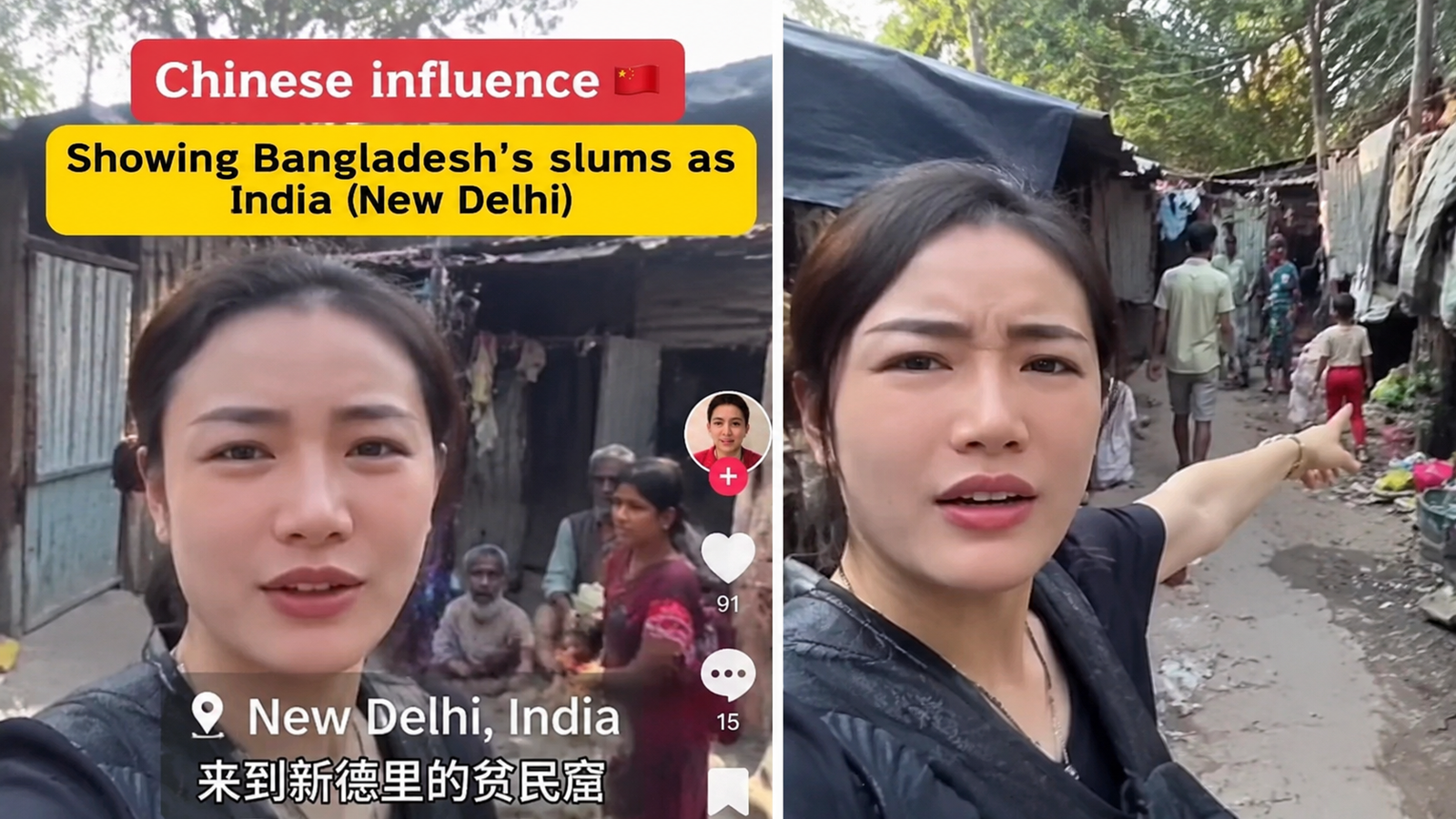
The person filming tells millions of viewers that the location is New Delhi, India.
But there is one problem.
The video was actually recorded in Dhaka, Bangladesh.
This is not merely a hypothetical example.
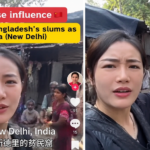
An investigation by Bangladesh’s leading newspaper, Prothom Alo, has uncovered Chinese nationals livestreaming from impoverished neighbourhoods in Dhaka while falsely identifying the locations as India.
Local residents estimate that more than 150 Chinese nationals have been filming in the area.
The revelations raise troubling questions about misleading online content, negative stereotypes about India and the possible manipulation of public opinion through social media.
1. What Did the Bangladeshi Investigation Reveal?
The investigation focused on Tekpara and Sector 12 of Uttara, a neighbourhood in Bangladesh’s capital, Dhaka.
According to Prothom Alo, Chinese nationals have been livestreaming in the area for months, often recording narrow streets, residential buildings, tea stalls and low-income settlements.
Reporters visited the area on October 27 and November 3, speaking with residents and attempting to interview 17 Chinese nationals.
Many declined to explain their activities.
Local residents estimated that more than 150 Chinese nationals were involved, although the newspaper could not establish an exact number.
The investigators found something particularly concerning when they examined the livestreams.
Some creators were telling Chinese-speaking audiences that they were filming in New Delhi rather than Bangladesh.
The newspaper used translation software and checked the commentary with four Bangladeshis who understand Chinese.
Source: Prothom Alo — Chinese Citizens Making Live Videos From Morning Till Night
2. Chinese Livestreamer Calls a Dhaka Neighbourhood New Delhi
One example involved a Chinese woman identified as Mianmian, who said she came from Sichuan province.
On November 1, she livestreamed from beside a canal in Uttara.
According to the newspaper’s translated account, she described the location as New Delhi and criticized the housing conditions, sanitation and public safety.
The geographical claim was false.
The footage was being recorded in Dhaka.
This distinction is fundamental.
There is nothing wrong with documenting poverty, infrastructure problems or urban living conditions.
But deliberately presenting footage from one country as another creates a misleading impression.
And when the footage is accompanied by negative cultural commentary, the potential reputational damage becomes even greater.
3. The Cow-Urine Tea Claim: Another Disturbing Example
The investigation also identified a Chinese livestreamer named Wang Wei, who filmed local tea stalls.
According to Prothom Alo, he claimed that people were drinking tea made from cow urine.
He also described the tea as being prepared with polluted water.
The investigation did not establish that the beverages contained cow urine or contaminated water.
These were claims made during the livestream.
Such commentary can reinforce derogatory stereotypes when presented to audiences unfamiliar with the actual location.
A viewer who believes the footage comes from India may associate these claims with Indian culture and hygiene.
This is how a misleading location label can transform ordinary footage into a vehicle for negative national stereotypes.
4. Why Were So Many Chinese Creators Filming Poor Neighbourhoods?
The concentration of livestreamers in a comparatively underdeveloped area attracted the attention of local residents.
A Bangladeshi guide, Ritu Akhter, told reporters that some creators earned money through platforms including WeChat and Douyin.
She said they were particularly interested in filming low-income neighbourhoods.
One Chinese national, identified as Fangyou, said the livestreams were connected to product promotion.
However, he declined to explain why they repeatedly filmed that specific area.
An earlier investigation by Bangladesh’s The Business Standard also documented Chinese vloggers recording low-income neighbourhoods in Uttara.
Its May 2026 reporting described videos emphasizing poverty and unhygienic conditions.
Source: The Business Standard — What Are Uttara’s Chinese Vloggers Up To?
The financial and organizational arrangements behind the wider activity remain unclear.
5. Is This an Organized Propaganda Campaign Against India?
The evidence raises an important question.
Why would creators repeatedly identify locations in Bangladesh as India while emphasizing poverty, sanitation problems and negative cultural stereotypes?
Such content can influence how viewers perceive another country.
Repeated across multiple accounts, misleading videos can create a distorted picture of a nation’s living conditions.
This resembles a familiar disinformation technique: using genuine footage but attaching a false location or narrative.
The underlying video may be authentic, while the story presented to viewers is misleading.
However, one distinction matters.
The Prothom Alo investigation documented false location claims but did not establish that the Chinese government, its intelligence agencies or a centrally coordinated propaganda organization directed the livestreamers.
Commercial incentives and sensational content may also help explain their activities.
Determining whether a wider organized campaign exists would require evidence about account ownership, funding, instructions and coordination.
The documented misinformation is serious enough to warrant investigation without claiming that government sponsorship has already been proven.
6. Bangladesh’s Residents Are Also Victims of the Filming
There is another important dimension to this story.
Local Bangladeshi residents have complained that some vloggers enter their homes without permission.
Some residents told journalists that filming had occurred near private bathing spaces and inside residential areas.
They described the repeated recordings as intrusive and distressing.
These complaints raise concerns about consent, privacy and the exploitation of economically vulnerable communities for online entertainment.
The people appearing in the videos are not simply background material for international social media audiences.
They deserve dignity and privacy.
The controversy therefore affects both India’s reputation and the rights of Bangladeshi residents.
7. What Have Bangladeshi Police Said?
According to Prothom Alo, officers at Uttara West Police Station acknowledged seeing Chinese nationals filming in the area.
Station officer Mohammad Khalid Mansur said police did not know the precise purpose of the recordings or where the livestreams were published.
He also indicated that senior authorities had been informed.
The lack of clarity surrounding the filming activities has become a concern for residents.
The relevant authorities could examine whether people were recorded without consent and whether any applicable laws were violated.
They could also investigate the identities of the account operators and the nature of their commercial activities.
8. Why India Should Take Online Misinformation Seriously
India is increasingly visible in global technology, manufacturing, infrastructure, tourism and international affairs.
Its reputation is shaped not only by official diplomacy but also by millions of social media posts.
A misleading video can reach audiences who may never visit India or verify its location.
If viewers repeatedly encounter falsely labelled images of poverty and sanitation problems, their perceptions may become distorted.
But countering such content does not require denying that India has genuine urban challenges.
India, like many countries, has neighbourhoods requiring better sanitation, housing and infrastructure.
The issue is accuracy.
Real social problems should be reported honestly. Footage from Bangladesh should not be presented as India to manufacture a false impression.
9. What Should Be Done?
The most effective response begins with evidence.
Social media platforms should examine accounts that repeatedly publish materially false location claims.
Independent researchers can preserve original videos, translate narration and verify filming locations using identifiable landmarks.
Indian and Bangladeshi media organizations can publish corrections that show where the footage actually originated.
Investigators should also examine any evidence of coordinated account activity or undisclosed sponsorship.
At the same time, users should avoid treating every Chinese creator as part of an organized operation.
Accountability must focus on the individuals and networks responsible for misleading content.
Conclusion: The Real Story Is About Who Controls the Narrative
The investigation in Dhaka has exposed a disturbing example of misinformation.
Chinese nationals were filmed repeatedly recording low-income neighbourhoods.
Some livestreamers falsely described those locations as New Delhi.
Others made derogatory claims about sanitation and local food practices.
And Bangladeshi residents reported serious concerns about privacy and intrusive filming.
The available evidence does not yet establish who financed or coordinated the wider activity.
But it demonstrates how easily social media can be used to distort perceptions of another country.
In today’s digital world, influencing international opinion does not always require inventing footage. Sometimes, it only requires taking a real video, changing the location and attaching a misleading story.
India must take such misinformation seriously.
Not by silencing legitimate criticism, but by insisting on verifiable facts, accurate locations and accountability for deliberate deception.
Because a country’s global image should be shaped by reality—not by someone else’s falsely labelled livestream.
Frequently Asked Questions
Did 150 Chinese influencers film Bangladesh’s slums as India?
Bangladeshi residents estimated that more than 150 Chinese nationals were filming in Uttara. Prothom Alo confirmed examples of livestreams falsely identifying Dhaka locations as New Delhi, but did not independently verify the total number of creators.
Where were the videos recorded?
The investigation identified filming locations in Tekpara and Sector 12 of Uttara, Dhaka, Bangladesh.
What did the Chinese livestreamers claim?
Some described Dhaka as New Delhi and criticized living conditions. One creator made an unsupported claim about tea being made from cow urine.
Is there proof that China’s government organized the campaign?
No public evidence identified in the reporting establishes Chinese government direction or funding. The possibility of coordination requires further investigation.
Which newspaper exposed the issue?
Bangladesh’s Prothom Alo published the detailed investigation, following earlier reporting by The Business Standard.
Why does this matter to India?
Falsely identifying locations can spread misinformation, reinforce negative stereotypes and influence international perceptions of India’s culture and development.
Editorial Disclaimer: The location misrepresentation is documented in Bangladeshi reporting. The figure of 150-plus creators is a residents’ estimate. Claims of Chinese state sponsorship or a centrally directed propaganda operation have not been independently established.
