













































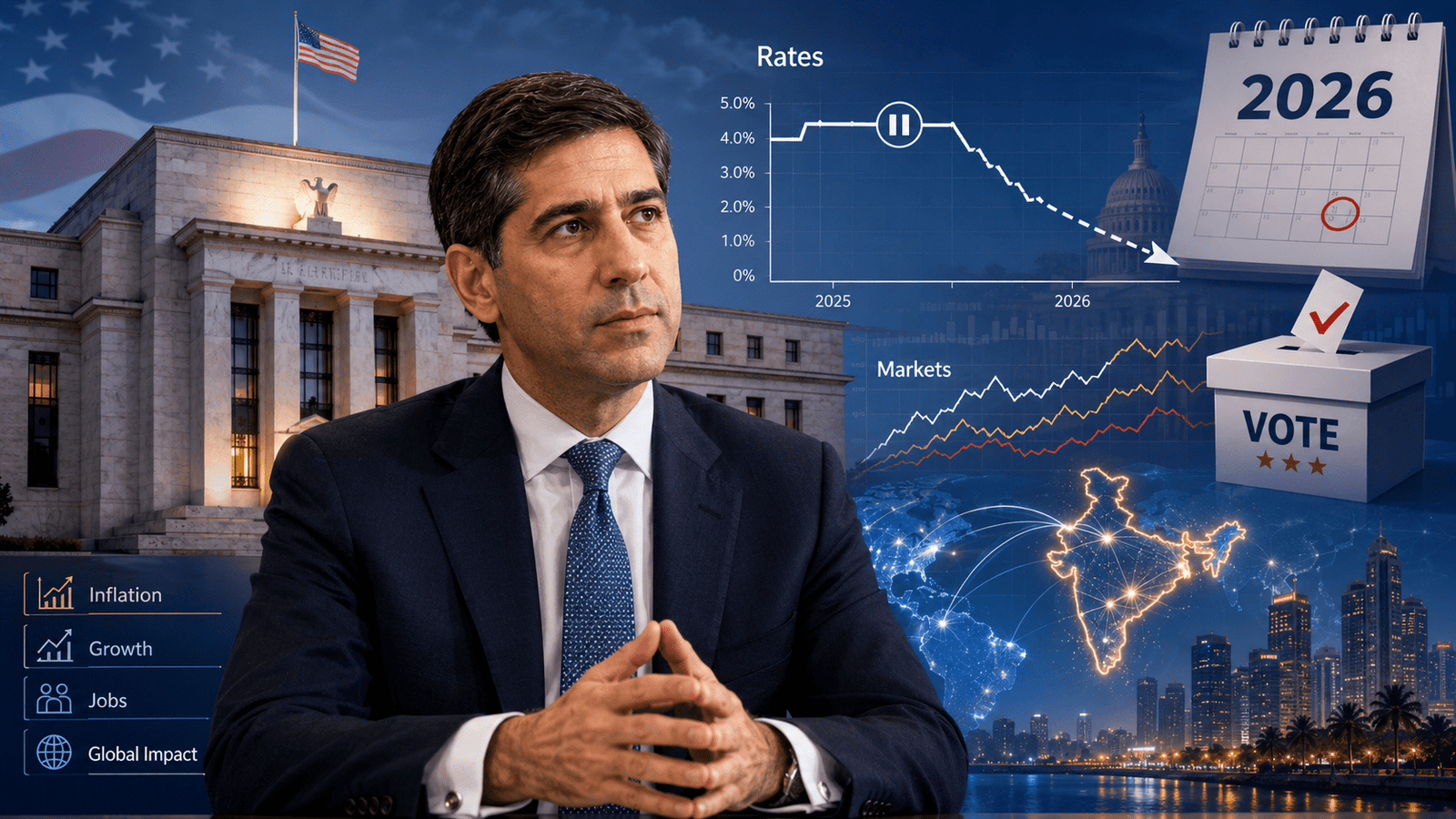
Federal Reserve Strategy 2026: Is Kevin Warsh Waiting to Cut Rates Before the Midterm Elections?

The Federal Reserve has entered a sensitive phase under its new chairman, Kevin Warsh. After taking office in May 2026, Warsh held interest rates steady at his first major policy meeting, keeping the federal funds rate in the 3.50% to 3.75% range.
On paper, the reason is simple: inflation remains elevated, the U.S. economy is still expanding and the Fed does not want to cut rates too early. But behind the official language, markets are asking a bigger question: is the Fed delaying rate cuts to protect its credibility and avoid looking politically controlled?
This question matters because the next U.S. general election is scheduled for November 3, 2026. If the Fed cuts interest rates in August or September, it could improve market confidence, reduce borrowing pressure and support economic sentiment before the midterm elections. That timing would be politically sensitive, even if the Fed explains it as a data-based decision.
Why the Fed Is Not Cutting Rates Yet
The Federal Reserve’s main job is to maintain price stability and support maximum employment. That means it must balance inflation control with economic growth.
Right now, the Fed is cautious because inflation is still above target. Energy prices, wage pressure, tariff uncertainty, Middle East risks and strong AI-related investment have kept the economy hot in several areas.
If Warsh cuts rates too early, inflation could rise again. If he waits too long, borrowing costs could squeeze businesses, consumers and global markets.
This is why the Fed is walking a narrow bridge.
The Credibility Question
Many investors believe Warsh does not want his first major move as Fed chairman to look like a political favour to President Trump. Because he was nominated by Trump, any quick rate cut could be criticized as proof that the Fed is becoming less independent.
By keeping rates unchanged, Warsh may be trying to send a message: the Federal Reserve is not a political tool.
That message matters. The Fed’s power depends not only on interest rates, but also on trust. If markets believe the central bank is acting under political pressure, the U.S. dollar, Treasury bonds and global confidence could be affected.
So even if rate cuts come later, Warsh may first want to establish himself as an independent inflation fighter.
Could Rate Cuts Come in August or September?
A rate cut in August or September is possible only if inflation cools, oil prices remain stable and job market data weakens. But current market pricing has recently moved in the opposite direction, with traders becoming more worried about possible rate hikes rather than cuts.
Still, politics and markets do not move in isolation. If the economy slows sharply, if tech stocks fall harder, or if consumer confidence weakens before the midterms, pressure on the Fed may grow.
A September rate cut would be powerful because it would come close enough to the election to influence market mood, but still early enough for the Fed to argue that it was based on economic data.
However, if inflation remains sticky, rate cuts may not come at all. In that case, the Fed may stay higher-for-longer, even if markets dislike it.
Why U.S. Tech Companies Are So Important
The U.S. economy has been heavily supported by AI and technology investment. Data centers, chips, cloud computing, AI models and automation tools have become major engines of growth.
Large U.S. technology companies are spending billions on AI infrastructure. This has helped boost business investment and market optimism. But it has also created a risk: if borrowing stays expensive, debt-funded AI expansion becomes harder.
High interest rates make loans more expensive. They also make investors more demanding. Tech companies may delay new projects, reduce experimental spending and focus only on high-return AI investments.
This matters because U.S. tech spending is connected to the global economy.
Impact on Indian IT Companies
Indian IT companies are deeply linked to U.S. clients. Banks, retailers, healthcare companies, software firms and technology giants in America are major customers for Indian IT services.
When U.S. interest rates are high, companies often reduce discretionary technology spending. They delay cloud migration projects, cut consulting budgets, renegotiate contracts and focus on cost-saving automation.
This can hurt Indian IT companies such as TCS, Infosys, Wipro, HCLTech and Tech Mahindra. Fewer discretionary projects mean slower growth, pressure on margins and weaker hiring.
The recent weakness in Indian IT stocks already reflects this concern. Investors are worried that U.S. clients may spend less if financial conditions stay tight.
What Happens If the Fed Cuts Rates?
If the Fed cuts rates in August or September, global markets may initially celebrate. Lower interest rates can reduce borrowing costs, support tech valuations and improve risk appetite.
For Indian IT companies, rate cuts could be positive. U.S. clients may become more willing to approve digital transformation projects, AI adoption programs, cloud modernization and enterprise software upgrades.
Indian stock markets may also benefit from improved global liquidity. Foreign investors often return to emerging markets when U.S. rates fall because lower U.S. yields make countries like India more attractive.
The rupee could stabilize if dollar strength reduces. Sectors such as IT, banking, real estate and consumption may see renewed investor interest.
What If the Fed Does Not Cut?
If the Fed refuses to cut rates, the pressure could continue. The U.S. dollar may remain strong, global liquidity may stay tight and emerging markets could face capital outflows.
Indian IT companies may continue to struggle with cautious client budgets. Export-driven sectors may benefit from a weaker rupee, but that is not enough if global demand slows.
A higher-for-longer Fed could also affect Indian startups, venture funding and global technology valuations. AI companies with high infrastructure costs may face tougher questions about profitability.
The AI Bubble Risk
The biggest hidden risk is the AI bubble.
AI is real, but the amount of money being spent on AI infrastructure is massive. If investors begin to doubt whether AI companies can generate enough revenue to justify the spending, tech valuations could fall quickly.
If that happens while interest rates remain high, the correction could be sharper. U.S. tech weakness would not stay in America. It would affect Indian IT exporters, global semiconductor supply chains, cloud partners, startup funding and investor sentiment.
Final Thoughts
The Federal Reserve’s 2026 strategy is about more than inflation. It is about credibility, politics, AI, global liquidity and the future of technology spending.
Kevin Warsh may be trying to prove that the Fed is independent before making any rate cut. If inflation cools, an August or September cut could support markets before the midterm elections. But if inflation remains high, the Fed may keep rates elevated even at the cost of market pain.
For India, the stakes are high. Lower U.S. rates could help Indian IT, foreign investment and stock market sentiment. Higher U.S. rates could pressure IT contracts, weaken global tech spending and increase volatility.
The world is watching the Fed because America’s interest rate decisions do not stay inside America. They move through currencies, stock markets, loans, startup funding, oil prices and technology contracts.
In 2026, the Federal Reserve may decide not only the direction of U.S. inflation, but also the mood of the global economy.
Disclaimer: This article is for informational and opinion-based analysis only. It should not be considered financial, investment, legal or political advice. Readers should consult qualified professionals before making financial decisions.