















































Changing Demography in Punjab: Drug Crisis, Conversions and the Growing Concern for Sikh Identity

Punjab has always held a special place in India’s civilizational and national story. It is the land of the Gurus, the home of Sikhism, the heart of India’s Green Revolution and one of the country’s most culturally powerful states. But in recent years, a serious debate has emerged around Punjab’s changing social landscape.
Two issues are repeatedly coming up in public discussion: the spread of drugs among the youth and the reported rise of new Christian missionary-linked churches, especially in rural and border districts.
These issues should be discussed carefully. Punjab’s problem is not with any ordinary Christian citizen or any peaceful religious community. India’s Constitution protects freedom of faith. But concerns arise when vulnerable families, addiction-affected youth, poor households or socially marginalized groups are allegedly targeted through miracle-healing claims, emotional dependency, material inducements or aggressive conversion campaigns.
For many Sikhs, this is not just a religious debate. It is about identity, demography, cultural continuity and the future of Punjab.
Punjab’s Religious Demography: What the Official Data Says
According to the 2011 Census, Punjab remains India’s only Sikh-majority state. Sikhs formed about 57.69% of the state’s population, Hindus 38.49%, Muslims 1.93% and Christians 1.26%.
This official census data is important because there has been no new nationwide census after 2011. Therefore, many recent claims about Punjab’s Christian population rising to much higher levels are based on estimates, church claims, activist claims or local observations — not confirmed census data.
However, even without updated census figures, it is clear that the visibility of new churches, pastors, faith-healing gatherings and conversion debates has increased in several areas of Punjab, especially in Majha and Doaba regions.
Why Christian Missionary Activity Has Become a Debate
In recent years, several reports have highlighted the rise of self-styled pastors, large congregations, healing meetings and new church networks in Punjab. Some Sikh and Hindu groups argue that these movements are using emotional suffering, poverty, illness and addiction as entry points for conversion.
One major concern is the use of “miracle cures.” Critics say some gatherings attract people by promising healing from disease, addiction or family problems. If any religious group offers prayer as spiritual support, that is protected. But if healing claims are used to manipulate vulnerable people or replace medical treatment, it becomes a serious public concern.
The debate has become more sensitive because many attendees may not formally declare conversion even while participating in church networks. This creates confusion around religious identity, census numbers, reservation status and social representation.
Is This a Threat to Sikhism?
Many Sikh organisations and community voices see the trend as a warning sign. Sikhism is not only a religion in Punjab; it is deeply connected to language, history, sacrifice, martial tradition, family identity, gurdwara life and the memory of the Gurus.
If large numbers of youth become disconnected from Sikh teachings, stop learning Gurmukhi, lose connection with gurdwaras, or become vulnerable to external religious influence, Sikh institutions naturally become concerned.
But the answer cannot be anger alone.
The stronger response is internal revival: better Sikh education, stronger community outreach, youth counselling, anti-drug programs, employment support, sports culture, kirtan education, Punjabi language pride and modern communication from gurdwaras.
A faith becomes stronger when its youth understand it, not when they are only told to defend it.
Punjab’s Drug Crisis: A Deep Social Wound
The drug crisis is one of Punjab’s most painful realities. Addiction has damaged families, weakened rural communities and affected thousands of young people. Heroin, synthetic drugs, opioids, alcohol abuse and injectable drug use have created serious public health and law enforcement challenges.
The Punjab government has treated tens of thousands of drug-affected individuals through de-addiction and outpatient opioid-assisted treatment programs. The state has also moved toward a detailed drug and socio-economic census to understand the scale of substance abuse and its link with poverty, education, unemployment and family stress.
This is important because addiction does not happen in isolation. It grows where there is hopelessness, unemployment, weak community support, trafficking networks and mental health distress.
Why Drugs and Conversion Debates Often Overlap
It is important not to falsely claim that Christianity causes drug addiction. That would be wrong and unfair.
But there is a social overlap in vulnerable communities. Families affected by addiction, illness or poverty may become emotionally desperate. If any group — religious, political or criminal — offers quick solutions, miracle claims, emotional comfort or material support, vulnerable people may be drawn in.
This is why Punjab needs both strict law enforcement and compassionate social healing.
The state must fight drug trafficking strongly, but it must also provide rehabilitation, jobs, counselling, sports facilities, family support and community-based recovery systems.
The Role of Sikh Institutions
Punjab’s gurdwaras and Sikh institutions have a major role to play. The Sikh tradition already contains powerful tools for social healing: seva, sangat, langar, kirtan, discipline, equality and courage.
If these are connected with modern youth programs, they can become a strong answer to both addiction and identity loss.
Gurdwaras can run:
- anti-drug counselling camps
- skill-development programs
- youth sports leagues
- Punjabi and Gurmukhi classes
- Sikh history workshops
- mental health support groups
- family counselling programs
- digital content for young Punjabis
The challenge is not only to oppose external influence. The challenge is to make Sikh identity meaningful and inspiring for today’s youth.
Government Responsibility
The government must ensure that religious freedom is protected, but illegal activity is not ignored.
If conversions happen through free personal choice, that is constitutionally protected. But if conversion happens through fraud, pressure, foreign-funded inducement, fake healing claims or exploitation of addiction and poverty, authorities must investigate.
The same applies to drugs. Punjab needs stronger border security, police reform, fast trials for traffickers, rehabilitation centers, school-level prevention and economic opportunities for rural youth.
The state cannot treat addiction only as a crime. It must also treat it as a health and social crisis.
What Punjab Must Do Now
Punjab needs a balanced strategy.
First, it must publish reliable updated demographic data so public debate is based on facts, not rumors.
Second, it must investigate alleged illegal conversions without targeting peaceful Christians or genuine charity.
Third, it must crack down on fake miracle-healing claims if they exploit vulnerable families.
Fourth, it must expand drug rehabilitation and youth employment programs.
Fifth, Sikh institutions must invest more in modern outreach, especially for youth who feel disconnected from tradition.
Sixth, Punjab’s schools and families must rebuild pride in Punjabi language, Sikh history and Indian civilizational values.
Final Thoughts
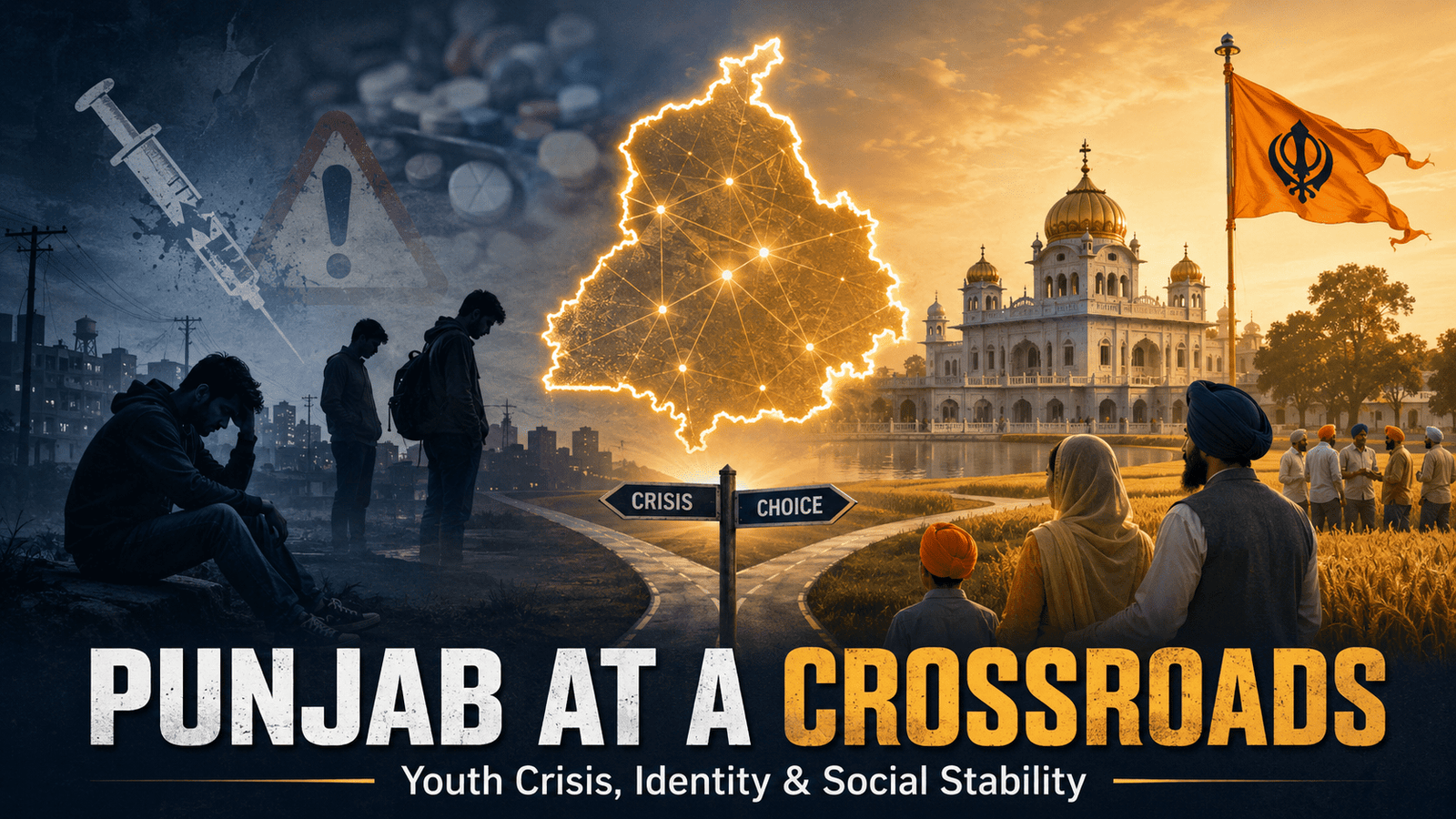
Punjab is facing a sensitive moment. The drug crisis is weakening youth, while the conversion debate is creating anxiety around Sikh identity and demographic change.
This is not a time for hatred. It is a time for clarity, courage and social reform.
Punjab must protect religious freedom, but it must also protect vulnerable people from exploitation. It must respect all peaceful communities, but also ensure that foreign-funded or inducement-based conversion networks do not misuse poverty, illness or addiction.
Most importantly, Sikh society must reconnect with its youth. A strong culture is not preserved only through slogans. It is preserved through education, confidence, discipline, family values and living connection with the teachings of the Gurus.
Punjab’s future will not be saved by fear. It will be saved by truth, reform and spiritual confidence.
Disclaimer: This article is for informational and opinion-based social analysis only. It does not target ordinary Christians, Sikhs, Hindus or any religious community. It discusses publicly reported concerns around drug addiction, religious conversion, demography and youth vulnerability. Allegations of illegal conversion or exploitation should be investigated through due legal process.