













































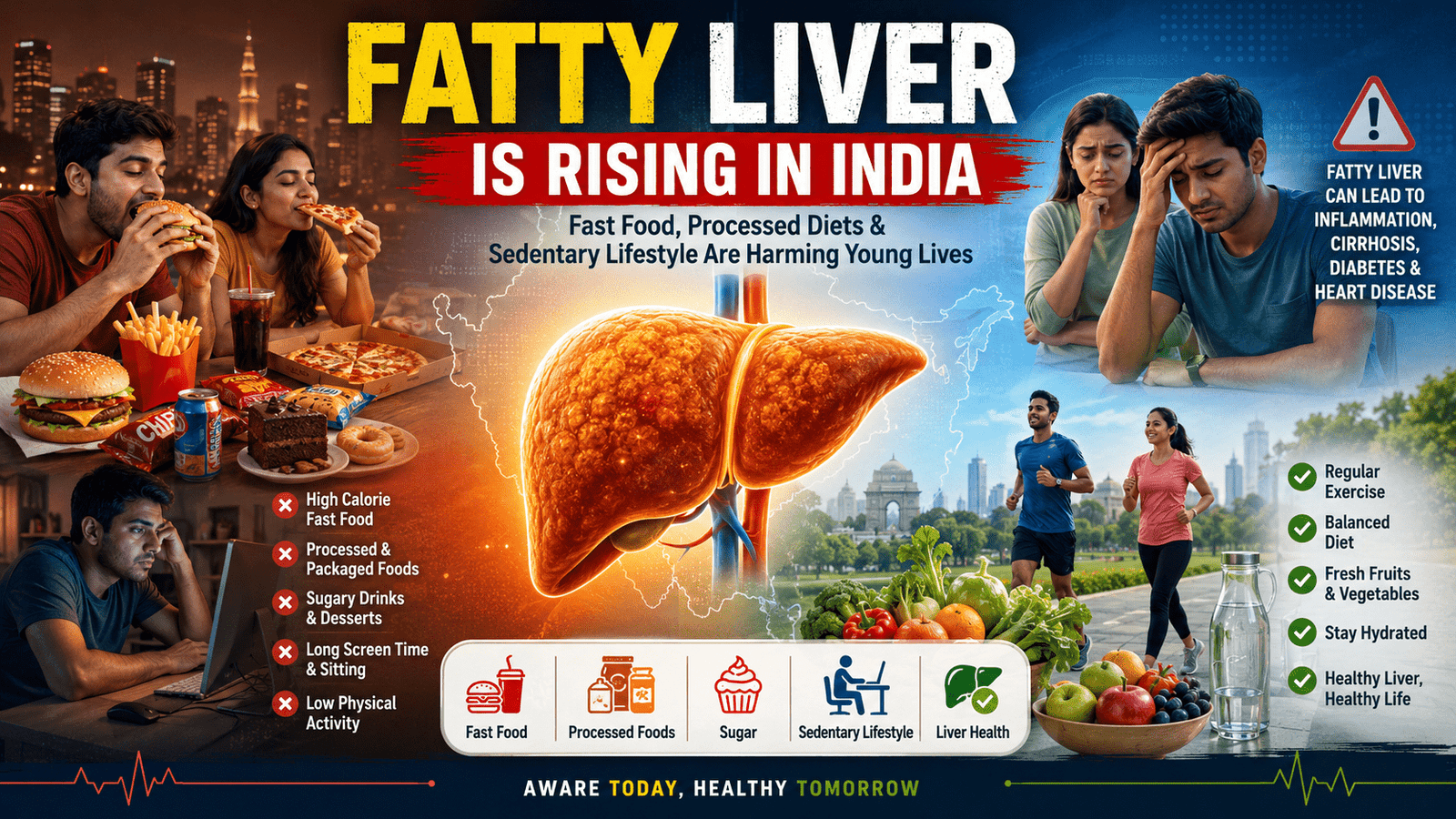
Fatty Liver Is Rising in India: How Fast Food, Processed Diets and Sedentary Lifestyle Are Damaging Young Lives

India is facing a silent health crisis, and many people do not even know they are part of it. Fatty liver disease, once commonly linked with alcohol, is now rising among people who do not drink at all.
This condition is often called Non-Alcoholic Fatty Liver Disease, or NAFLD. Doctors now increasingly use the newer term Metabolic Dysfunction-Associated Steatotic Liver Disease, or MASLD. In simple words, it means too much fat is getting deposited in the liver because of lifestyle, diet, obesity, insulin resistance, diabetes, high cholesterol and lack of physical activity.
The worrying part is that this is no longer only a problem of older people. Young professionals, students, IT workers, office employees and even teenagers are becoming vulnerable.
The reason is clear: our food habits and lifestyle have changed faster than our health awareness.
The New Indian Diet Problem
India’s traditional diet was never perfect, but it usually had balance: dal, roti, rice, vegetables, curd, seasonal fruits, homemade food, spices and some physical activity built into daily life.
Today, the pattern is changing.
Pizza loaded with cheese, burgers with processed sauces, fried chicken, creamy momos, cheese-loaded street food, sugary cold drinks, packaged snacks, fries, pastries, processed meats, instant noodles and late-night delivery meals have become common in urban India.
The problem is not eating pizza once a month. The problem is when high-fat, high-salt, high-sugar and ultra-processed food becomes a lifestyle.
Many street foods and fast foods now use extra butter, extra cheese, mayonnaise, refined flour, reused oil and processed ingredients to make food more addictive. These foods taste good, but they can silently increase belly fat, insulin resistance and liver fat.
Fatty Liver Without Alcohol: Why It Happens
Many Indians are shocked when a doctor tells them they have fatty liver.
Their first response is often: “But I don’t drink alcohol.”
That is exactly why awareness is needed.
Fatty liver can happen even without alcohol. When the body receives too many calories, refined carbohydrates, sugar and unhealthy fats, the liver starts storing extra fat. Over time, this can lead to inflammation and liver damage.
Sedentary lifestyle makes the problem worse. Sitting for long hours, working on laptops, scrolling phones, driving everywhere and avoiding regular exercise reduces the body’s ability to burn fat efficiently.
The result is dangerous: a person may look normal from outside but still have fat around the liver and abdomen.
Why Young Indians Are at Risk
Urban Indian youth are especially vulnerable because their lifestyle has changed dramatically.
Many young people wake up late, skip breakfast, sit for long hours, eat outside frequently, drink sugary beverages, sleep late and exercise very little. Stress, screen time and poor sleep also increase metabolic risk.
This is why fatty liver is increasingly being found in people in their 20s and 30s.
The liver is a silent organ. It does not always show symptoms early. Many people discover fatty liver only during a routine blood test, ultrasound or health checkup.
By the time fatigue, abdominal discomfort or abnormal liver enzymes appear, the condition may already need serious lifestyle correction.
Why Fatty Liver Should Not Be Ignored
Fatty liver may sound harmless, but it can become serious if ignored.
In many people, early-stage fatty liver can be reversed with diet, exercise and weight management. But in some cases, fat buildup can cause inflammation, scarring, fibrosis, cirrhosis and even liver failure.
Fatty liver is also closely linked with diabetes, high blood pressure, heart disease and obesity. That means it is not only a liver problem. It is a full-body metabolic warning sign.
If your liver is showing fat accumulation, your body is telling you something important: your lifestyle needs correction.
Fast Food Is Not the Only Culprit
It is easy to blame only Western food, but the truth is broader.
Indian food can also become unhealthy when it is overloaded with oil, ghee, sugar, refined flour and fried snacks. Samosas, kachoris, jalebis, sugary tea, bakery biscuits, fried namkeen and heavy restaurant gravies can also contribute to the problem.
So the issue is not “Indian food versus Western food.”
The real issue is homemade, balanced, whole food versus processed, excessive and sedentary living.
A simple dal-roti-sabzi meal is very different from a cheese-loaded fried street snack. A homemade chicken curry is very different from processed fried chicken eaten with fries and sugary drinks.
How to Reduce Fatty Liver Risk
The good news is that fatty liver can often be improved, especially if detected early.
The first step is reducing ultra-processed food. Cut down on packaged snacks, sugary drinks, processed meats, instant noodles, bakery sweets, fried fast food and cheese-heavy meals.
Second, reduce sugar. Sweet drinks, desserts, packaged juices and frequent sugary tea can add hidden calories and worsen insulin resistance.
Third, control refined carbohydrates. Too much white bread, maida, noodles, biscuits and refined snacks can increase liver fat.
Fourth, eat more real food. Include vegetables, fruits, dal, beans, curd, nuts, seeds, eggs, fish, lean protein, whole grains and traditional home-cooked meals.
Fifth, walk daily. Even 30–45 minutes of brisk walking can make a big difference when done consistently.
Sixth, add strength training. Building muscle helps improve insulin sensitivity and supports better metabolism.
Seventh, sleep properly. Poor sleep and late-night eating can disturb hormones and increase weight gain.
Eighth, avoid alcohol or limit it strictly. Even if the fatty liver is not caused by alcohol, alcohol can worsen liver stress.
What India Needs to Do
India needs a national awareness movement on fatty liver.
Just as people now talk about diabetes and blood pressure, they must also talk about liver health. Schools, colleges, workplaces, gyms, doctors, influencers, parents and public health campaigns must explain that fatty liver can happen even to non-drinkers.
Workplaces should encourage movement breaks. Schools should reduce junk food exposure. Families should return to home-cooked meals. Food delivery apps and restaurants should clearly show calorie, sugar, salt and fat information.
Most importantly, people should stop thinking that thin-looking bodies are automatically healthy. Belly fat, tiredness, high triglycerides, borderline sugar and fatty liver are warning signs.
When Should You See a Doctor?
People with obesity, diabetes, high cholesterol, high blood pressure, belly fat, family history of metabolic disease or abnormal liver function tests should consult a doctor.
Do not self-diagnose. Do not take random liver detox supplements. Fatty liver needs proper medical evaluation, lifestyle changes and follow-up.
Your doctor may recommend blood tests, ultrasound, FibroScan or other investigations depending on your risk.
Final Thoughts
India’s fatty liver crisis is not only a medical issue. It is a lifestyle issue.
Western-style fast food, ultra-processed meals, cheese-heavy snacks, sugary drinks and long sitting hours are changing the health of an entire generation. Many people who never drink alcohol are still developing fatty liver because the modern lifestyle is overfeeding the body and underusing it.
The solution is not fear. The solution is awareness.
Eat real food. Move daily. Reduce processed food. Sleep better. Check your health. Teach children early. Make liver health part of India’s public conversation.
A healthy India cannot be built only with hospitals and medicines. It must begin in the kitchen, the school, the workplace and the daily routine.
Your liver works silently for you every day. It is time to start working for your liver.
FAQs
Can fatty liver happen without alcohol?
Yes. Fatty liver can happen in non-drinkers due to obesity, insulin resistance, diabetes, high cholesterol, unhealthy diet and sedentary lifestyle.
Is fatty liver reversible?
In many early-stage cases, fatty liver can improve with weight loss, healthier diet, regular exercise and better control of diabetes or cholesterol.
Which foods increase fatty liver risk?
Frequent intake of sugary drinks, fried foods, refined flour, processed snacks, excess cheese, processed meats and high-fat fast food can increase metabolic risk.
How much exercise is helpful?
Adults should aim for at least 150 minutes of moderate physical activity per week, along with muscle-strengthening activities.
Should I take liver detox supplements?
Do not take random supplements without medical advice. Fatty liver needs proper diagnosis, lifestyle correction and doctor-guided management.
Disclaimer: This article is for informational and educational purposes only. It is not medical advice. Fatty liver disease should be diagnosed and managed by qualified healthcare professionals. Please consult a doctor before making major diet, exercise or treatment changes.