






































How India Controlled Inflation Amid Global Crisis and Tariff War

At a time when many countries are struggling with high prices, trade tensions, energy shocks and slow growth, India has managed to remain one of the most stable major economies in the world.
India’s retail inflation stood at 3.93% in May 2026, still close to the Reserve Bank of India’s medium-term target and far below the painful inflation levels seen in many crisis-hit economies. Food inflation was higher at 4.78%, but overall price pressure remained under control.
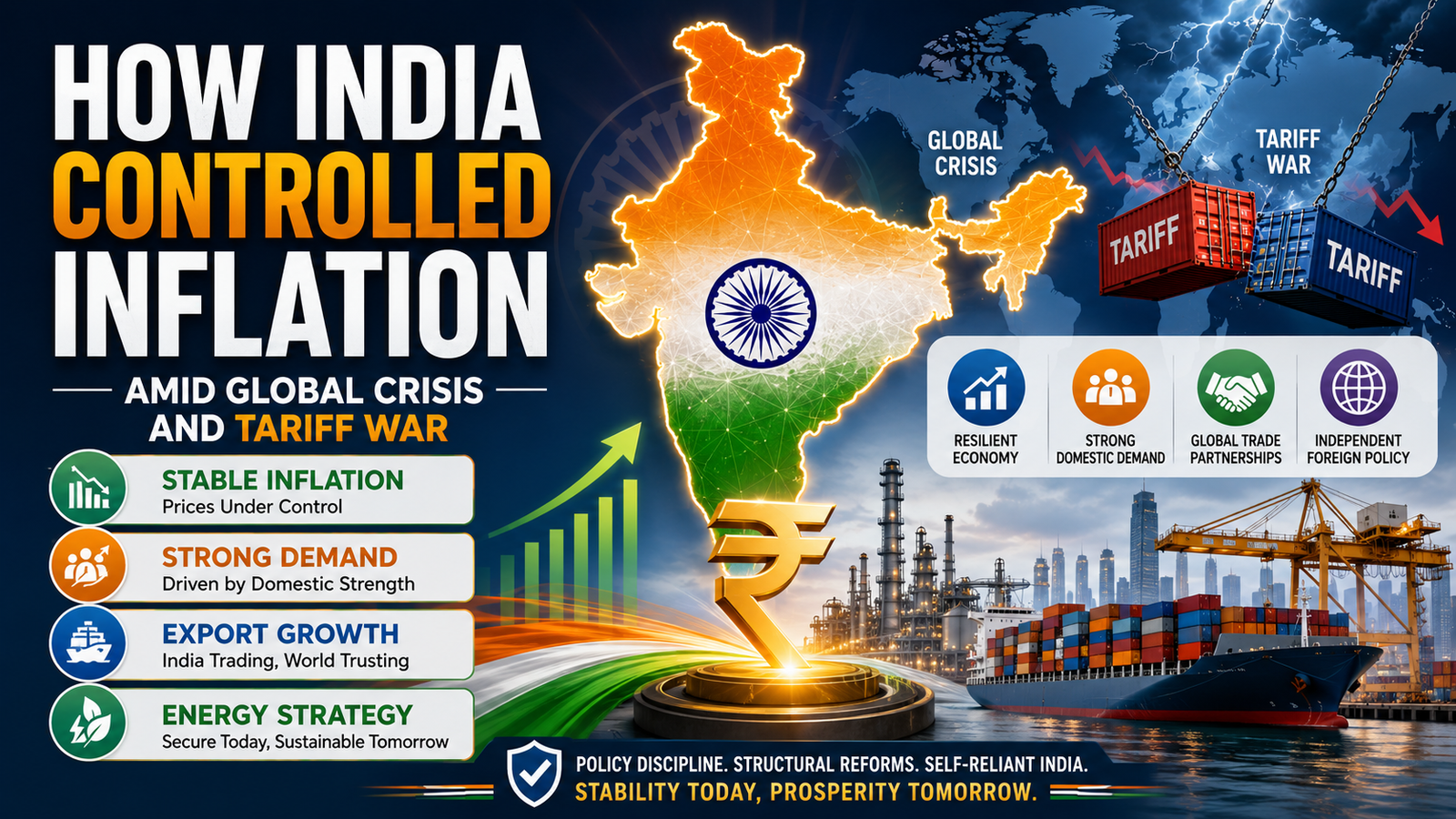
This is not luck. India’s inflation control is the result of a mix of strong monetary policy, domestic production, export growth, energy security and an independent foreign policy that protected national interest during global uncertainty.
Independent Foreign Policy Helped India Protect Energy Security
Energy is one of the biggest reasons inflation rises. When crude oil becomes expensive, transport, food, manufacturing and household costs all increase.
India imports a large part of its crude oil requirement, so global oil shocks directly affect the Indian consumer. During recent global conflicts and sanctions, India followed a practical foreign policy. Instead of blindly joining any bloc, India focused on securing affordable energy for its people.
This approach helped India diversify oil supplies, negotiate better prices and reduce the impact of global crude volatility. Recent reports show Russian Urals crude discounts for India widened to more than $10 per barrel compared with Brent at Indian ports, giving refiners cheaper supply options.
This is where India’s independent foreign policy matters. It allowed New Delhi to keep national interest first — balancing relations with the West, Russia, the Middle East and the Global South.
Inflation Control Was Not Just About Oil
India’s inflation stability also came from better economic management. The government and RBI used a combination of interest-rate discipline, food supply monitoring, fiscal control and currency management.
The RBI’s inflation-targeting framework has helped keep inflation expectations anchored. India continues to operate within a 2–6% inflation band, with a 4% medium-term target. Recent commentary from RBI leadership suggests confidence in India’s inflation framework, even as global risks remain.
At the same time, India’s domestic economy has become a major strength. Unlike export-dependent economies, India has a huge internal market. Even when global demand weakens, domestic consumption, infrastructure spending, digital payments, manufacturing and services continue to support growth.
India Is Growing Despite Global Trade Tensions
The world economy is facing pressure from tariff wars, protectionism and geopolitical shocks. The IMF’s April 2026 World Economic Outlook projected global growth at only 3.1% in 2026, showing how fragile the global environment has become.
Yet India continues to outperform. The World Bank’s April 2026 India Development Update noted that despite heightened global trade tensions in FY26, India remained the fastest-growing major economy, with growth accelerating to 7.6%.
This matters because growth gives the government more room to invest in infrastructure, jobs, manufacturing and social support — without collapsing under inflation pressure.
Exports Are Still Rising
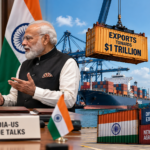
One of the biggest signs of India’s resilience is trade. Despite tariff uncertainty and global slowdown fears, India’s total exports of merchandise and services reached an estimated $81.96 billion in May 2026, growing 15.83% compared with May 2025. Merchandise exports alone stood at $45.20 billion.
In April 2026 too, total exports were estimated at $80.80 billion, up 13.59% year-on-year.
This shows that India is no longer just a consumption story. It is becoming a manufacturing, services, technology and export story.
Why India’s Model Is Working
India’s economic resilience comes from five major strengths.
First, India protected energy security by buying from multiple suppliers instead of depending on one bloc.
Second, India’s massive domestic market kept demand alive even when global trade slowed.
Third, public infrastructure spending improved roads, railways, logistics, ports and digital systems.
Fourth, India’s services exports, especially IT, finance, consulting and digital services, continued to bring foreign exchange.
Fifth, India avoided extreme economic experiments and maintained a balanced fiscal and monetary approach.
This is why India has been able to control inflation while still growing.
The Challenge Ahead
India’s success does not mean there are no risks. Food inflation can rise if the monsoon fails. Oil prices can spike if the Middle East crisis worsens. Tariff wars can hurt exports. A weak rupee can make imports expensive.
But compared with many countries, India is entering this uncertain period with stronger growth, better foreign exchange resilience, a large domestic market and a more confident global position.
Final Thoughts
India’s inflation control amid global crisis is not an accident. It is the result of policy discipline, economic reforms, energy diplomacy and an independent foreign policy that puts India first.
While many countries are trapped between inflation, trade wars and slow growth, India has shown that a developing nation can protect its people, grow its economy and still maintain strategic independence.
The message is clear: in a divided world, India’s strength lies in balance — not blind alignment.
FAQs
How much is India’s latest inflation rate?
India’s retail inflation was 3.93% in May 2026, according to official CPI data.
Why is India’s economy stable during global crisis?
India’s economy is supported by strong domestic demand, controlled inflation, infrastructure spending, services exports and a practical foreign policy.
How did independent foreign policy help India?
India maintained relations with multiple global powers and protected its energy security by buying oil from different suppliers at competitive prices.
Is India safe from global inflation?
No country is completely safe, but India is better positioned because of domestic demand, diversified trade, strong services exports and active inflation management.
Disclaimer: This article is for informational and educational purposes only and should not be considered financial, investment, or policy advice. Readers should verify data from official sources and consult qualified experts before making any financial decisions.