

































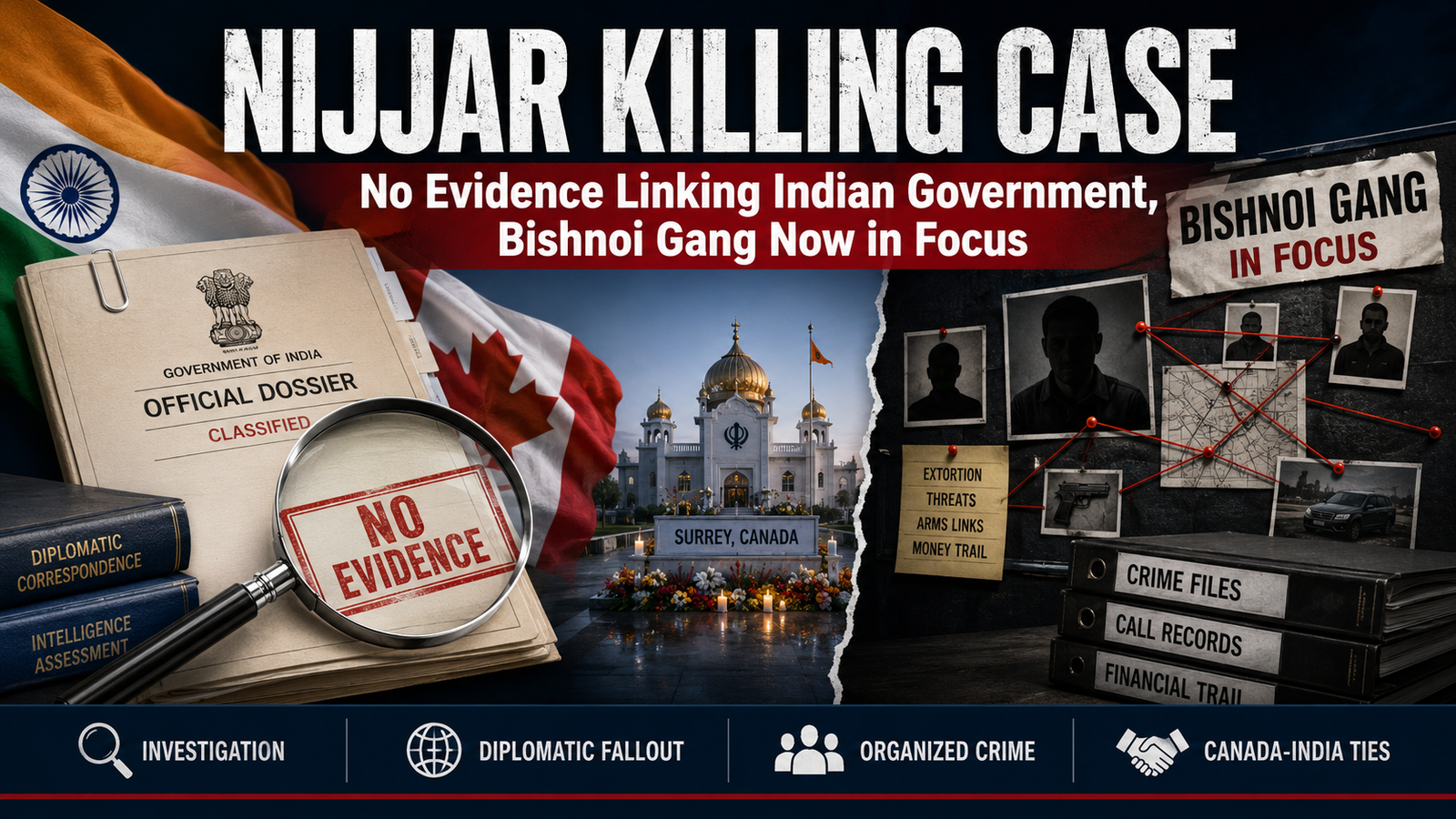
Nijjar Killing Case: No Evidence Linking Indian Government, Bishnoi Gang Now in Focus

The Hardeep Singh Nijjar killing case has taken a major turn after new law-enforcement developments shifted the focus toward alleged transnational organized crime networks, including the Lawrence Bishnoi gang.
For nearly three years, the case remained one of the biggest reasons behind the collapse of India-Canada relations. In 2023, then Canadian Prime Minister Justin Trudeau said Canadian authorities were pursuing “credible allegations” of a potential link between Indian government agents and Nijjar’s killing. India strongly rejected the accusation, calling it absurd and politically motivated. Reuters reported that the killing had pushed relations between Ottawa and New Delhi into crisis.
Now, fresh developments have raised serious questions about that earlier political narrative.
RCMP Says No Evidence Links Indian Government Officials
According to The Indian Express, Canadian police said there is no evidence linking Indian government officials to the 2023 killing of Canadian citizen and Khalistan activist Hardeep Singh Nijjar. RCMP Deputy Commissioner Lisa Moreland reportedly told CBC News that, through the organized crime investigation and the charges laid forward, nothing had come out linking the Indian government.
This is a significant development because Trudeau’s earlier allegations triggered a diplomatic crisis between India and Canada. Canada expelled Indian diplomats, India denied all allegations, and relations between the two countries deteriorated sharply.
However, it is also important to be precise: this does not automatically mean every intelligence concern from the past has been fully resolved. The investigation is still active, and court proceedings are ongoing. But based on the latest public charges, the current focus appears to be on organized crime networks rather than the Indian state.
Bishnoi Gang Named in U.S. Charges
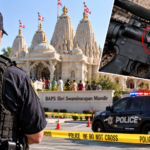
The biggest development came from the United States. Reuters reported that U.S. prosecutors charged Lawrence Bishnoi, the imprisoned head of an Indian criminal gang, and Satinderjeet Singh, also known as Goldy Brar, with directing Nijjar’s 2023 murder in Surrey, British Columbia. The federal indictment unsealed in Los Angeles alleges that Bishnoi and Brar ordered the shooting outside a Sikh temple on June 18, 2023.
Reuters also reported that the U.S. indictment does not allege any Indian government role in the killing, and officials at the Los Angeles press conference did not allege that the Indian government was involved or aware of the killing.
Global News reported that the indictment alleges Bishnoi provided a photograph and multiple addresses of the target to facilitate the assassination, while Goldy Brar allegedly directed North American operations of the Bishnoi enterprise.
These are serious allegations, but they remain allegations until proven in court.
Operation Hard Ball: A Global Crackdown
The charges were part of a wider international operation called Operation Hard Ball. According to AP, authorities charged 37 alleged members of India-based transnational organized crime groups with crimes including murder, kidnapping, racketeering, extortion, firearms dealing and drug trafficking.
AP also reported that the operation involved agencies across the United States, Canada and Europe, and that officials described the crackdown as part of an effort to dismantle criminal organizations operating across borders.
This changes the wider understanding of the case. Instead of only being framed as a diplomatic dispute, the Nijjar killing is now being seen through the lens of international organized crime, diaspora extortion networks and cross-border gang violence.
Why This Matters for India-Canada Relations
The Nijjar case severely damaged India-Canada relations. Trudeau’s 2023 allegations created a political earthquake, but India repeatedly demanded evidence and denied involvement.
The new developments may create an opportunity for both countries to move toward a more evidence-based conversation. If the current public case points toward organized crime rather than direct state involvement, Canada will face pressure to clarify what evidence supported the earlier political claims.
At the same time, India and Canada must work together against transnational crime, extremism, extortion and violent networks that threaten ordinary people in both countries. This issue should not become a fight between communities. It should become a law-enforcement priority.
A Lesson in Responsible Diplomacy
The Nijjar case also shows why serious allegations between countries must be handled carefully. When a government publicly accuses another sovereign nation of involvement in a killing, the diplomatic consequences are huge.
If evidence exists, it should be presented through legal channels. If the evidence does not support the claim, then political leaders must correct the record.
Public trust depends on facts, not narratives.
Final Thoughts
The latest developments in the Nijjar killing case have shifted global attention toward the alleged role of the Bishnoi gang and other transnational crime networks. The RCMP’s reported statement that no evidence currently links Indian government officials to the charges is a major moment in a case that deeply damaged India-Canada relations.
This does not end the legal process. Courts must still decide guilt or innocence. But it does challenge the earlier political framing and puts organized crime at the centre of the investigation.
For India and Canada, the priority now should be clear: fight crime, protect communities and rebuild trust based on evidence.
FAQs
Did the RCMP link the Indian government to Nijjar’s killing?
According to recent reports, RCMP Deputy Commissioner Lisa Moreland said no evidence had come out through the organized crime investigation linking Indian government officials to the charges.
Who has been charged in the Nijjar killing case?
U.S. prosecutors have charged Lawrence Bishnoi and Satinderjeet Singh, also known as Goldy Brar, with allegedly directing the killing. The allegations have not yet been proven in court.
Did the U.S. indictment accuse the Indian government?
Reuters reported that the U.S. indictment did not allege any Indian government role in the killing.
Why did the Nijjar case affect India-Canada relations?
The case triggered a diplomatic crisis after Justin Trudeau publicly alleged a possible link between Indian agents and Nijjar’s killing. India strongly denied the allegation.
Disclaimer: This article is for informational and educational purposes only. It is based on publicly available law-enforcement statements and credible media reports. All accused individuals are presumed innocent unless proven guilty in court.