













































PM Modi Joins Bhajan Clubbing With Gen Z: Why This Spiritual Trend Is Growing

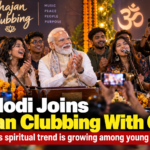
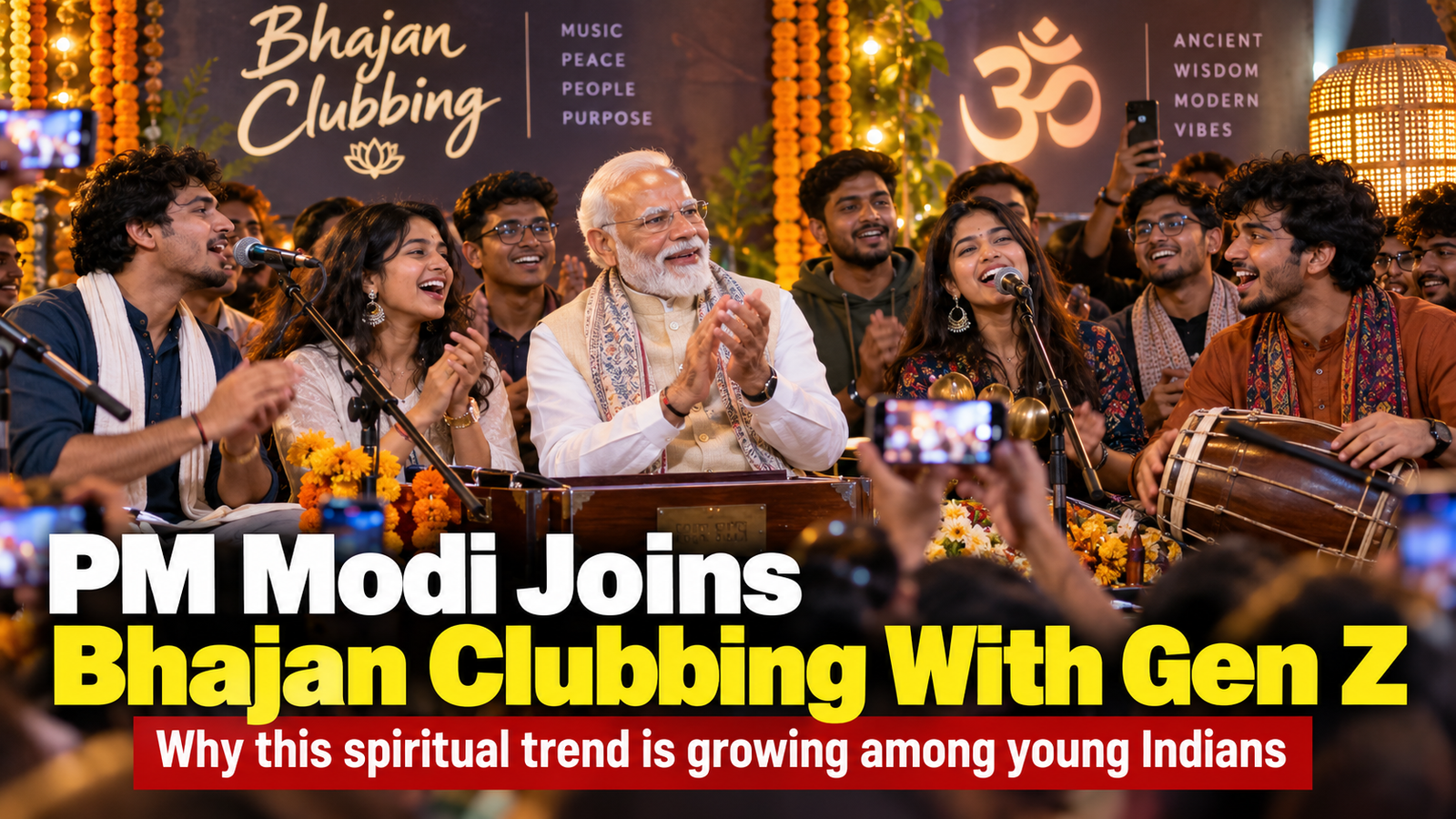
The programme was held at Deen Dayal Upadhyay Park to mark the 110th birth anniversary of Bharatiya Jana Sangh leader Pandit Deendayal Upadhyaya. Modi was seen listening to devotional performances, clapping with participants and taking part in the musical atmosphere.
But Bhajan Clubbing itself is bigger than one political event. The format has increasingly appeared at youth gatherings, colleges and cultural events, where devotional songs are performed using modern sound systems, energetic arrangements and concert-style staging.
What Is Bhajan Clubbing?
Bhajan Clubbing is essentially a modern, concert-style devotional gathering.
Instead of DJs and conventional nightclub music, crowds sing and listen to bhajans, kirtans and devotional chants.
The events may feature drums, guitars, electronic arrangements, stage lighting and powerful sound systems, creating an atmosphere similar to a live concert while keeping devotional music at the centre.
It is less about turning bhajans into nightclub music and more about presenting spirituality in a format familiar to younger audiences.
Modi Had Already Spoken About the Trend
This was not the first time Prime Minister Modi had discussed Bhajan Clubbing.
During his Mann Ki Baat programme on January 25, 2026, Modi said Gen Z was taking an interest in the format and described it as a combination of spirituality and modernity while maintaining the sanctity of bhajans.
His appearance at the Delhi programme has now brought even more visibility to the trend.
Why Is Bhajan Clubbing Connecting With Gen Z?
There is no evidence that every young Indian is suddenly becoming more religious, and India’s Gen Z is far too diverse to make such a broad claim.
However, the popularity of these events suggests that some young people are interested in experiencing tradition differently.
A More Social Form of Spirituality
Traditional devotional practices are often associated with temples, family gatherings or religious ceremonies.
Bhajan Clubbing turns that experience into something more collective.
Young people can attend with friends, sing together and participate in a large crowd—similar to a music festival or concert.
An Alternative to Conventional Nightlife
Another attraction is that Bhajan Clubbing can offer the energy of a social event without necessarily depending on alcohol or nightclub culture.
For young people who enjoy music and large gatherings but prefer a different environment, devotional concerts provide another option.
Social Media Makes It Highly Shareable
Bhajan Clubbing also fits perfectly into the Instagram and YouTube generation.
Videos showing hundreds of young people singing devotional songs under concert lighting can quickly attract attention online.
A short viral clip can introduce thousands of viewers to an event they may never have otherwise discovered.
Tradition Is Changing Its Format
Perhaps the most interesting part of the trend is that it does not necessarily replace tradition.
Instead, it repackages it.
India has centuries-old traditions of bhajans, kirtans and collective devotional singing. What is changing is the venue, presentation and technology surrounding them.
A bhajan that might once have been performed mainly in a temple can now appear in an auditorium with concert-grade speakers and young people recording the experience on smartphones.
The devotion may be familiar.
The presentation is new.
Is Gen Z Becoming More Spiritual?
Bhajan Clubbing has sometimes been described as evidence of a spiritual revival among young Indians.
That conclusion is difficult to prove from popular events alone.
What can be observed is that some younger audiences appear willing to engage with spirituality when it is presented through contemporary music and social experiences.
That makes Bhajan Clubbing interesting not only as a religious phenomenon, but also as a cultural one.
It shows how traditions can adapt to changing generations without necessarily disappearing.
Why Modi’s Appearance Matters
Modi’s participation gives the format significantly greater national visibility.
The Prime Minister had already referenced Bhajan Clubbing earlier in 2026, but appearing at such a gathering places the trend directly into mainstream public conversation.
Whether Bhajan Clubbing becomes a permanent part of India’s youth culture or eventually fades as another social-media trend remains to be seen.
For now, however, it demonstrates something important about the way cultural traditions evolve.
Young Indians do not always have to choose between modern lifestyles and traditional culture.
Sometimes, they simply combine the two.
Frequently Asked Questions
What is Bhajan Clubbing?
Bhajan Clubbing is a concert-style devotional gathering where participants sing or listen to bhajans and kirtans using modern music production and event formats.
Did PM Modi attend a Bhajan Clubbing event?
Yes. Modi attended a Bhajan Clubbing programme at Deen Dayal Upadhyay Park in New Delhi on September 25, 2026.
Why is Bhajan Clubbing popular among Gen Z?
Its appeal appears to come from combining devotional music with social gatherings, modern production, live performances and social-media-friendly experiences.
Is Bhajan Clubbing the same as nightclub clubbing?
No. Despite the name, the central focus is devotional music rather than conventional nightclub entertainment.
