






































Jaishankar’s 4F Warning: How Food, Fuel, Fertilizer and Finance Could Be Hit—and How India Is Building Protection

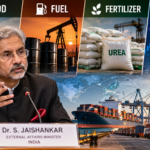
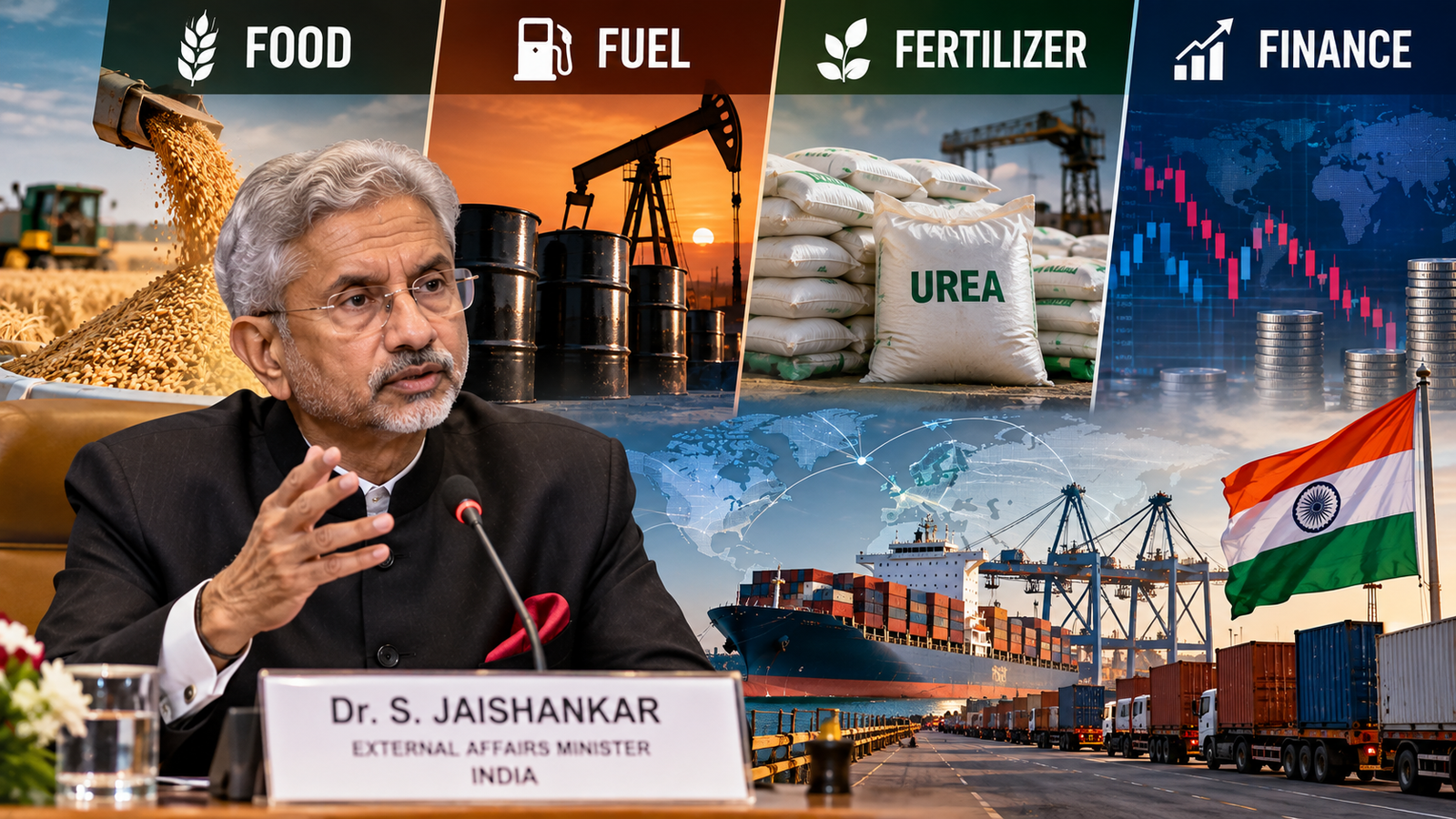
India’s External Affairs Minister Dr. S. Jaishankar has given a simple name to one of the biggest economic threats facing the developing world:
4F — Food, Fuel, Fertilizer and Finance.
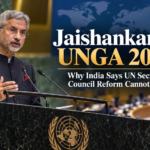
Speaking during the 81st UN General Assembly, Jaishankar warned that the Global South faces a crisis involving the security of all four as conflicts, disrupted trade routes and economic pressure spread far beyond the actual battlefields.
His warning is particularly relevant today.
The Russia-Ukraine war continues to affect grain, fertilizer and financial flows.
The conflict in West Asia has disrupted energy markets, shipping routes and fertilizer supply chains.
Oil prices have again moved above $100 per barrel.
And countries such as India, despite being thousands of kilometres from many of these conflicts, can still feel the consequences through inflation, imports and currency pressure.
But India is also entering this crisis in a much stronger position than many developing economies.
What Does Jaishankar Mean by the “4F Crisis”?
Jaishankar’s point is that these four pressures are not separate.
They reinforce one another.
Higher fuel prices increase transportation and farming costs.
More expensive fertilizer makes agriculture costlier.
Higher food prices increase inflation.
Inflation then pressures interest rates, currencies and government finances.
The chain can look like this:
War → disrupted shipping → expensive fuel and fertilizer → higher food costs → inflation → currency and financial pressure.
That is why a conflict in the Gulf or Ukraine can eventually affect an Indian household that has no direct connection to either war.
Jaishankar later explained that India itself has faced higher fuel and fertilizer costs, but had absorbed some of the impact while increasing fertilizer procurement.
1. FOOD: India Has Built a Major Grain Buffer
Food is probably the area where India currently has the strongest protection.
As of May 28, 2026, government wheat stocks stood at approximately 513 lakh metric tonnes, compared with a required buffer norm of about 275.8 lakh tonnes.
Rice stocks stood at around 397 lakh tonnes, compared with a buffer requirement of roughly 135.4 lakh tonnes.
That means central foodgrain inventories were substantially above minimum buffer levels.
Why is that important?
If international grain prices rise or imports become disrupted, India has domestic reserves that can be released through welfare schemes or market intervention.
This provides protection to programmes under the National Food Security Act and gives the government more flexibility to control shortages or extreme price spikes.
India has also benefited from strong domestic grain and pulses production.
So while food inflation remains a risk, particularly if weather conditions deteriorate, India is not currently dependent on imported staple grains in the way many developing countries are.
But Food Security Is More Than Wheat and Rice
There is still vulnerability.
India imports substantial quantities of edible oils.
Higher fuel costs increase transportation and agricultural expenses.
A strong El Niño could also affect crop output.
The Finance Ministry has already warned that geopolitical tensions, high crude prices and climate-related pressures could contribute to imported inflation.
So India’s large grain reserves provide a cushion—but not complete immunity.
2. FUEL: This Is India’s Biggest Vulnerability
Fuel remains the most difficult of the four Fs for India.
India imports the majority of the crude oil it consumes.
That means every major Gulf conflict can quickly affect the Indian economy.
If crude rises from $70 to $100 or $110 per barrel, India has to spend significantly more foreign currency importing the same amount of energy.
That can weaken the rupee.
A weaker rupee makes oil even more expensive.
And fuel prices eventually feed into transport, manufacturing and food costs.
This is why West Asia matters so much.
Brent crude was recently trading above $100 per barrel, with the Middle East war creating one of the largest energy shocks in years.
How India Is Protecting Fuel Supplies
The government has responded on several fronts.
During the West Asia crisis, authorities repeatedly said that petrol and diesel stocks remained adequate nationwide and urged people not to panic-buy.
India has also diversified crude suppliers over recent years rather than depending entirely on one region.
Russian oil became particularly important after the Ukraine war.
At the same time, India continues buying from Middle Eastern producers and other suppliers.
That diversification matters.
If one supplier or shipping route becomes unreliable, refiners have alternatives.
India’s large domestic refining industry is another advantage. Even though the country imports crude, it has substantial capacity to convert that crude into petrol, diesel and other fuels.
RBI Is Now Protecting the Rupee From Oil Pressure
The fuel problem connects directly to the fourth F: finance.
High crude prices increase demand for dollars because Indian oil companies need foreign currency to pay suppliers.
That can weaken the rupee.
In October, the Reserve Bank of India opened a special facility to supply dollars directly to major state-run oil companies instead of forcing all of that demand into the open foreign-exchange market.
The RBI has also tightened foreign-exchange derivatives rules in an attempt to reduce speculative pressure against the rupee.
These are defensive measures designed to prevent an energy shock from becoming a currency crisis.
3. FERTILIZER: India Prepared Early
Fertilizer may be the least visible part of the 4F crisis—but it is critical.
Without fertilizer, crop yields can fall.
And India still depends on global markets for several fertilizers and raw materials, including potash, phosphoric acid, ammonia and sulphur.
West Asia disruptions have already increased freight costs, insurance costs and global fertilizer-price volatility.
The government’s response has been aggressive advance procurement.
For the 2026 Kharif season, India reassessed total fertilizer requirements at approximately 383.9 lakh metric tonnes.
By early June, stocks had already reached around 197.56 lakh tonnes, or more than 51% of the requirement—well above the usual advance-stock level of around 33%.
India also secured 42.7 lakh tonnes of urea through global tenders in April and June while increasing domestic production.
That is exactly the kind of preparation Jaishankar’s 4F argument requires:
do not wait for a shortage before acting.
India Is Also Building More Fertilizer at Home
The long-term answer is domestic capacity.
The government says six new urea plants have added about 76.2 lakh tonnes of annual capacity, taking indigenous urea production capacity to roughly 269.42 lakh tonnes per year.
This matters because fertilizer dependence can become a national-security issue during war.
If shipping through the Gulf is disrupted or global fertilizer prices explode, domestic production reduces India’s exposure.
4. FINANCE: The Shock That Connects Everything
The fourth F may be the hardest to understand.
Finance refers to the ability of countries to absorb all the other shocks.
Poorer economies can face:
higher import bills,
weaker currencies,
capital outflows,
higher borrowing costs,
and greater debt-servicing pressure.
India is currently experiencing some of these pressures.
The rupee weakened sharply during 2026 as oil prices rose and foreign capital left Indian markets.
But India also has a major defensive asset:
foreign-exchange reserves.
India’s reserves were approximately $734.6 billion in early October, even after the RBI used tens of billions of dollars to stabilize the rupee.
Earlier Finance Ministry data showed reserves near $766 billion, providing more than 11 months of import cover.
That buffer gives the RBI significant firepower.
Many emerging economies simply do not have that kind of protection.
India Is Absorbing Some Costs Instead of Passing Everything to Consumers
This is another important part of the government response.
When global fertilizer prices rise, the full increase does not immediately appear in the price paid by Indian farmers because fertilizer subsidies absorb part of the shock.
Likewise, governments can temporarily use taxes, subsidies, strategic stocks or public-sector balance sheets to reduce the immediate impact of fuel and food volatility.
The cost does not disappear.
It moves somewhere else—often onto the government budget or public-sector companies.
But that can prevent a sudden international shock from immediately becoming a domestic social crisis.
The Ukraine War Still Matters
The current fertilizer shock is heavily connected to West Asia and the Strait of Hormuz.
But Ukraine remains part of the wider 4F story.
Russia and Ukraine are major participants in global grain and agricultural markets.
Russia and Belarus are also major fertilizer suppliers.
The war has altered shipping routes, insurance costs, sanctions regimes and commodity flows.
Jaishankar has said India is engaging both Russia and Ukraine regarding safe Black Sea passage because disruptions there affect food security well beyond Europe.
This is precisely the Global South argument:
countries that did not start the wars still pay part of the economic price.
Why India Is Better Protected Than Many Countries
India has several advantages going into this crisis.
It has large food stocks.
It has significant domestic agricultural production.
It has expanded domestic fertilizer capacity.
It has diversified energy suppliers.
It has large refining capacity.
It has foreign-exchange reserves above $700 billion.
It has strong services exports and remittances that bring foreign currency into the economy.
And the government has created inter-ministerial mechanisms specifically to monitor the West Asia crisis.
Prime Minister Narendra Modi chaired the Cabinet Committee on Security in March to review risks involving agriculture, fertilizer, food security, petroleum, power, exporters, shipping, trade, finance and supply chains.
An informal group of ministers has also repeatedly reviewed essential supplies and economic preparedness.
That level of coordination matters when several shocks arrive simultaneously.
But India Is Not Immune
The strongest article should not pretend India is completely insulated.
It is not.
Oil remains a major vulnerability.
The rupee remains under pressure.
Inflation rose to 5.54% in September, according to Reuters, while high energy costs continue threatening imported inflation.
Foreign investors have also withdrawn large amounts from Indian markets.
India therefore has buffers—but those buffers can be tested if a conflict lasts long enough.
That is why Jaishankar’s warning matters.
The 4F crisis is not necessarily about shortages today.
It is about resilience if global instability persists for years rather than months.
The Real Strategy: Diversify Everything
Jaishankar has repeatedly argued that countries need to de-risk and diversify rather than become excessively dependent on one supplier, one market or one financial system.
For India, that means:
more energy suppliers,
more fertilizer suppliers,
more domestic production,
more strategic reserves,
more export markets,
stronger foreign-exchange buffers,
and more resilient supply chains.
That approach is already visible across government policy.
It is essentially economic strategic autonomy.
Conclusion
Dr. Jaishankar’s “4F” warning sounds simple:
Food. Fuel. Fertilizer. Finance.
But these four words describe the way modern wars reach people who live thousands of kilometres away from the battlefield.
Ukraine disrupts grain and commodity flows.
West Asia threatens oil, gas, fertilizer and shipping.
Higher fuel raises transportation costs.
Higher fertilizer raises agricultural costs.
Higher food prices create inflation.
Inflation and imports pressure currencies and national finances.
For many countries in the Global South, that chain can become devastating.
India is not immune.
But it has spent years building buffers.
Large grain inventories protect food security.
Diversified energy purchases and refining capacity support fuel security.
Advance fertilizer procurement and new domestic plants protect agriculture.
And more than $700 billion in foreign-exchange reserves give the RBI room to defend financial stability.
The real test will be how long the wars last.
If energy prices remain high and shipping disruptions continue, India will still pay a significant economic price.
But Jaishankar’s larger message is becoming increasingly clear:
in an unstable world, national security is no longer only about soldiers and weapons.
It is also about whether a country can feed its people.
Fuel its economy.
Fertilize its farms.
And finance all three when the world around it becomes unstable.
India’s strategy is therefore not simply to survive the next crisis.
It is to become difficult to economically disrupt in the first place.
Frequently Asked Questions
What are Jaishankar’s 4Fs?
The four Fs are Food, Fuel, Fertilizer and Finance. Jaishankar used the framework to describe interconnected economic-security pressures facing the Global South.
Is India facing a food shortage?
Current government stocks are comfortably above prescribed buffer norms for wheat and rice, although food inflation and weather risks still require monitoring.
Does India have enough fertilizer?
Government data showed fertilizer stocks for Kharif 2026 were significantly higher than normal advance-stock levels, supported by imports and domestic production.
Why is fuel the biggest risk for India?
India imports most of its crude oil, so prolonged increases in global oil prices can raise the import bill, weaken the rupee and increase inflation.
How is the RBI protecting India financially?
The RBI has used foreign-exchange reserves, market intervention, tighter derivative rules and a special dollar facility for oil companies to reduce pressure on the rupee.
Is India completely protected from the 4F crisis?
No. High oil prices, currency weakness, capital outflows and inflation remain significant risks. India’s advantage is that it has larger buffers and more policy options than many developing economies.
Disclaimer: This article analyses India’s preparedness against global food, energy, fertilizer and financial shocks using government data and publicly available reporting as of October 13, 2026. Adequate buffers reduce risk but do not eliminate the economic consequences of prolonged geopolitical conflict.
