
























Make in India 2.0: PM Modi’s Atmanirbhar Bharat Vision Aims to Make India a Global Manufacturing Powerhouse

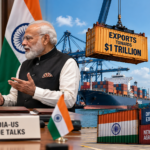
India’s economic story is entering a new phase. Prime Minister Narendra Modi’s latest remarks on Atmanirbhar Bharat and Make in India 2.0 make one message very clear: India does not want to remain only a market for the world. India wants to become a maker for the world.
This idea is at the heart of the government’s vision for Viksit Bharat 2047. A developed India cannot be built only on consumption. It needs manufacturing, innovation, technology, exports, skilled jobs and strong domestic industries. That is why Make in India is no longer just a slogan. It is becoming a long-term economic strategy.
India Wants to Be a Maker, Not Just a Market
For decades, India was seen by many global companies mainly as a large consumer market. Foreign brands came to India to sell products. But the new strategy is different. India wants global companies to manufacture in India, design in India, innovate in India and export from India.
PM Modi’s recent message reflects this shift. He has repeatedly stressed that India’s strength will not come from being dependent on imports, but from building its own capabilities.
This is especially visible in defence and maritime manufacturing. India is now focusing on building ships, aircraft, drones, electronics, semiconductors, railway systems, renewable energy equipment and advanced industrial products at home.
Make in India 2.0 and the Rise of Self-Reliance
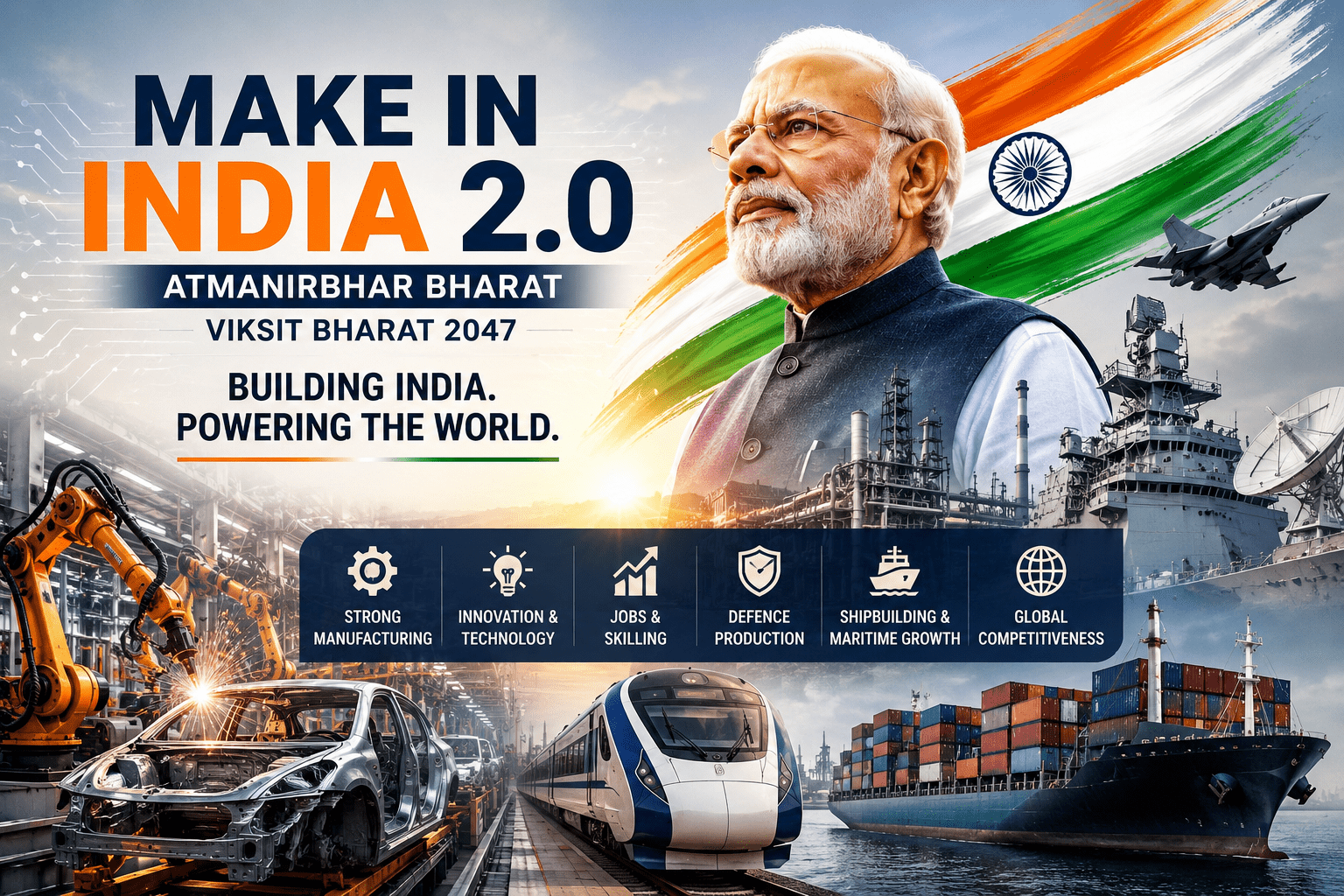
Make in India 2.0 expands the original manufacturing mission into 27 key sectors, including defence, aerospace, electronics, pharmaceuticals, medical devices, textiles, renewable energy, logistics, automobiles and advanced technology.
The goal is not isolation from the world. Atmanirbhar Bharat does not mean closing India’s doors. It means building enough strength so India can compete globally with confidence.
A self-reliant India can import what it needs, export what it produces, protect critical sectors and reduce overdependence on foreign supply chains.
Defence Manufacturing Becomes a Big Example
One of the strongest examples of Make in India 2.0 is defence production. India has long been one of the world’s biggest defence importers. But that is changing.
The recent commissioning of indigenously designed and built naval platforms, including INS Dunagiri, INS Sanshodhak and INS Agray, shows how India’s shipbuilding ecosystem is growing. These platforms are not just military assets. They represent Indian engineering, Indian labour, Indian MSMEs and Indian strategic confidence.
Defence manufacturing also creates a powerful economic chain. One modern warship requires steel, electronics, sensors, weapons systems, skilled workers, engineers, designers and hundreds of small and medium companies. This creates jobs far beyond the defence sector.
Manufacturing Is the Engine of Viksit Bharat
If India wants to become a developed economy by 2047, manufacturing must play a central role. Services have helped India grow, but manufacturing can create mass employment, boost exports and strengthen the middle class.
Countries that became industrial powers did so by building strong factories, supply chains and innovation systems. India now wants to follow that path in its own way.
Make in India 2.0 focuses on:
- local production
- global competitiveness
- quality manufacturing
- export growth
- innovation and research
- MSME participation
- skill development
- advanced technology adoption
This is how India can move from being a low-cost market to a high-value production hub.
Why Quality Matters Now
India cannot become a global manufacturing leader only by producing more. It must produce better.
Quality standards, testing systems, reliable supply chains and global certification will decide whether Indian products can compete in international markets. From electronics to medical devices and from automobiles to defence equipment, global buyers expect precision and reliability.
This is why India’s next manufacturing leap must focus not only on quantity but also on trust.
Jobs, MSMEs and Youth Opportunity
Make in India 2.0 can become a major job creator if implemented properly. India has a young population, and millions of young people need stable, skilled employment.
Manufacturing creates jobs at multiple levels — factory workers, technicians, engineers, designers, logistics professionals, quality controllers, software specialists and exporters.
MSMEs will also benefit if they are integrated into large supply chains. Small companies can become suppliers for defence, electronics, auto parts, textiles, food processing and renewable energy industries.
India’s Global Opportunity
The world is looking for alternatives to overdependence on one manufacturing country. Global companies want supply-chain diversification. India has a major opportunity because of its large workforce, growing infrastructure, digital ecosystem and domestic market.
If India can improve logistics, reduce compliance burden, speed up approvals and maintain policy stability, it can attract more global manufacturing investment.
This is where Atmanirbhar Bharat and global partnership can work together. India can become self-reliant while also becoming deeply connected to global trade.
Challenges India Must Solve
The vision is strong, but challenges remain. India must improve land availability, power reliability, logistics costs, skill training, research investment and ease of doing business at the ground level.
Manufacturing success cannot come only from announcements. It needs execution in states, districts, industrial corridors, ports and factories.
India must also ensure that growth is spread across regions, not limited to a few industrial hubs. Tier-2 and Tier-3 cities can become the next manufacturing engines if they receive infrastructure, training and investment.
Final Thoughts
Make in India 2.0 is more than an economic policy. It is a national confidence project.
PM Modi’s Atmanirbhar Bharat vision is about changing India’s role in the world — from buyer to builder, from consumer to creator, from market to manufacturing power.
If India succeeds, the impact will be historic. It can create jobs, strengthen national security, boost exports, reduce import dependence and help build the foundation of Viksit Bharat 2047.
The message is simple: India is no longer waiting to be supplied by the world. India is preparing to supply the world.
Disclaimer: This article is for informational and educational purposes only. It is based on publicly available reports and policy updates. It should not be considered financial, investment, legal or business advice.