

































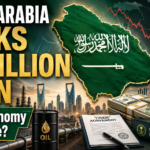
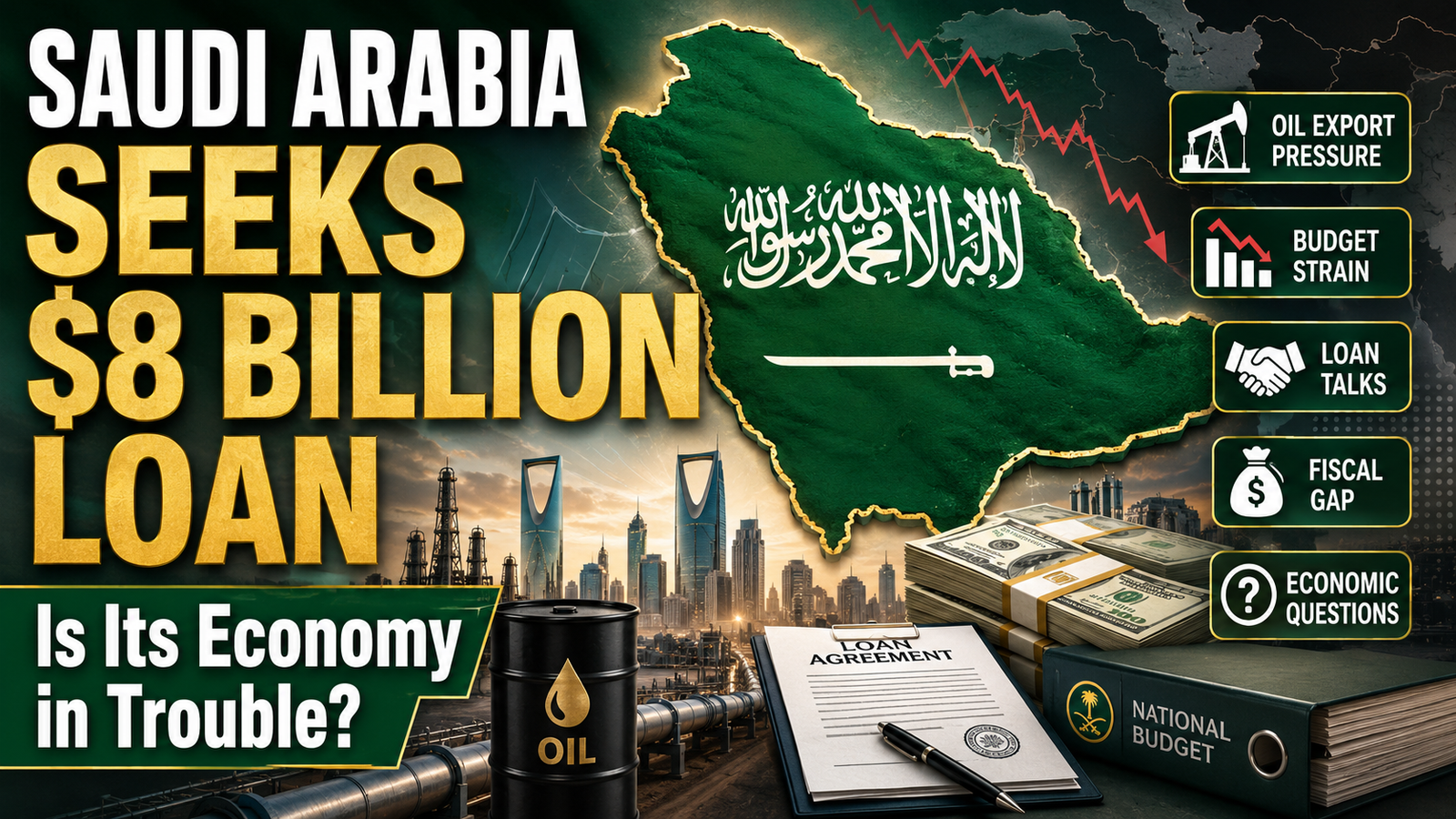

Saudi Arabia Seeks $8 Billion Loan: Is Its Economy in Trouble?
Saudi Arabia is reportedly exploring a loan worth around $8 billion as the Iran–US-Israel conflict puts new pressure on Gulf economies.
The development has produced dramatic claims that the oil-rich kingdom is “asking for financial help.” That description is misleading.
Saudi Arabia is not seeking an international bailout. Its National Debt Management Center is reportedly holding preliminary talks with commercial banks about a dollar-denominated syndicated loan. Saudi Aramco is conducting separate financing discussions.
The borrowing does, however, raise an important question: is the regional war exposing deeper weaknesses in the Saudi economy?
What Is the Reported $8 Billion Deal?
According to Bloomberg-based reporting, Saudi Arabia has approached international banks to explore raising approximately $8 billion.
The government is reportedly considering a five-year syndicated loan—a loan provided by a group of banks rather than a single lender. Discussions remain preliminary, and the transaction may change or may not proceed.
This means Saudi Arabia is borrowing from financial markets, not requesting emergency aid from another country or the International Monetary Fund.
Governments regularly borrow to finance budget deficits, repay maturing debt and avoid spending their foreign-exchange reserves too quickly.
Did the Iran War Cause This Borrowing?
Not entirely.
Saudi Arabia approved a much larger borrowing programme before the latest regional conflict escalated. In January 2026, the government announced approximately $58 billion in financing requirements for the year.
Around $44 billion was intended to cover the projected budget deficit, while nearly $14 billion was allocated for debt repayments, according to Reuters.
Therefore, the reported $8 billion loan is part of an existing financing strategy. The war did not create Saudi Arabia’s borrowing needs, but it has made those pressures more serious.
How Is the War Hurting Saudi Arabia?
Disruption to oil exports
Saudi Arabia earns a substantial share of government revenue from oil. Conflict around the Strait of Hormuz and attacks on regional energy infrastructure can delay shipments, increase insurance costs and reduce export volumes.
Higher crude prices normally benefit Saudi Arabia. But higher prices cannot fully compensate if production facilities, ports or shipping routes are disrupted.
Rising security expenditure
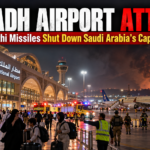
Saudi Arabia must protect oil installations, airports, ports, cities and desalination plants from missiles and drones.
Maintaining air-defence systems, military readiness and critical-infrastructure protection can significantly increase government expenditure.
More expensive imports and shipping
Regional instability increases freight, insurance and security costs. Saudi Arabia imports large quantities of food, machinery, construction materials and consumer products.
These higher costs can affect both businesses and households.
Pressure on tourism and investment
Vision 2030 depends heavily on tourism, international investment and large events. Prolonged regional conflict may discourage visitors and make foreign investors more cautious.
Airspace restrictions and expensive flights could also affect Saudi Arabia’s ambition to become a global aviation and tourism hub.
Saudi Arabia’s Problems Started Before the War
The kingdom was already facing pressure from the enormous cost of its economic transformation.
Vision 2030 includes projects involving new cities, resorts, airports, entertainment venues, transport systems and industrial zones. These programmes are intended to reduce Saudi Arabia’s dependence on oil, but they require substantial investment.
Some projects have reportedly been delayed, reduced or reprioritised as the government concentrates its resources on developments that can generate faster economic returns.
Saudi Arabia also recorded a large budget deficit in 2025. Oil revenue fell by 20% to approximately 590 billion riyals, while the annual deficit reached about 276 billion riyals, according to a Saudi Finance Ministry statement reported by Reuters.
The war is therefore worsening existing fiscal pressure rather than creating it from nothing.
Is the Saudi Economy in a Crisis?
Saudi Arabia’s economy is under strain, but available evidence does not indicate an immediate financial crisis.
Several important strengths remain:
- Public debt is approximately 34% of GDP—moderate compared with many major economies.
- Saudi Arabia retains investment-grade credit ratings.
- The kingdom controls valuable oil reserves and energy infrastructure.
- Its sovereign wealth fund manages hundreds of billions of dollars in assets.
- Non-oil industries such as tourism, construction, logistics and technology continue to expand.
Saudi Arabia’s Public Investment Fund was managing approximately $925 billion when it approved its 2026–2030 strategy, according to Reuters.
These resources give Riyadh considerable financial protection.
However, the decision to explore additional borrowing signals that the government wants to preserve cash while continuing major projects and managing wartime uncertainty.
Why Borrow When Saudi Arabia Has Huge Wealth?
A country can own valuable assets while still needing immediate cash.
Selling investments during market instability may generate poor returns. Borrowing can allow Saudi Arabia to protect its reserves and continue funding essential projects.
The government must compare the loan’s interest cost against the cost of selling assets, reducing development spending or drawing down reserves.
The real concern would emerge if borrowing costs rise sharply, deficits continue expanding and oil exports remain disrupted for a prolonged period.
What Should India Watch?
Developments in Saudi Arabia matter directly to India.
The Gulf region is important for Indian energy imports, exports, aviation and overseas employment. Continued instability could produce:
- Higher crude-oil and transport costs
- More expensive shipping insurance
- Pressure on India’s inflation and trade deficit
- Disruption to Indian businesses operating in the Gulf
- Risks to the employment and safety of Indian workers
- Delays in India–Middle East connectivity projects
Saudi Arabia’s financial stability is therefore important not only for the Gulf but also for India’s energy and economic security.
Conclusion
Saudi Arabia is not asking for an $8 billion bailout. It is reportedly negotiating a commercial bank loan as part of a much larger borrowing programme.
The kingdom is not close to bankruptcy, and it continues to possess enormous energy resources, investments and sovereign assets.
Nevertheless, the reported loan is a warning sign. Vision 2030 spending, budget deficits and dependence on oil had already created financial pressure. The Iran–US-Israel conflict has added shipping disruptions, security costs and uncertainty over energy revenue.
The most accurate conclusion is that Saudi Arabia remains financially powerful—but the war is forcing it to borrow more carefully, reconsider some ambitions and protect its cash.
Frequently Asked Questions
Is Saudi Arabia asking for $8 billion in foreign aid?
No. Reports indicate that Saudi Arabia is exploring a syndicated commercial loan from international banks, not requesting a government or IMF bailout.
Has the $8 billion loan been finalised?
No. The discussions are reportedly preliminary, and the amount or terms could change.
Is Saudi Arabia’s economy collapsing?
There is no evidence of an economic collapse. However, budget deficits, megaproject spending and regional conflict are increasing financial pressure.
Did the Iran war cause Saudi Arabia’s deficit?
Not by itself. Saudi Arabia approved its 2026 borrowing plan before the latest conflict escalated. The war has intensified existing pressures.
Can higher oil prices help Saudi Arabia?
Yes, if the kingdom can maintain production and exports. Disrupted facilities or shipping routes could reduce the benefits of higher prices.
Disclaimer: This article is based on publicly available government information and credible media reports as of September 2, 2026. The reported loan discussions are preliminary and have not been announced as a completed transaction. References to economic pressure do not imply insolvency or an official financial crisis. Conflict conditions, oil markets and government finances can change rapidly. This content is intended for news and educational purposes and does not constitute financial or investment advice.
