










































Europe Wildfires 2026: Why France and Spain’s Fire Crisis Is a Warning for the World

Europe Is Burning Again
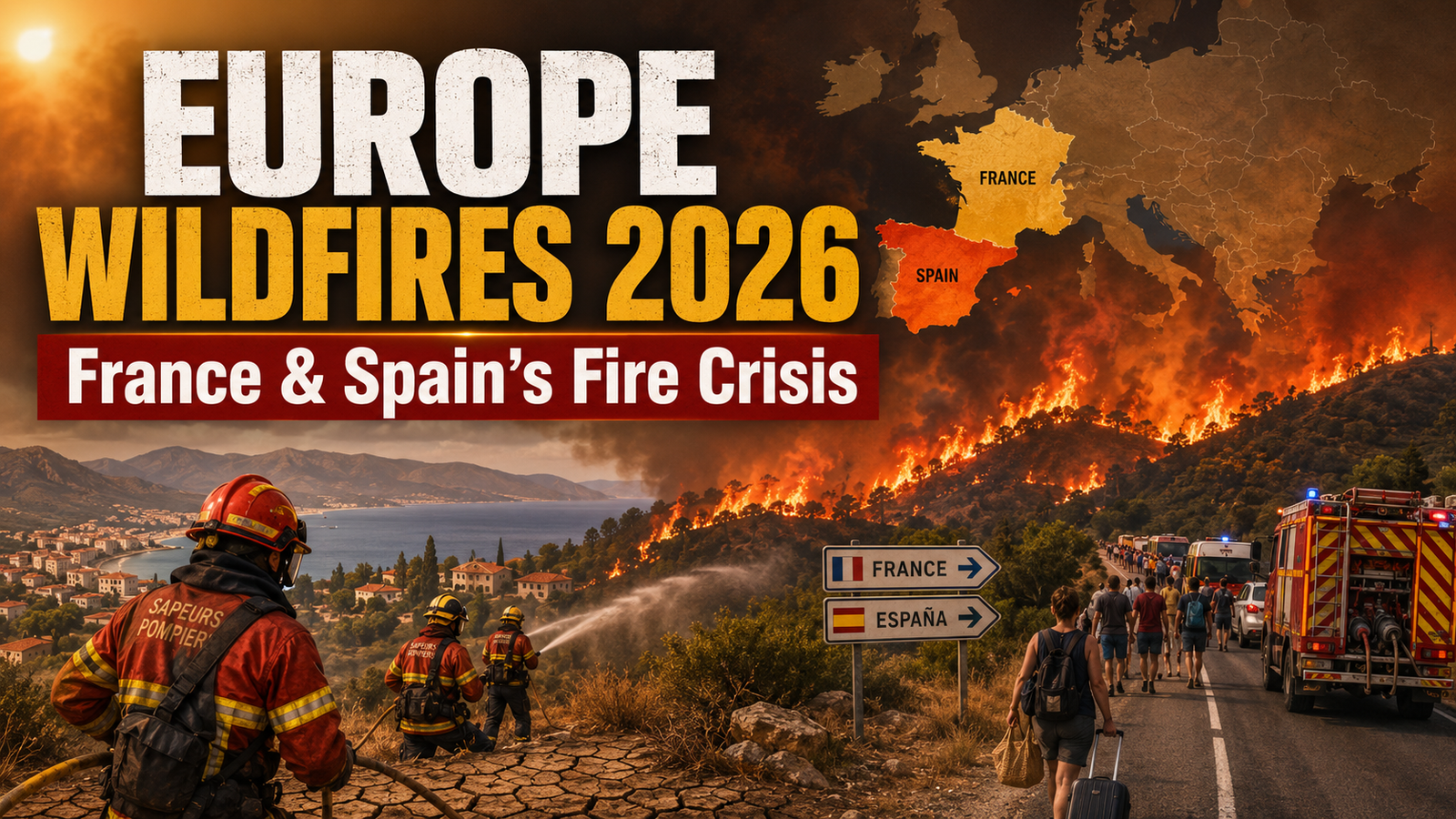
Europe is facing another major climate emergency as wildfires tear through parts of France and Spain, forcing mass evacuations and putting historic cities, tourist hotspots and rural communities at risk.
Reuters reported that wildfires advanced toward the outskirts of Bordeaux, one of France’s most famous wine cities, while Spain continued battling dangerous blazes after days of heat, drought and strong winds.
Associated Press reported that more than 250,000 people were forced to flee homes in France and Spain as firefighters struggled to contain the flames.
This is not only a European disaster. It is a global warning.
Why These Wildfires Matter
Wildfires are not new. But the scale, speed and frequency of these fires are becoming more alarming.
Reuters reported that hundreds of thousands were evacuated in both countries as fires followed sustained dry spells and successive heatwaves that scientists say have been worsened by climate change.
That is the key issue. Heat dries forests. Drought weakens soil. Strong winds push flames faster. Once a fire starts, it can spread with terrifying speed.
The danger is no longer limited to remote forests. Fires are now threatening cities, tourist areas, farms, power lines, roads and water systems.
Tourism and Economy Take a Hit
France and Spain are among the world’s biggest tourism destinations. Summer is one of their most important economic seasons.
But when wildfires spread near tourist regions, visitors cancel trips, hotels lose bookings, roads close, airports face disruption and local businesses suffer. Reuters reported that fires hit France’s Atlantic coast and forced evacuations around areas popular with tourists.
This shows how climate disasters can quickly become economic disasters.
A wildfire does not only burn trees. It burns income, jobs, homes, savings and confidence.
Climate Change Is Now a Daily-Life Issue
For years, climate change sounded like a future problem. Now it is affecting daily life.
Families are leaving homes. Children are sleeping in shelters. Farmers are losing land. Firefighters are working under extreme pressure. Cities are preparing emergency plans that were once considered rare.
Europe’s wildfire crisis proves that climate change is not only about melting ice or rising sea levels. It is also about heatwaves, smoke, insurance costs, food prices, water shortages and public health.
What the World Should Learn
Governments must stop treating wildfires as seasonal accidents. They must invest in forest management, early-warning systems, firefighting aircraft, water planning, climate-resilient cities and emergency evacuation systems.
People also need awareness. Homes near forests need fire-safe planning. Tourists must follow alerts. Cities must prepare cooling shelters. Rural areas need better support.
The world cannot stop every wildfire. But it can reduce the damage.
Final Thoughts
The France and Spain wildfires are one of the biggest global warning signs of 2026.
They show that even developed countries with strong infrastructure are vulnerable when extreme heat, dry land and strong winds combine.
This crisis is not just about Europe. It is about the future of every country facing rising temperatures.
The message is clear: climate resilience is no longer optional. It is now part of national security, economic planning and human survival.
FAQs
Why are France and Spain facing wildfires?
The fires have been linked to heatwaves, dry spells, drought conditions and strong winds.
How many people were evacuated?
Associated Press reported that more than 250,000 people were forced to flee homes in France and Spain.
Is climate change making wildfires worse?
Scientists say sustained heatwaves and dry conditions linked to climate change can increase wildfire risk and intensity.
Why are European wildfires important globally?
They show how climate disasters can affect cities, tourism, agriculture, public health and national economies.
Disclaimer: This article is for informational and educational purposes only. It does not provide environmental, travel, medical or emergency advice. People in affected areas should follow official local alerts and evacuation instructions.