



























US 100% Tariff Threat: Should India Really Trust America?

America’s 100% Tariff Threat Against India
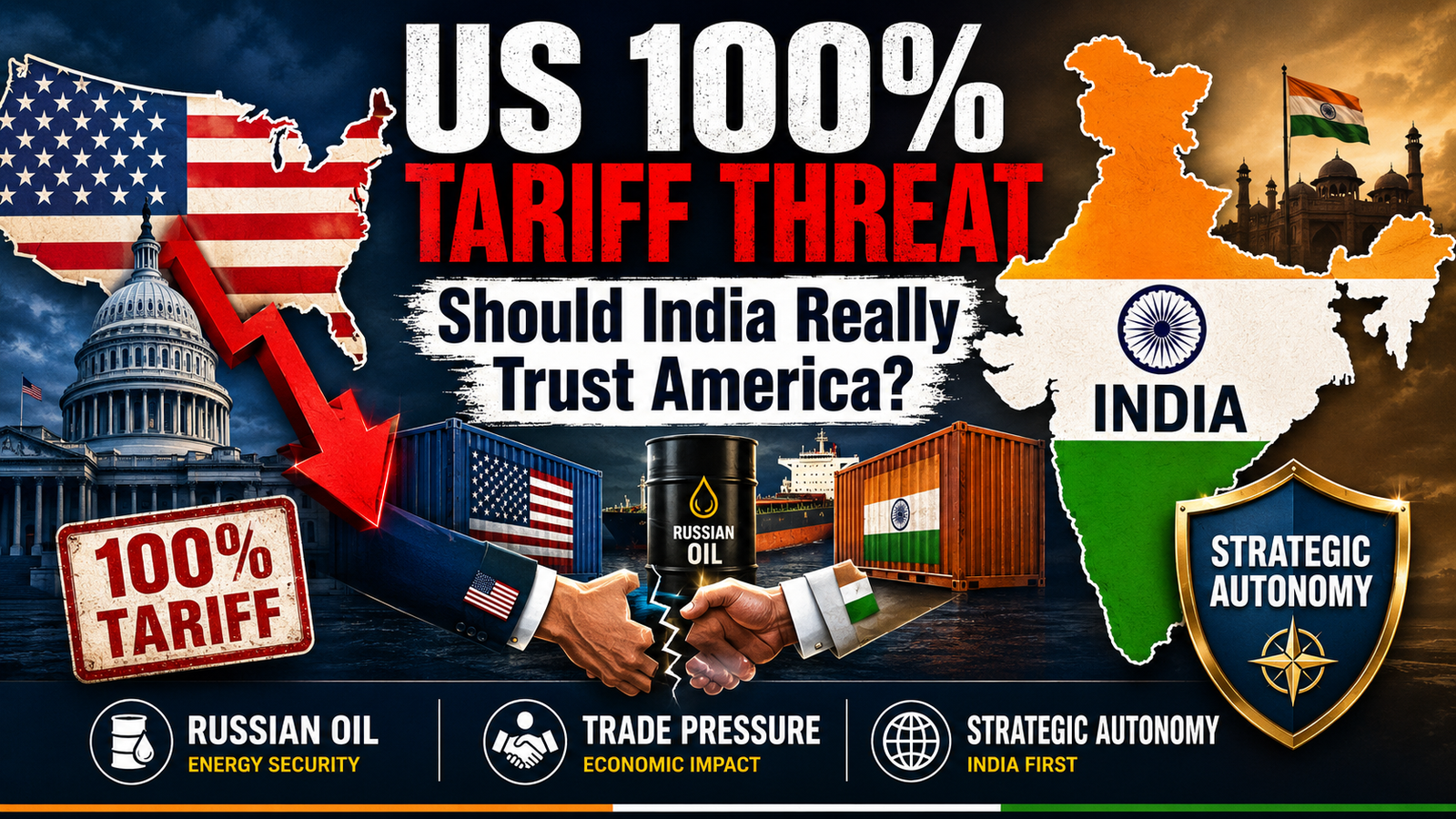
The United States Senate has passed a major Russia sanctions bill that could allow the U.S. president to impose tariffs of up to 100% on countries that continue buying Russian oil and gas, including India.
Reuters reported that the Senate passed the Lindsey O. Graham Sanctioning Russia and Iran Act of 2026 by an overwhelming vote of 86-11. The bill now goes to the U.S. House of Representatives, meaning it is not yet fully law, but it is a serious warning signal for India.
The bill is aimed at cutting Russia’s energy revenue over the Ukraine war. But for India, the message is uncomfortable: Washington wants India as a strategic partner, but it is also willing to punish India for protecting its own energy security.
This raises a difficult question: should India blindly trust the United States?
India Buys Oil for Its People, Not to Please Washington
India buys Russian oil because it helps control fuel prices, inflation and import costs. A country of 1.4 billion people cannot run its energy policy based only on Western pressure.
The U.S. itself has often made decisions based on national interest. India should do the same.
If Washington can threaten 100% tariffs on Indian goods over oil purchases, then India must understand that American friendship comes with conditions. The U.S. may cooperate with India when interests match, but it can also apply pressure when India refuses to follow its geopolitical line.
That is why India needs strategic autonomy, not emotional foreign policy.
The GE Engine Lesson: Dependence Has a Price
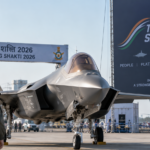
The Tejas Mk1A fighter jet programme has already shown India the risk of overdependence on foreign defence suppliers.
Reuters reported that GE engine deliveries for India’s Tejas fighter were supposed to begin in March 2024, but supply-chain constraints delayed deliveries. The delay affected India’s fighter rollout at a time when the Indian Air Force urgently needs to strengthen its squadron numbers.
Some people call this sabotage. Public evidence has not proven sabotage. But the strategic lesson is still clear.
Whether the reason is supply-chain delay, export control, technical issue or political pressure, India cannot allow its frontline defence projects to depend completely on foreign engines.
India needs its own jet engine ecosystem. India needs domestic defence manufacturing. India needs backup suppliers.
Friendship is good. Dependency is dangerous.
The Pakistan Problem: Old Wounds Still Matter
India has not forgotten America’s history with Pakistan.
In 2022, the U.S. approved a possible $450 million F-16 sustainment package for Pakistan. Reuters reported that India expressed concern because Pakistan’s F-16 fleet is a critical military asset and India worries it can be used against India.
Washington often says such assistance is for counterterrorism or maintenance. But from India’s perspective, the same military platforms can strengthen Pakistan’s air power.
This is why many Indians ask: how can the U.S. call India a strategic partner while also helping Pakistan maintain advanced military capability?
India must judge America by actions, not speeches.
H-1B: Indian Talent, American Control
The U.S. also has a long history of using immigration rules as leverage.
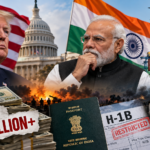
Reuters reported that Indian nationals accounted for 71% of approved H-1B applications in the previous year, and that the Trump administration’s $100,000 fee on new H-1B applications caused major concern for Indian workers and companies.
Later clarifications reduced some confusion, but the message was still clear: Indian talent powers American technology, yet Indian professionals can be hit by sudden policy changes.
In 2026, Reuters also reported that stricter immigration vetting created delays and uncertainty for employers managing global workforces.
India should learn from this. The long-term answer is not only fighting U.S. visa rules. The real answer is building a strong innovation economy at home so Indian engineers do not have to depend on American visa politics for their future.
The VanDyke Case: India Must Stay Alert
Another controversy involved American national Matthew VanDyke, not “Andrew Van Dyke.” NDTV reported that VanDyke and six others were arrested in India under anti-terror law, with the NIA suspecting the group was linked to drone warfare training for ethnic armed groups connected to Myanmar.
This does not prove that VanDyke was a CIA agent. That claim requires evidence and legal confirmation.
But the case still raises a serious national security question: why should India allow foreign conflict networks, drone trainers or private military-linked actors to use Indian territory as a route or operating space?
India must be strict. Foreign nationals involved in armed conflicts, drone warfare or insurgency-linked networks should face tough scrutiny under Indian law.
Foreign-Funded NGOs and Narrative Power
India has also become more careful about foreign-funded organisations.
FCRA exists because foreign money can influence domestic politics, activism, media narratives and social movements. PRS explains that the FCRA regulates foreign funds and prohibits their use for activities that may be detrimental to national interest.
This does not mean every NGO is bad. Many NGOs do excellent work in health, education, disaster relief and poverty reduction.
But India cannot ignore the possibility that foreign funding may be used to shape domestic narratives. In today’s world, influence operations are not always done through soldiers. They can also be done through money, media, legal activism, social campaigns and digital networks.
A sovereign country has the right to demand transparency.
Should India Trust America?
India should work with America. But India should not blindly trust America.
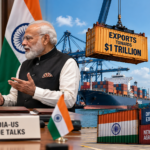
The U.S. is important for India in defence, technology, trade, education and global strategy. USTR data shows U.S.-India goods trade reached an estimated $149.4 billion in 2025. The White House has also described expanding defence sales and co-production with India as part of deeper strategic cooperation.
So the answer is not anti-America emotion.
The answer is realism.
America is not India’s enemy.
America is not India’s permanent saviour either.
America is a powerful country that protects American interests first.
India must do the same.
India’s Best Response
India should respond to the 100% tariff threat with calm confidence.
First, India must diversify energy imports so no one can blackmail it over oil.
Second, India must accelerate domestic defence manufacturing, especially jet engines, drones, missiles, semiconductors and electronics.
Third, India must reduce overdependence on H-1B by creating high-paying innovation jobs at home.
Fourth, India must continue strong ties with the U.S., but also deepen relations with France, Russia, Japan, Israel, UAE, ASEAN and the Global South.
Fifth, India must protect its information ecosystem from foreign-funded influence, deepfakes and narrative warfare.
Sixth, India must negotiate with America from strength, not fear.
Final Thoughts
The U.S. 100% tariff threat is a wake-up call.
It shows that even friendly countries can pressure India when their interests change. From Russian oil to H-1B visas, from Pakistan policy to defence supply delays, India has seen enough to understand that global politics is not based on emotions.
India should cooperate with America where interests match. But India should never outsource its national security, energy policy, technology future or diplomatic choices to Washington.
The real lesson is simple: trust partnerships, but build self-reliance.
India’s future depends on strategic autonomy.
Not blind trust.
Not anti-American anger.
But strong, confident, India-first realism.
FAQs
Has the U.S. passed a 100% tariff law against India?
The U.S. Senate has passed a sanctions bill that could allow up to 100% tariffs on countries buying Russian energy, including India. It still needs further legislative steps before becoming law.
Why is India buying Russian oil?
India buys Russian oil to protect energy security, manage fuel costs and reduce inflation pressure for its citizens.
Did GE sabotage India’s Tejas programme?
There is no public proof of sabotage. However, GE engine delays have exposed India’s risky dependence on foreign defence suppliers.
Why is H-1B important for Indians?
Indians form the largest share of H-1B beneficiaries, so sudden U.S. visa fee hikes and policy changes directly affect Indian workers, families and IT companies.
Should India stop working with America?
No. India should work with America where interests align, but it should also protect its own interests and build self-reliance in energy, defence and technology.
Disclaimer: This article is for informational and editorial commentary only. It does not claim that all U.S. actions are hostile to India or that every foreign-funded organisation is involved in wrongdoing. Allegations involving individuals or organisations should be judged through verified evidence and legal process.