















































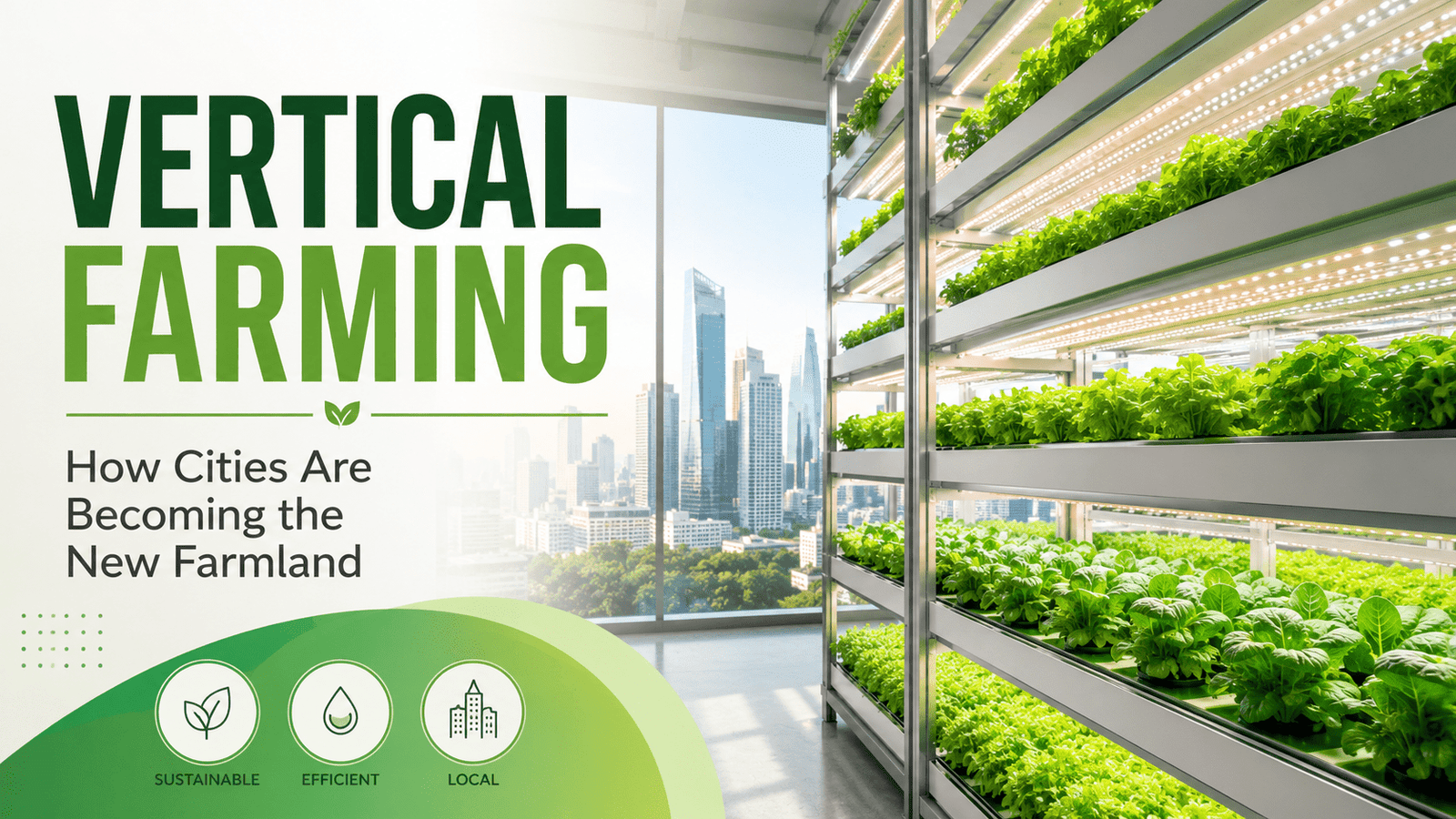

For centuries, agriculture required horizontal land spread across rural areas. Vertical farming breaks that limitation by growing food upward instead of outward.
It uses stacked layers inside controlled environments, often integrated into urban buildings.
The End of Geography-Based Farming
Traditional farming separates production and consumption. Food is grown far from where it is eaten.
Vertical farming collapses that distance.
Now food can be grown:
- Inside cities
- Near consumers
- Within controlled indoor systems
This reduces transportation costs, spoilage, and supply chain delays.
Agriculture Becomes Infrastructure
Vertical farming is not just about efficiency. It changes the role of cities.
Urban areas shift from pure consumers to hybrid systems that both produce and consume resources.
However, this system depends heavily on technology, automation, and energy inputs — making agriculture more like engineered infrastructure than natural cultivation.
The result is a fundamentally new model of food production.
Disclaimer: This article is for informational and educational purposes only. It is based on publicly available reports and policy updates. It should not be considered financial, investment, legal or business advice.